





Furnace carbon monoxide signs in Alabama

Step 1 of 3: Equipment

A furnace that leaks carbon monoxide usually shows warning signs before anyone gets sick. Look for a yellow or flickering burner flame instead of a steady blue one. Soot around the furnace cabinet, a strange burning smell, or excess moisture on windows near the unit are all signs the gas isn't burning clean. If your carbon monoxide detector goes off, or if people in the house have headaches, nausea or feel drowsy only when they're home, the furnace is a likely source. This happens when the heat exchanger cracks or the vent pipe gets blocked, so exhaust that should go outside ends up in the air you breathe instead. Most homes in Alabama heat with electricity, but if yours runs on gas, a furnace that's unsafe to run needs a technician to check it before you turn it on again. Carbon monoxide has no smell of its own, so these signs are what you have to go on.

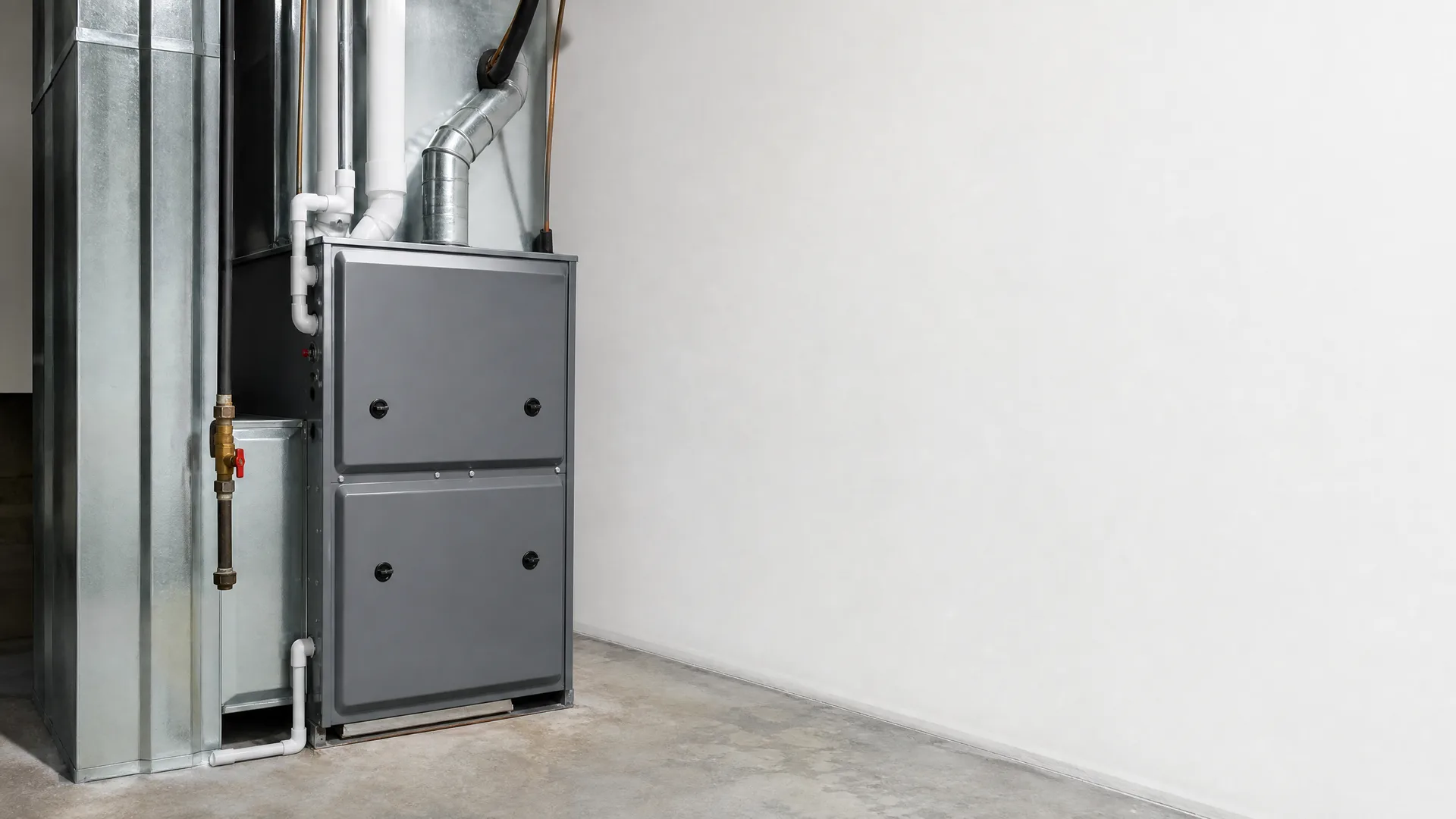
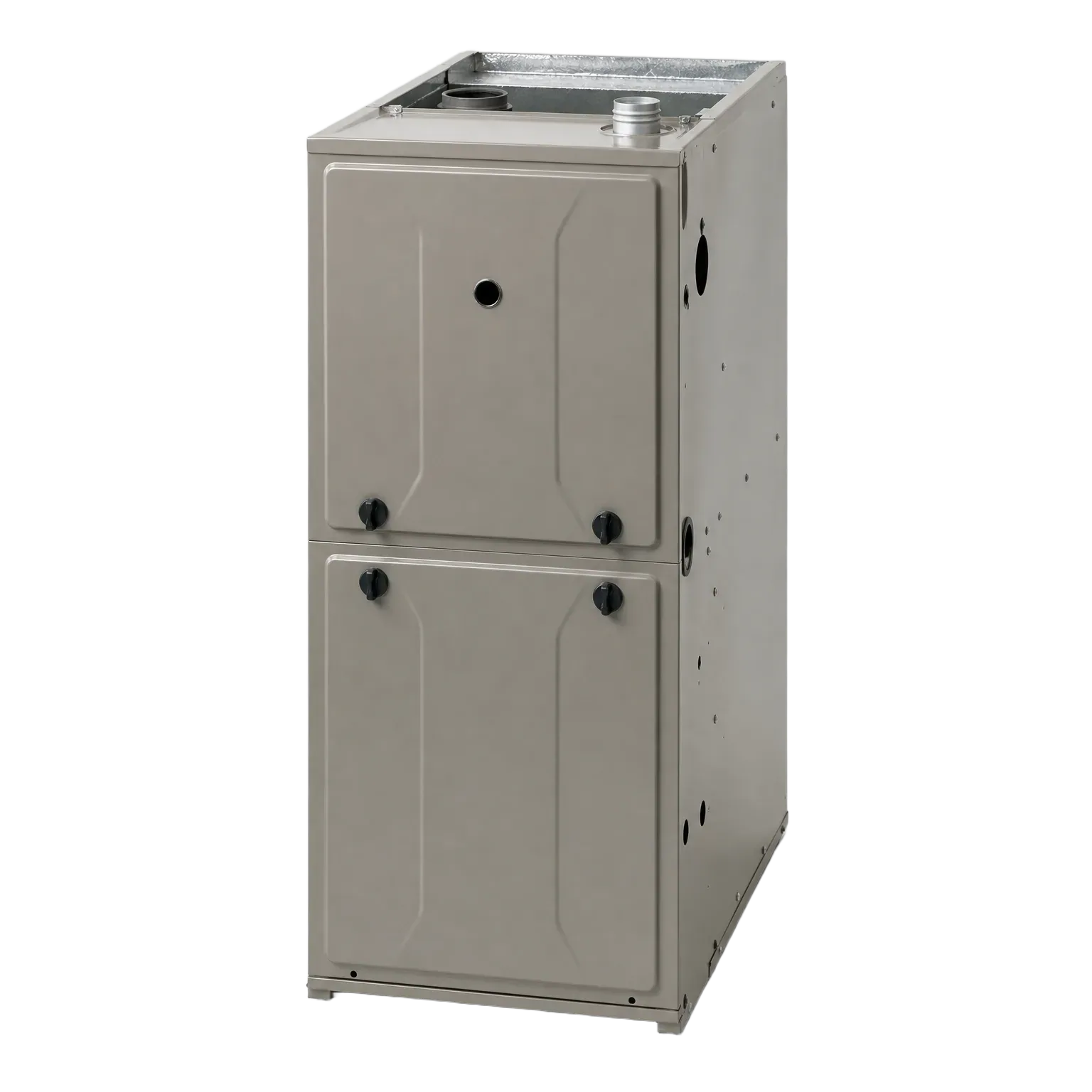
A gray residential furnace with two panel doors stands against a plain light wall in a concrete-floored room, connected to metal ductwork and white and copper pipes.

Why a steady flame matters

A gas furnace burns clean when it gets enough air mixed with the gas. That burn shows up blue and steady. When the burner can't draw enough air, or the gas mixture is off, the flame turns yellow and starts to waver. That same incomplete burn is what produces carbon monoxide. The flame is telling you something about the air it's getting, not just its own color.

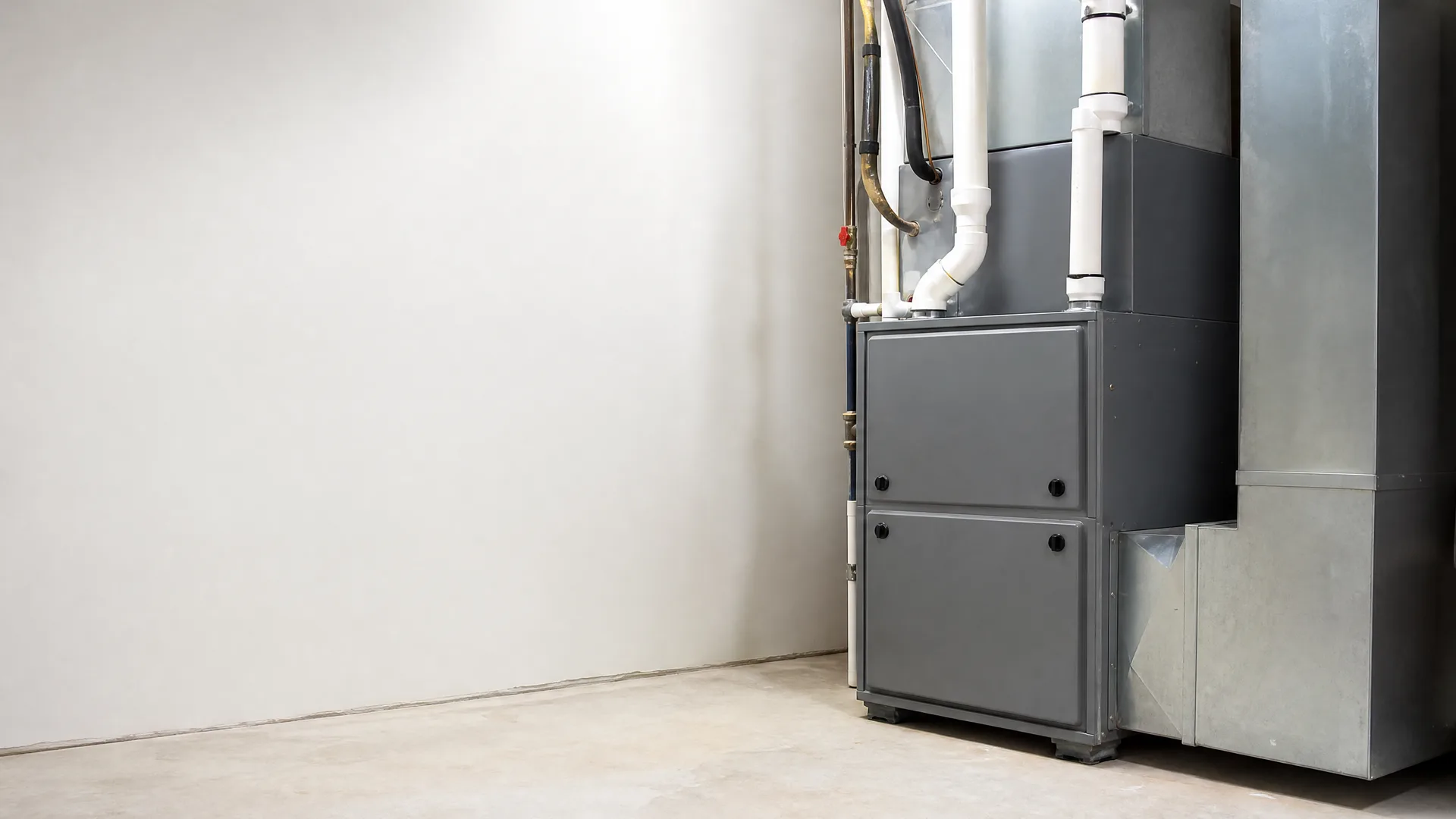
A gray high-efficiency furnace with white PVC venting pipes stands against a plain wall in a basement, connected to sheet-metal ductwork on a concrete floor.

Where the gas actually goes

Most homes in Alabama heat with electricity, but if your furnace runs on gas, it depends on a flue to carry exhaust out of the house. A cracked heat exchanger or a blocked vent can send that exhaust back into the air you breathe instead. Soot stains near the cabinet or a burning smell often mean the exhaust path isn't doing its job, well before a detector would ever sound.

Furnace Signs vs. Body Signs

Furnace Signs

  • A yellow, flickering flame instead of a steady blue one points to incomplete combustion inside the burner.
  • Soot collecting around the cabinet or vent hood means the furnace isn't burning gas cleanly.
  • A burning or sharp smell when the furnace kicks on is not normal and shouldn't be ignored.
  • Rust or heavy condensation on the flue pipe can mean exhaust isn't venting the way it should.
  • A furnace that cycles on and off more than usual may be struggling to burn fuel correctly.
  • Excess moisture on windows and walls near the furnace room can trace back to the same bad burn.

Body Signs

  • A headache that shows up at home and fades once you're outside or away for a few hours.
  • Feeling dizzy, nauseous, or unusually tired in rooms near the furnace, especially with the heat running.
  • Several people in the house getting sick around the same time, with symptoms that look like the flu but no fever.
  • Confusion or trouble concentrating that doesn't have another clear cause.
  • Pets acting lethargic or sick before anyone in the household notices symptoms in themselves.
  • Symptoms that ease up when you leave the house and return once you're back inside.
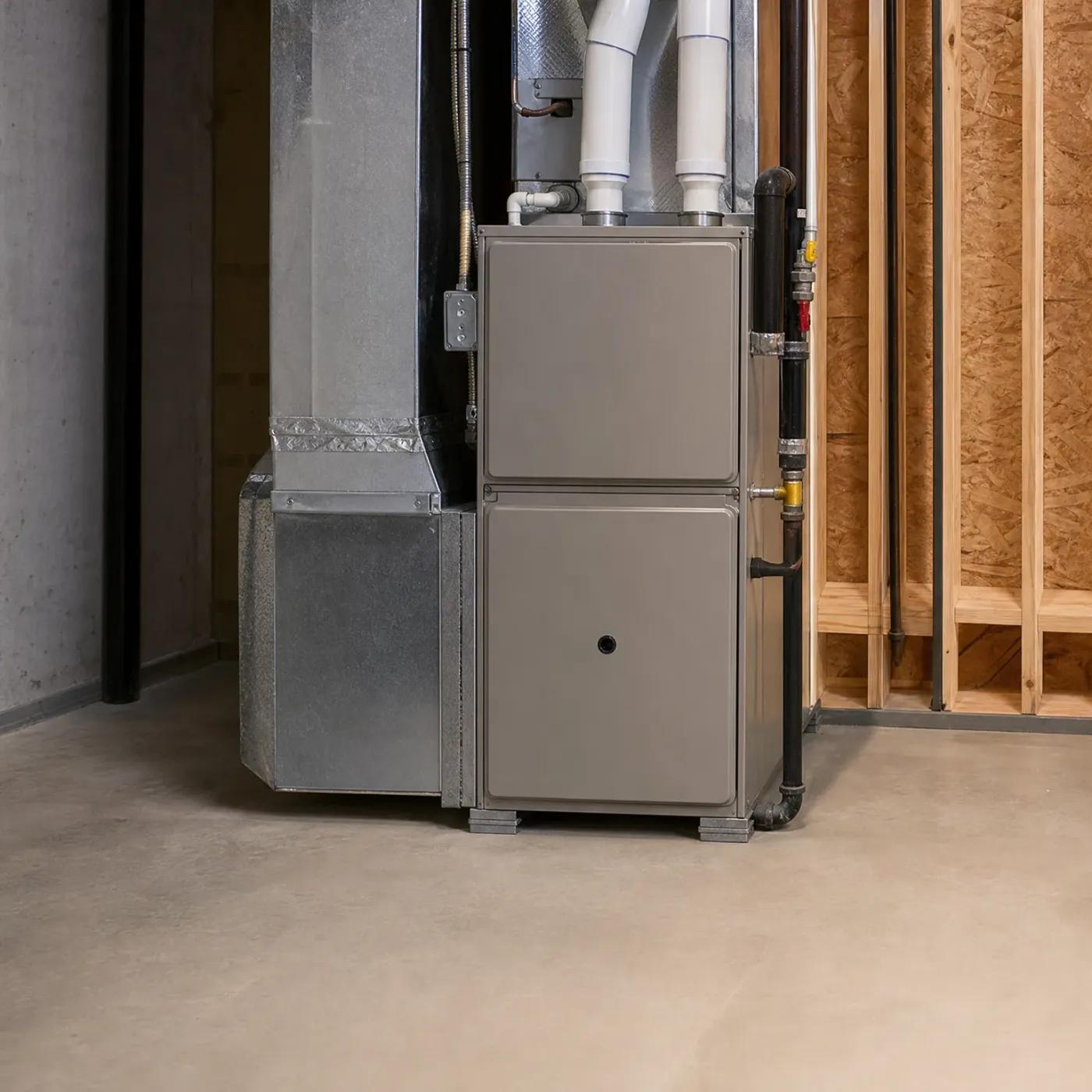
A gray high-efficiency furnace in a basement, connected to sheet-metal ductwork on the left and white PVC vent pipes above, with black gas and drain piping and an exposed wood-stud wall with OSB sheathing on the right.
A steady flame and clean venting mean the furnace is burning gas the way it's supposed to, with nowhere for carbon monoxide to collect.
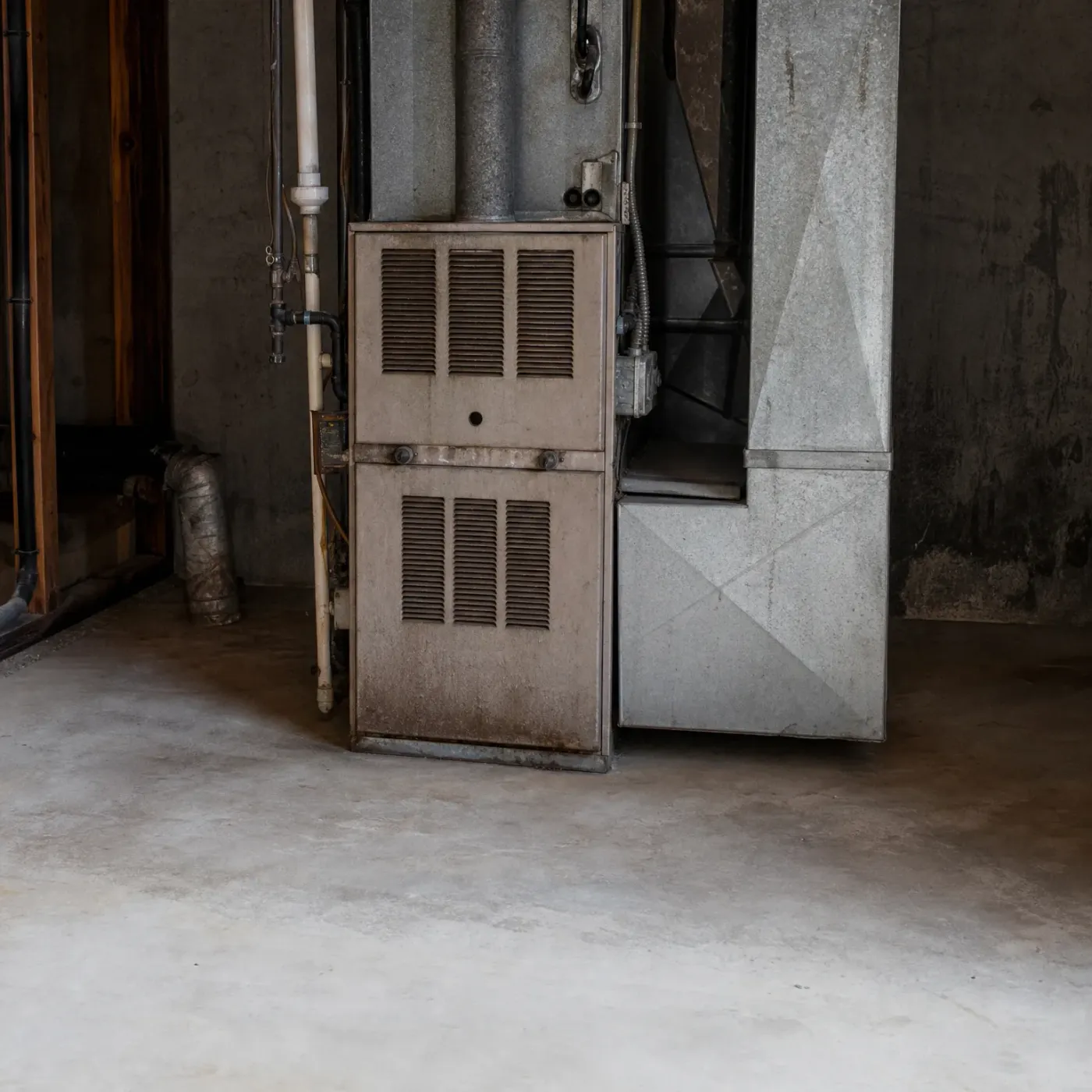
An older gas furnace with two louvered front panels stands on a concrete basement floor beside galvanized sheet-metal ductwork, pipes, and a weathered concrete wall.
Rust and moisture on an older unit can mean a cracked heat exchanger, which lets carbon monoxide mix with the air your furnace pushes through the house.
A smiling man in a dark navy sweater sits on a light sofa in a living room, with a glass bowl of popcorn on a wooden coffee table and bookshelves behind him.
A smiling man in a dark green sweater sits on a tan leather sofa in a dimly lit living room, with a bowl of popcorn in the foreground and a kitchen area blurred behind him.
A smiling middle-aged man in a dark shirt sits on a gray sofa in a living room, with a bowl of popcorn on a side table and shelves, a window and kitchen area behind him.
A smiling bearded man in a dark gray t-shirt sits on a gray couch in a living room, with a large glass bowl of popcorn on a wooden table in the foreground.

A pro who works on furnaces

Send the request today and stop worrying about who to call.

Sending the form costs nothing.

What this looks like in your house

Most homes in Alabama heat with electric systems, so a gas furnace running in yours usually means an older setup, maybe one that came with the house. If that's what you have, you're the one who'd notice the signs first, since carbon monoxide has no smell of its own and the detector may not trip until levels build up in a closed room. A yellow flame visible through the viewing port, soot on the cabinet, or fog forming on a nearby window in weather that doesn't call for it are things you'd catch walking past, not something a once-a-year inspection would always find in time.

Why this isn't one to sit on

A furnace with a combustion problem doesn't fix itself, and running it through another winter night makes the exposure longer, not safer. Alabama winters aren't long, but a furnace that's cracked or short on air doesn't wait for the coldest stretch to leak. If you've noticed any of these signs, the furnace needs to stay off until a contractor looks at it. Once you send the request, you're done chasing down who's available. A contractor who handles this gets in touch, and finding someone stops being the thing you have to manage tonight.

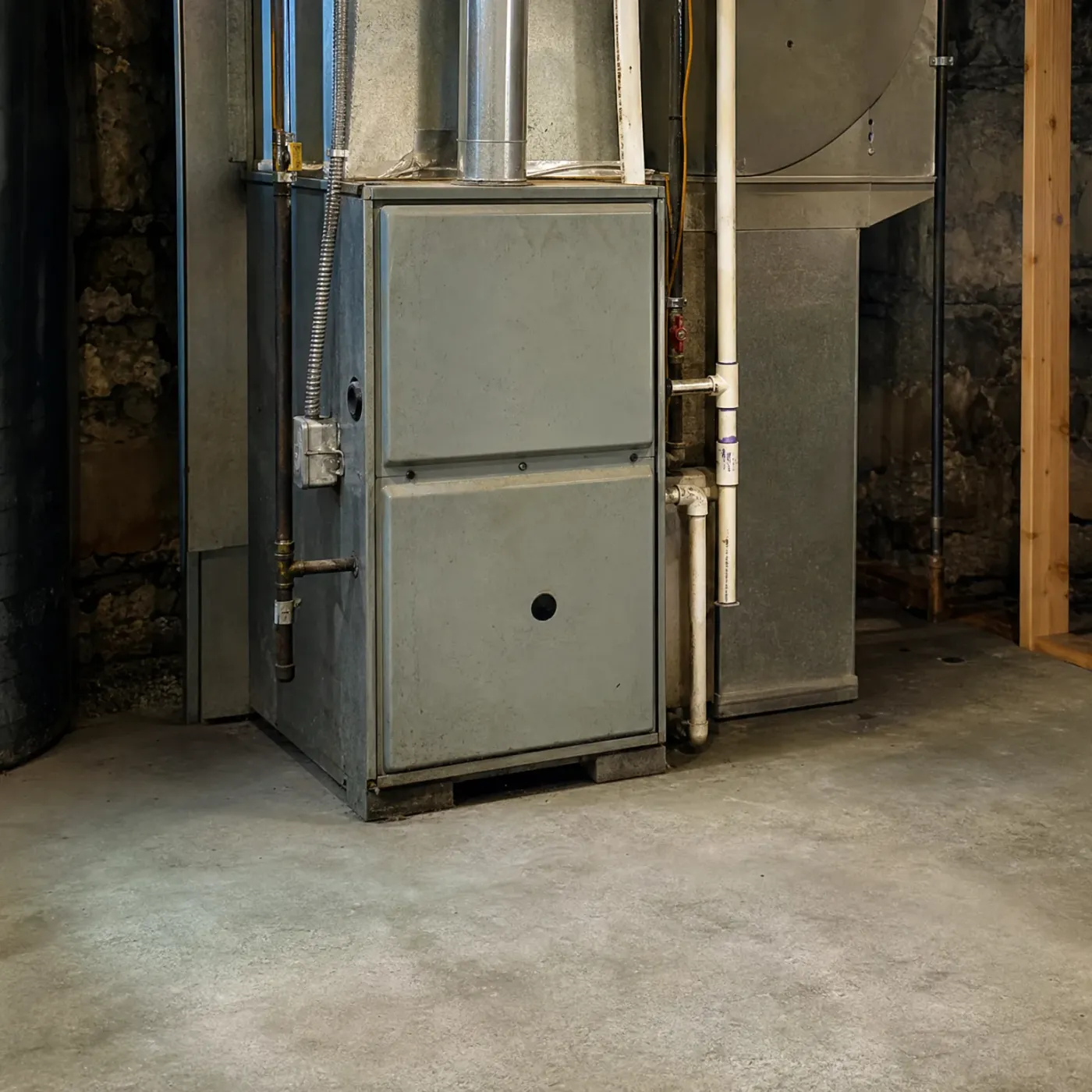
A gray sheet-metal furnace with flue pipe and adjacent ductwork stands against a stone basement wall on a concrete floor, with white PVC and metal pipes running nearby.
Before you get your furnace repair
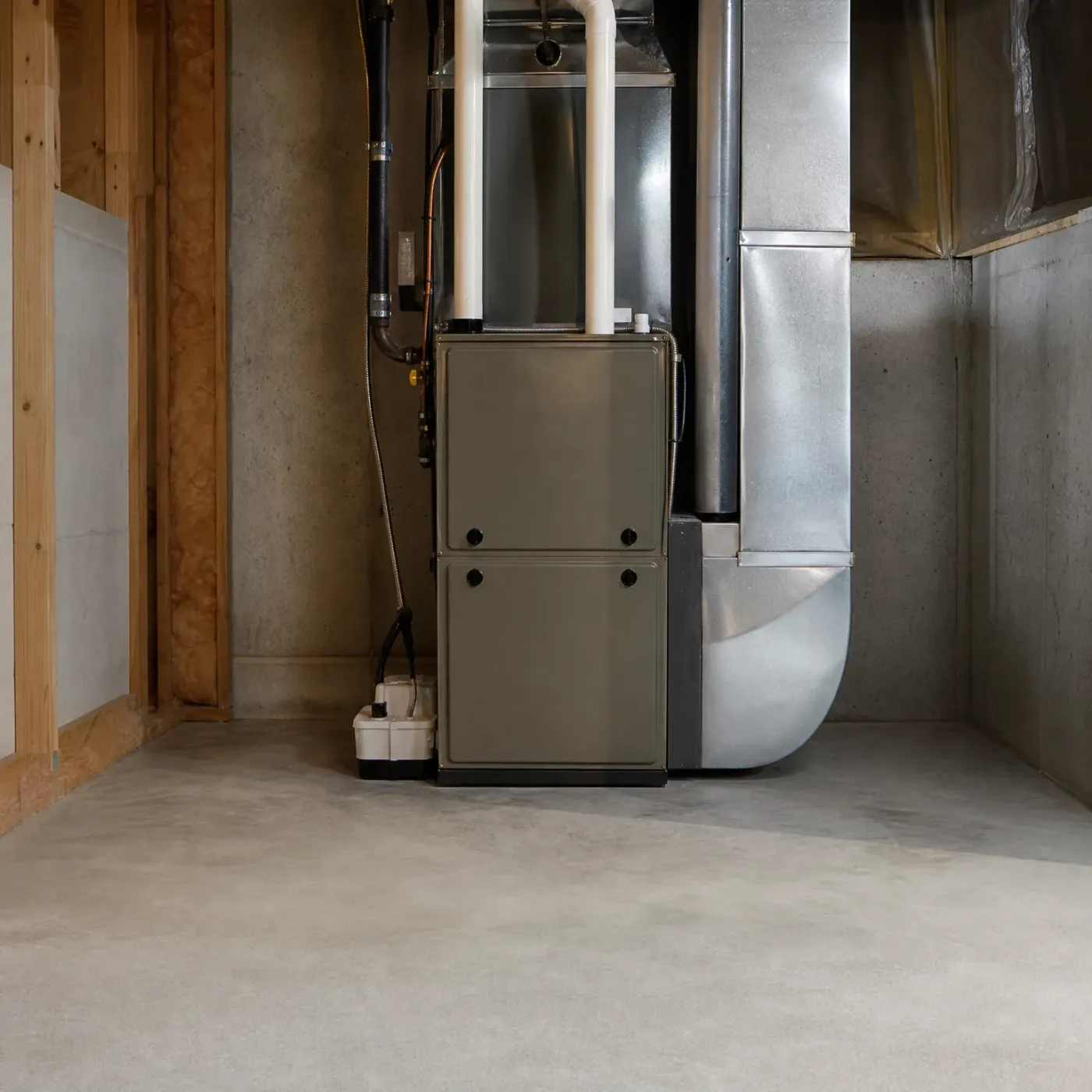
A gray high-efficiency furnace with white PVC vent pipes stands against a concrete basement wall beside sheet-metal ductwork, a small condensate pump on the floor, and exposed wood framing at left.
After you get your furnace repair

The heat exchanger is what keeps the burner flame separate from the air moving through your ducts. Gas burns on one side, your house air passes on the other, and the metal wall between them is what makes that safe. Once that wall cracks, there's nothing stopping combustion gas from riding along with the air your furnace sends into your rooms. That's the part a contractor checks first when carbon monoxide is suspected, because it's the one place where a flame problem turns into an air problem.

The other path is the flue. Exhaust is supposed to travel up and out through the vent pipe, but a bird's nest, debris, or a pipe that's worked loose can block that route without any obvious sign from inside the house. When that happens, exhaust has nowhere to go but back down. A furnace that's short-cycling, or running longer than it used to for the same heat, is often struggling with one of these two problems already. Either way, it's not something to wait out.

Where the carbon monoxide comes from

  • A cracked heat exchanger lets carbon monoxide mix with the air your furnace blows into the house.
  • The exchanger is the metal wall between the burner flame and the air that travels through your ducts.
  • Once it cracks, nothing is stopping combustion gas from entering that airstream on its way to your rooms.
  • A blocked flue or vent pipe forces exhaust back down into the house instead of outside.
  • Birds, debris, or a disconnected vent pipe can block that path without anyone noticing right away.
  • A furnace that short-cycles or runs longer than usual to reach the same temperature may be struggling to burn gas fully.
A woman in a dark gray sweater reclines on a light sofa with eyes closed and a slight smile, under a textured gray blanket with an open book resting on her lap, with a lit table lamp and plant in the background.
A smiling bearded man in a navy crewneck sweater sits at a dinner table with a glass of red wine, plates and glasses in the foreground, in a dimly lit room with a lamp and framed picture behind him.

Winter nights average 36°F statewide

Winter nights here average 36°F, so your furnace isn't running flat out the way one up north would. It still cycles on most nights all winter, and every cycle sends the burner flame and the heat exchanger through another round of heat and cool down. That's when a crack is most likely to show itself.

NOAA nClimDiv 1991-2020 county normals weighted by homes

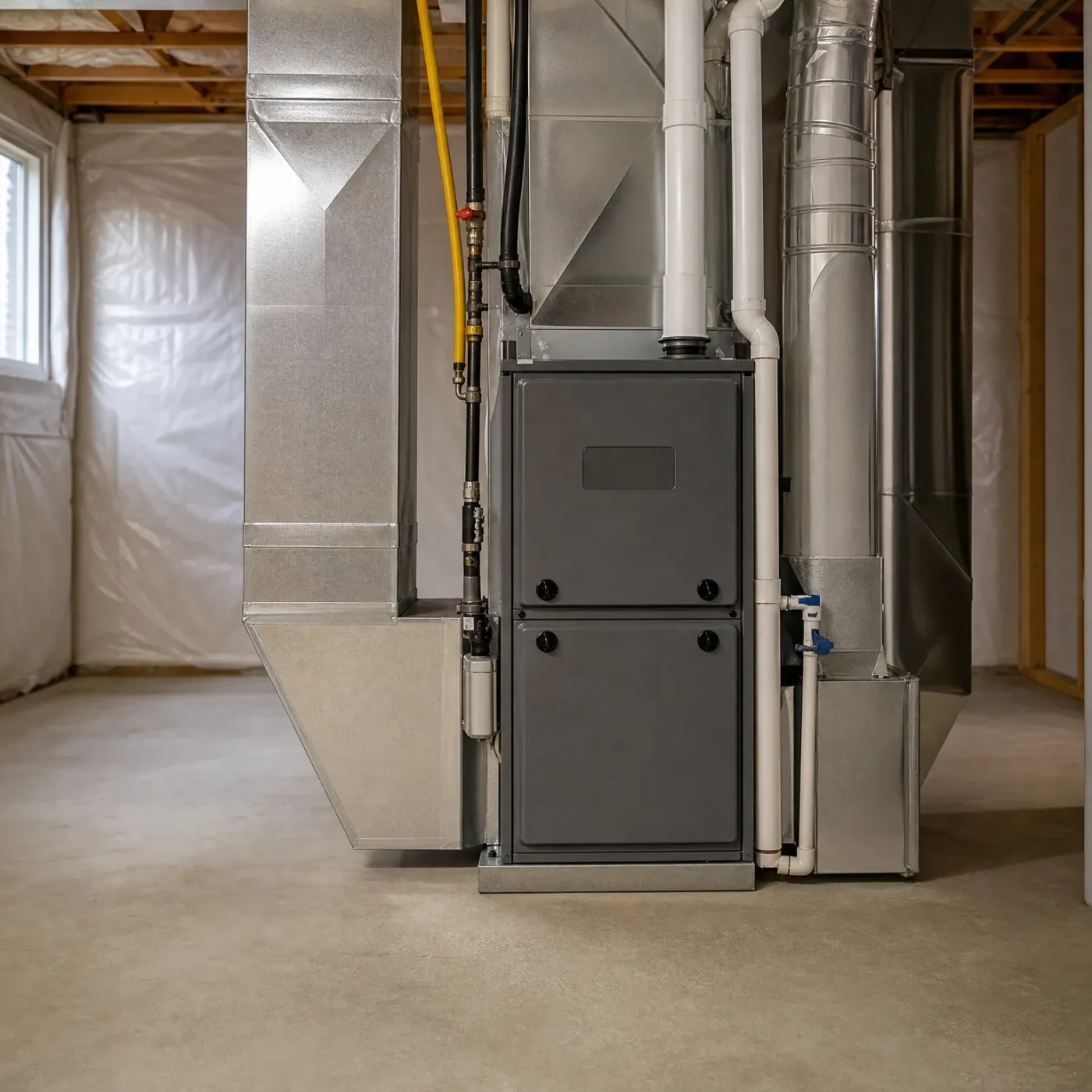
A gray gas furnace stands on a concrete basement floor, connected to sheet-metal ductwork, white PVC vent pipes, and a yellow gas line, with plastic sheeting covering the walls.

What a working furnace looks like

The burner sits connected to its ductwork, the gas line, and the exhaust pipe, all sealed and holding together the way they were installed. A new or well-kept furnace like this burns gas cleanly and vents the exhaust straight outside.
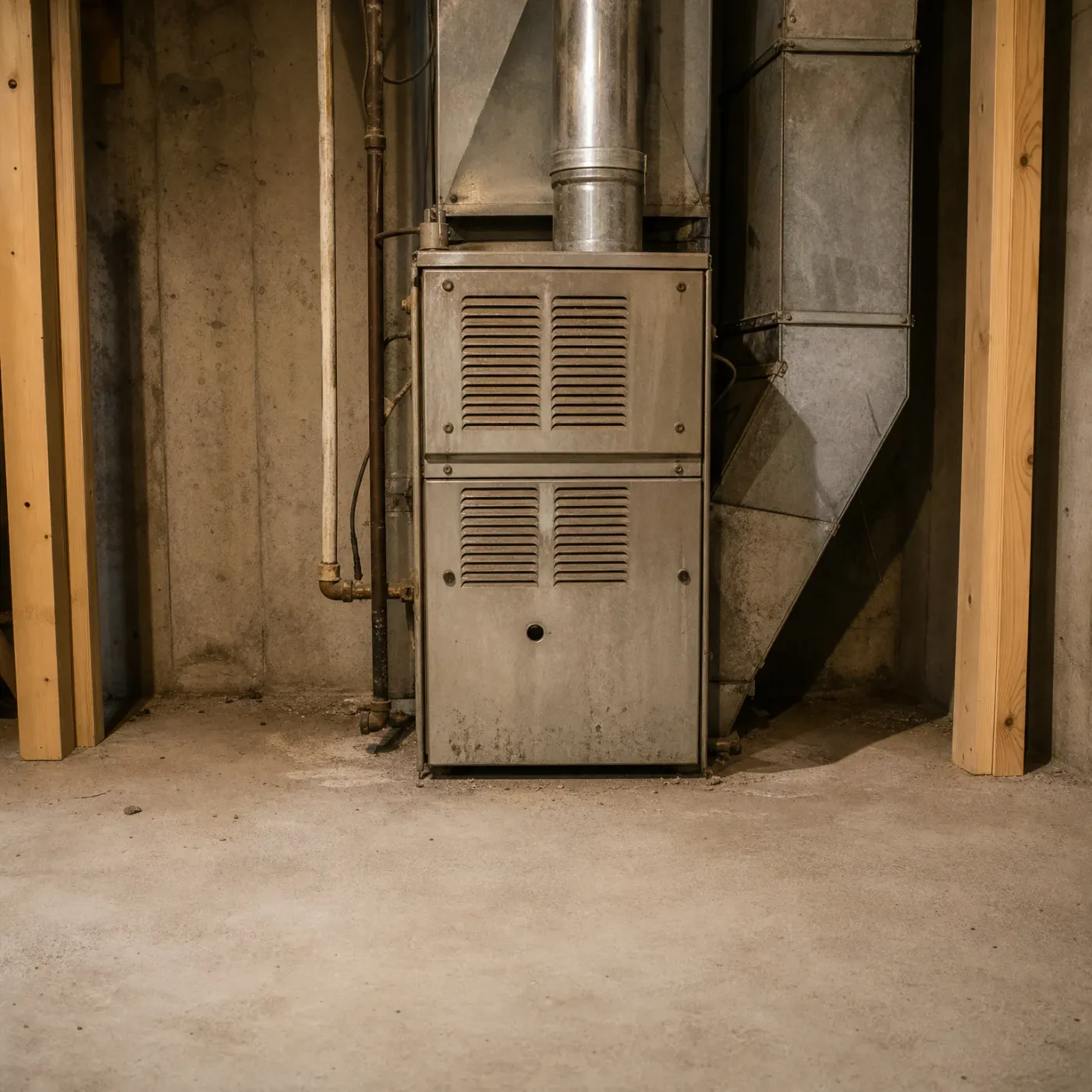
A metal furnace with louvered panels stands against a concrete basement wall, connected to sheet-metal ductwork and a round flue pipe, with wooden framing posts and a pipe nearby.

What an aging furnace looks like

Dust has settled over the cabinet and the pipes show their age. An older furnace like this has had more years for the heat exchanger to warp and crack, and more years for connections to loosen, which is when carbon monoxide starts finding its way into the air instead of the vent.

A woman in a cream cardigan and jeans stands with one hand raised facing an open front door of a gray horizontal-siding house, with a black lantern wall light, a potted shrub with yellow flowers, and a stone-faced porch column.

If you've seen any of these signs, don't wait on it

A yellow flame, soot on the cabinet, rust near the vent, a headache that eases once you're outside. Any one of these is a furnace telling you it isn't venting the way it should. In a gas furnace that's running in an electric-heat state, that's not a small thing to let sit through another cold night.

Once you send the request, you're done chasing it. A contractor who handles this gets in touch with you directly, and from there it's his job to find what's wrong and fix it, not yours to keep wondering.

A living room corner with a light beige sofa holding a textured taupe cushion, a large ceramic vase of olive branches by a window, a framed neutral artwork on the wall, and a dark bowl with stacked books in the foreground.
A lit ceramic table lamp with a linen shade sits on a round wooden side table with a small vase of greenery and a dark shallow bowl, beside a beige upholstered sofa with a cushion and knit throw, below a framed artwork on a pale wall.
Corner of a beige linen sofa with a large woven cushion and a fringed knit throw, beside a potted leafy tree in a woven basket against a neutral wall.
Sunlit interior corner with a wood-framed armchair with beige cushions and a striped pillow, a leafy plant in a tall ceramic pot, a window with wood sill showing green foliage outside, and dark wood flooring.
A lit black path light beside a stone walkway leading to a dark front door of a white clapboard house, with shrubs and flowering plants in the bed at dusk.
A covered porch at dusk with a wooden front door, a lit lantern wall sconce on gray horizontal siding, a black rocking chair with a cream throw, a potted white flowering plant, a coir doormat, and a window showing a lit interior lamp.

Get your furnace to the right pro

Send the request today and let a furnace pro reach out to you.

Get a furnace pro

You're not committing to anything by asking.