Tell us about the job
Takes about a minute. No obligation.
A furnace sized for mild conditions will be undersized for Clarke County. 190 severe weather events were recorded in Clarke County, Alabama between 2015 and 2024. At that rate, severe weather is part of the normal operating environment for every system here, and a contractor who ignores it will quote the wrong equipment. Sizing for this area means accounting for repeated thermal stress across the life of the unit, and a spec pulled from a manufacturer's generic load table does not do that. The contractor has to work from what this county actually asks of a furnace, not from what an average climate does.
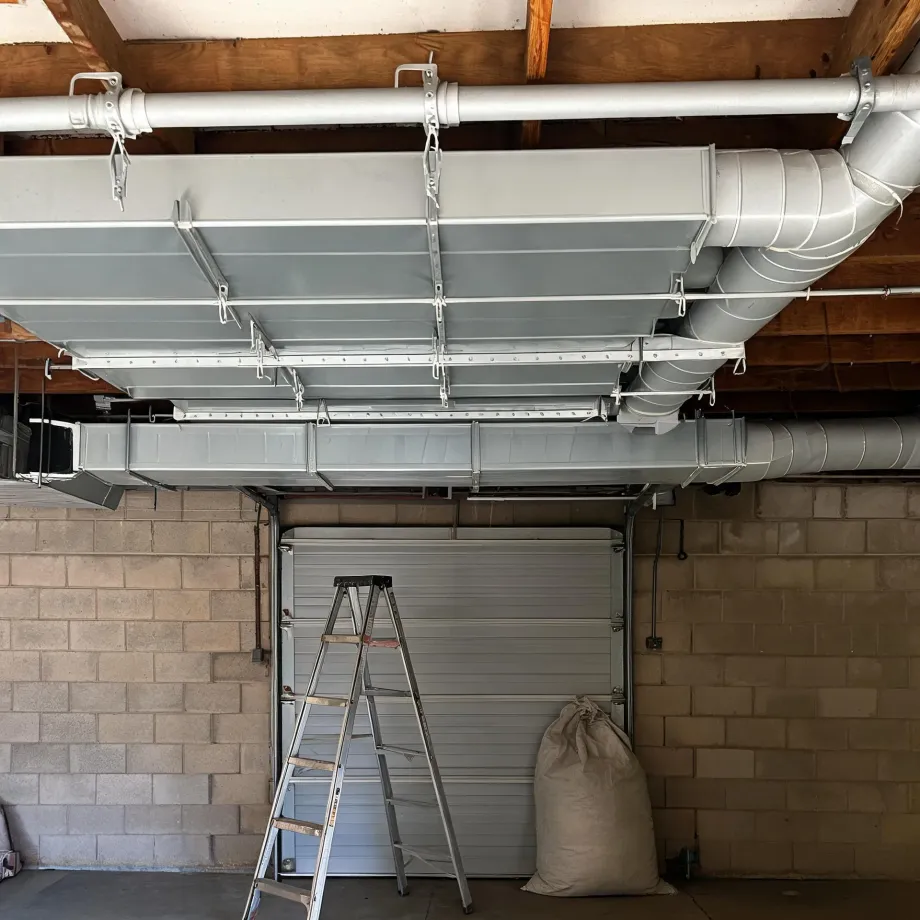
Ductwork laid out for equipment of an earlier generation does not always carry what a new furnace asks of it, and in Clarke County the gap between the two is where an installation job can change scope quickly. Half the homes in Clarke County, Alabama were built in 1981 or earlier (2020-2024 ACS 5-year). That puts a contractor checking trunk lines and branch runs before a unit is ever ordered, because what is already in the walls determines whether the installation is straightforward or whether the duct system has to be reworked alongside it. Electrical service gets the same look, since a panel sized for older draw may not match what a new furnace requires.
What Gets Installed With a New Furnace
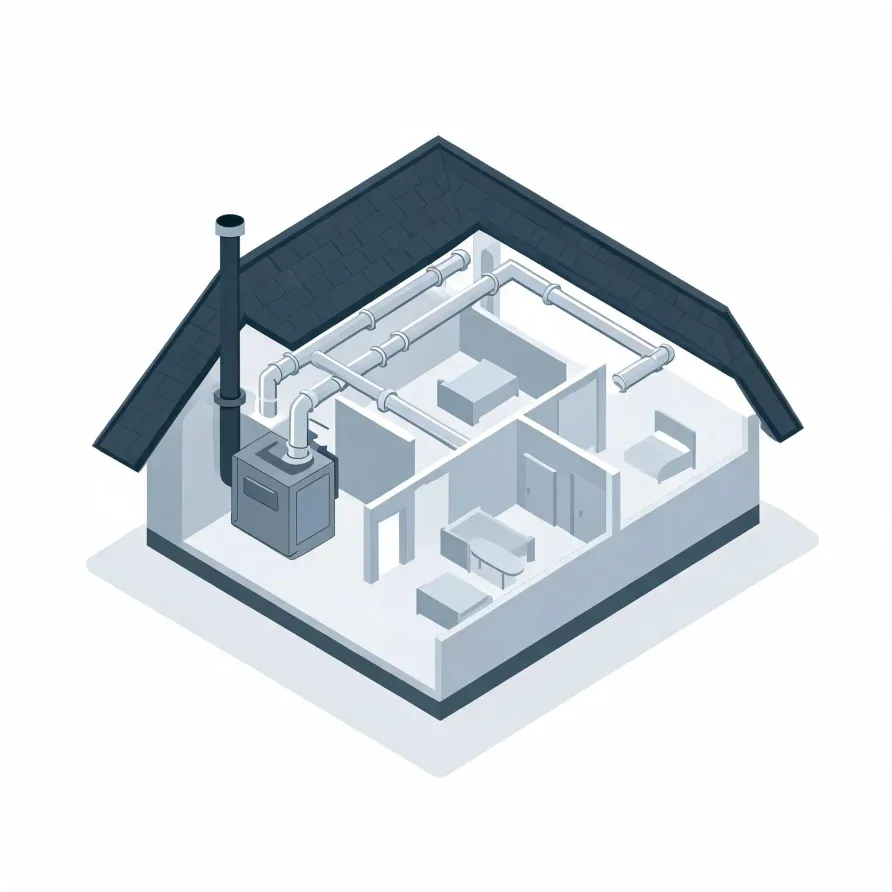
The furnace itself sits inside the house, most often in a basement, utility closet, or dedicated mechanical room. It is the unit that generates heat and pushes conditioned air into the living spaces. A flue or vent pipe runs from the furnace to an exterior wall or through the roof, carrying combustion gases out of the home.
The air handler components built into or paired with the furnace work alongside a thermostat mounted on an interior wall, which is the control point a homeowner touches to set temperatures. A contractor also installs or connects the filter housing at the return-air intake, where incoming air passes through before it reaches the heat exchanger.
The drawing shows a typical layout, and a licensed contractor determines exactly which components and configurations apply to your house.
Get matched in Clarke CountyClarke County, by the numbers
190 severe weather events were recorded in Clarke County, Alabama between 2015 and 2024.
NOAA National Centers for Environmental Information, Storm Events Database, bulk CSV export, events 2015-01-01 through 2024-12-31.Half the homes in Clarke County, Alabama were built in 1981 or earlier (2020-2024 ACS 5-year).
U.S. Census Bureau, 2020-2024 American Community Survey 5-Year EstimatesClarke County, Alabama holds 11,749 housing units (2020-2024 ACS 5-year).
U.S. Census Bureau, 2020-2024 American Community Survey 5-Year EstimatesOwners occupy 70.8% of the occupied homes in Clarke County, Alabama (2020-2024 ACS 5-year).
U.S. Census Bureau, 2020-2024 American Community Survey 5-Year EstimatesFurnace Installation Rules & Standards for Clarke County, Alabama5 codes, laws & standards
What the Installation Actually Looks Like
Non-weatherized gas furnaces manufactured on or after November 19, 2015 must reach 80.0 percent AFUE.
Non-weatherized oil-fired furnaces manufactured on or after November 19, 2015 must reach 83.0 percent AFUE.
Mobile home gas furnaces manufactured on or after November 19, 2015 must reach 80.0 percent AFUE.
Non-weatherized gas furnaces manufactured on or after December 18, 2028 must reach 95.0 percent AFUE, up from the 80.0 percent minimum that applies to units manufactured before that date.
Licensing Rules for HVAC Work in Clarke County, Alabama
Alabama requires state certification to do heating, air conditioning and refrigeration contracting: nobody may advertise, bid, pull permits or do the work unless the person in responsible charge is a certified contractor.
Severe Weather Events in Clarke County
Weather places real demands on heating equipment, and those demands are shaped by local conditions. A furnace sized and installed for what Clarke County actually sees will hold up better than one spec'd to a generic standard.
190 severe weather events, 2015–2024. Source: NOAA National Centers for Environmental Information, Storm Events Database.