Tell us about the job
Takes about a minute. No obligation.
A contractor diagnosing a furnace repair in Bibb County has to work out why the system failed before anything else can be priced or ordered. 46 severe weather events were recorded in Bibb County, Alabama between 2015 and 2024. At that rate, severe weather shapes the background but does not wear a furnace down the way years of neglected filters, cracked heat exchangers, or an undersized original install do. A system that breaks here broke mostly on its own terms. The contractor checks ignition components, heat exchanger condition, and service records first.
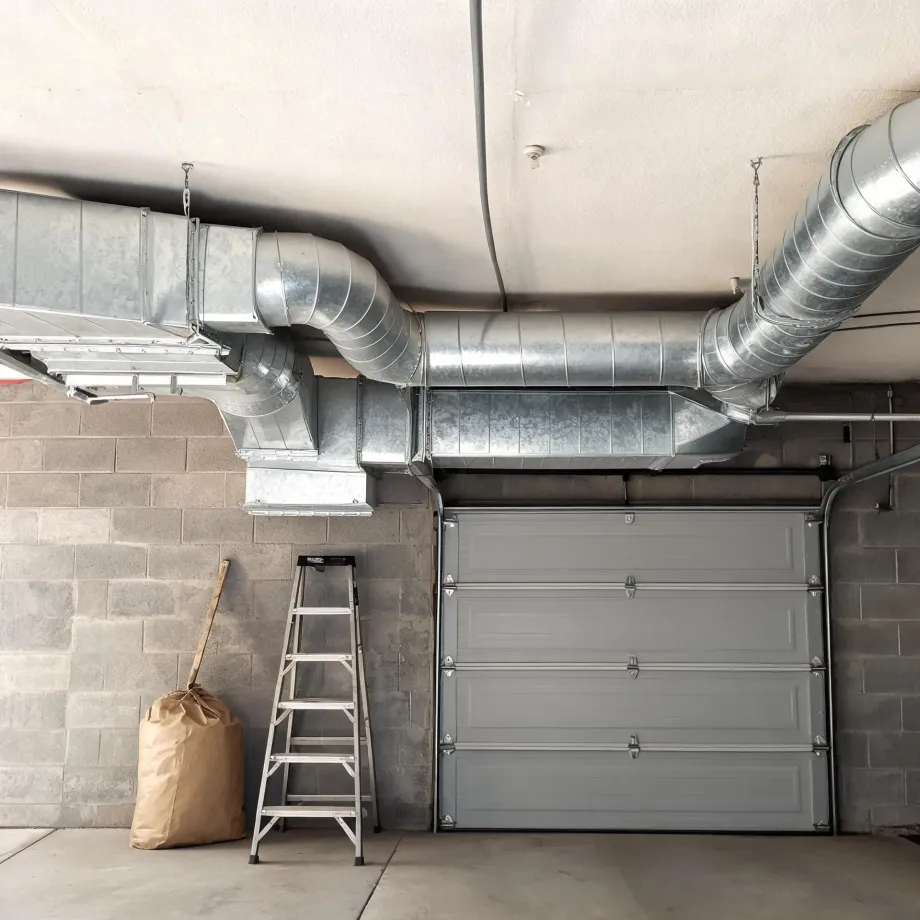
Furnaces running in older houses here were installed well after the houses themselves were built, and the gap between construction and equipment is where the repair job gets complicated. Half the homes in Bibb County, Alabama were built in 1990 or earlier (2020-2024 ACS 5-year). A system that went in years after the original build tends to reflect whatever was available and affordable at the time of installation, which means a contractor opening the unit finds a mix of component generations. The part that failed may still be manufactured, or it may require a search. That question, once the system is open, is what sets the repair scope.
The Parts of a Furnace a Contractor Checks First
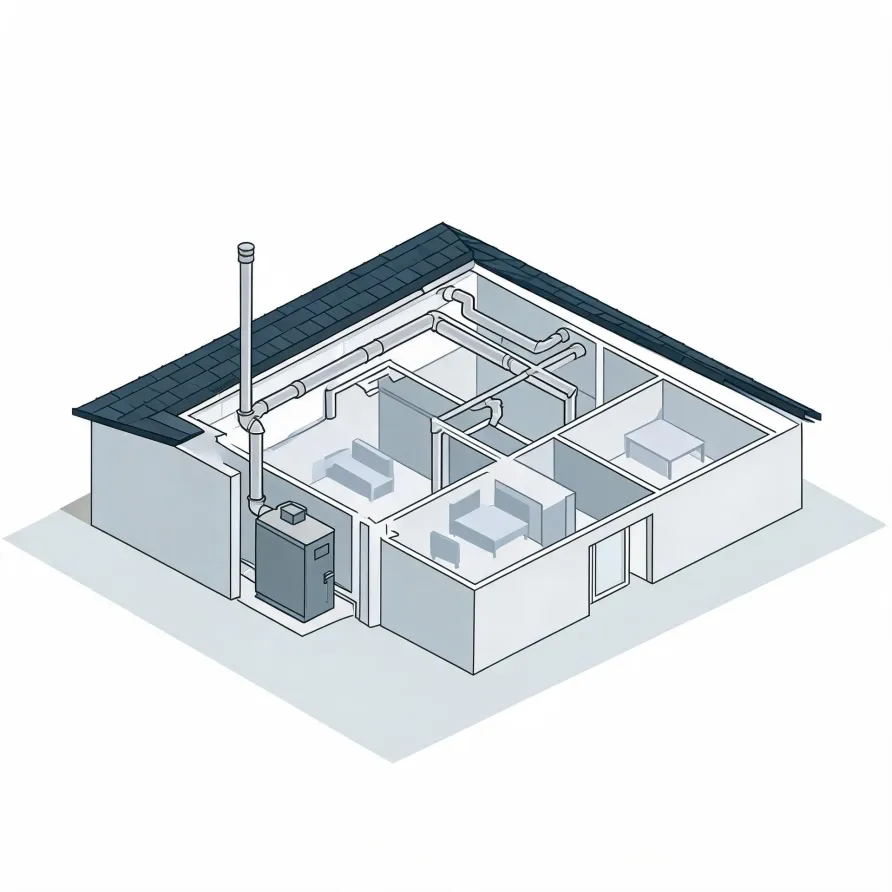
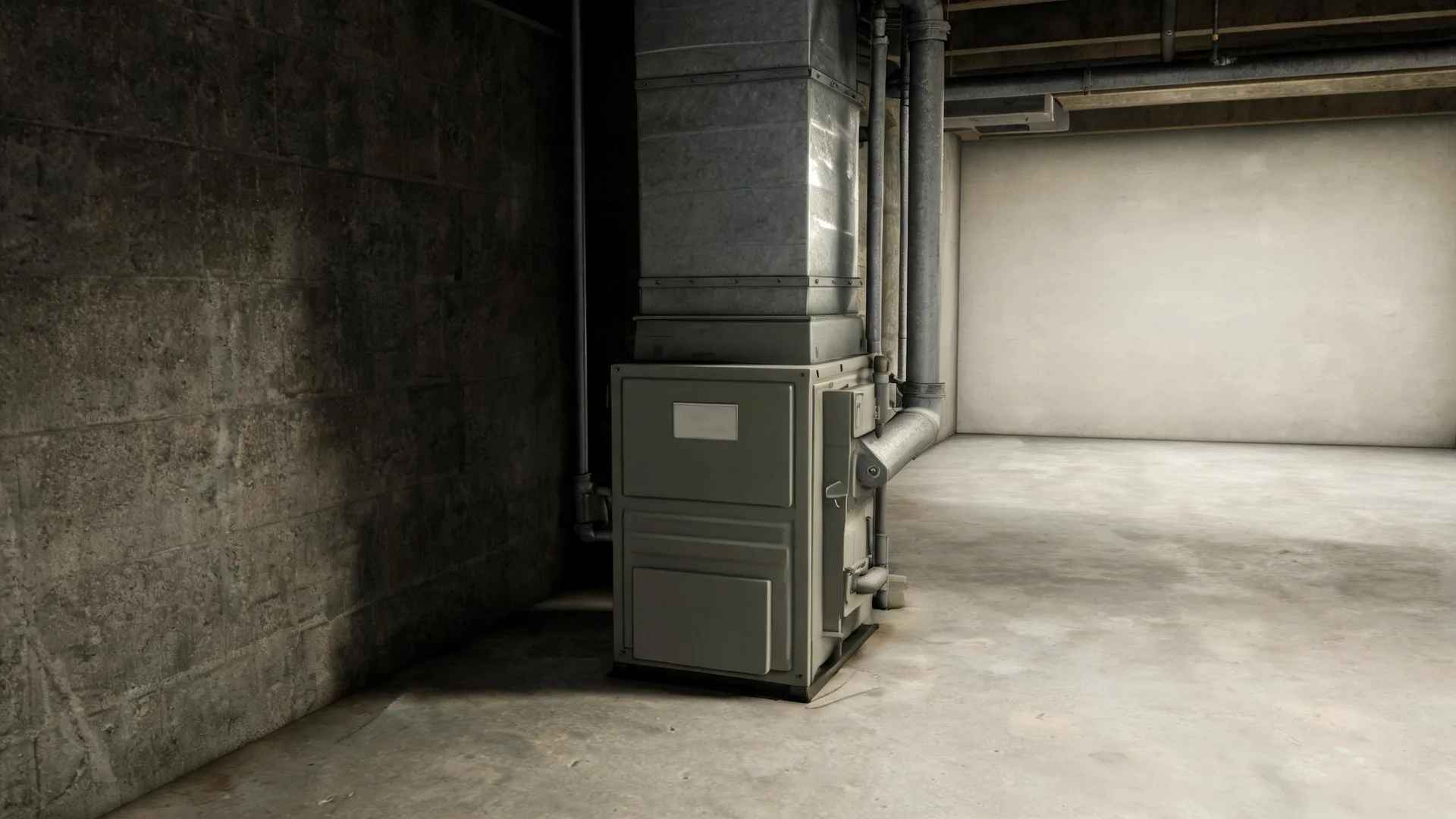
The furnace itself sits in the basement, utility closet, or attic and is the piece a contractor goes to first. Inside it, the heat exchanger is the part most worth understanding: a crack or a failure there is what stops a furnace cold and what a contractor will examine closely before anything else. The burners, which fire inside that exchanger, are another early stop.
The blower motor sits at the base of the furnace cabinet and pushes conditioned air out into the home. Alongside it, the inducer motor, the ignitor, the flame sensor, and the control board each play a role in starting and sustaining a heating cycle, and any one of them can be the reason the system is not behaving.
The drawing shows the general layout of a furnace system, and a licensed contractor determines what applies to the specific equipment and configuration in your home.
Get matched in Bibb CountyBibb County, by the numbers
46 severe weather events were recorded in Bibb County, Alabama between 2015 and 2024.
NOAA National Centers for Environmental Information, Storm Events Database, bulk CSV export, events 2015-01-01 through 2024-12-31.Half the homes in Bibb County, Alabama were built in 1990 or earlier (2020-2024 ACS 5-year).
U.S. Census Bureau, 2020-2024 American Community Survey 5-Year EstimatesBibb County, Alabama holds 9,133 housing units (2020-2024 ACS 5-year).
U.S. Census Bureau, 2020-2024 American Community Survey 5-Year EstimatesOwners occupy 79.2% of the occupied homes in Bibb County, Alabama (2020-2024 ACS 5-year).
U.S. Census Bureau, 2020-2024 American Community Survey 5-Year EstimatesCodes & Standards Governing Furnace Repair in Bibb County, Alabama5 sourced rules and standards
What Happens When the Contractor Comes Out
Non-weatherized gas furnaces manufactured on or after November 19, 2015 must reach 80.0 percent AFUE.
Non-weatherized oil-fired furnaces manufactured on or after November 19, 2015 must reach 83.0 percent AFUE.
Mobile home gas furnaces manufactured on or after November 19, 2015 must reach 80.0 percent AFUE.
Non-weatherized gas furnaces manufactured on or after December 18, 2028 must reach 95.0 percent AFUE, up from the 80.0 percent minimum that applies to units manufactured before that date.
Licensing and Legal Requirements in Bibb County, Alabama
Alabama requires state certification to do heating, air conditioning and refrigeration contracting: nobody may advertise, bid, pull permits or do the work unless the person in responsible charge is a certified contractor.
Severe Weather Events in Bibb County
Extreme weather puts real strain on furnace systems, forcing them to run harder and longer than ordinary conditions demand. How much of that pressure your equipment faces depends on where it operates, and Bibb County has its own record.
46 severe weather events, 2015–2024. Source: NOAA National Centers for Environmental Information, Storm Events Database.