Tell us about the job
Takes about a minute. No obligation.
A contractor diagnosing a failed furnace in Conecuh County has to decide what actually drove the failure before pricing the repair. 56 severe weather events were recorded in Conecuh County, Alabama between 2015 and 2024. At that rate, severe weather is something equipment here encounters now and then, not a sustained load that grinds components down season after season. That shifts where a contractor looks first: heat exchangers crack from age and short-cycling, ignitors fail from deferred maintenance, and blower motors wear out on their own schedule. The weather record is real, but it does not carry the weight of the repair bill here.
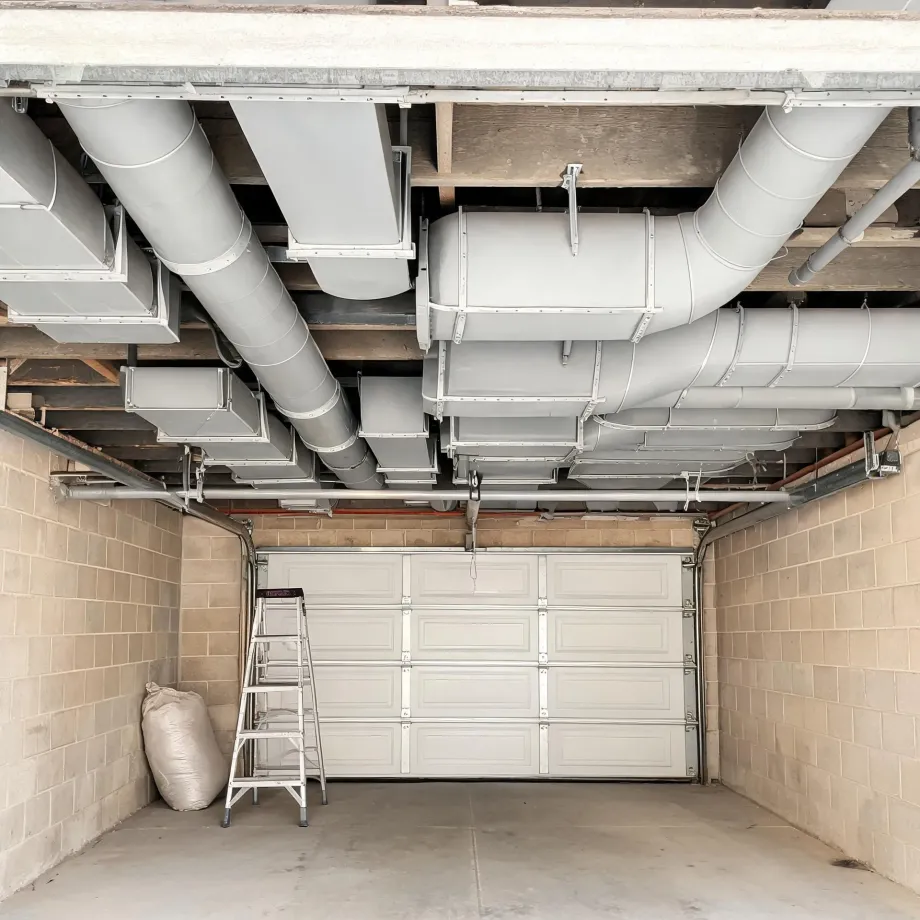
Furnaces in housing built for an earlier era of home construction can outlive the parts supply that supports them. Half the homes in Conecuh County, Alabama were built in 1982 or earlier (2020-2024 ACS 5-year). A contractor who opens a furnace here and identifies a failed heat exchanger, a worn inducer motor, or a cracked igniter then has to establish whether that component is still manufactured and what the lead time looks like if it is not. That sourcing question shapes the repair scope as much as the diagnosis does, and a quote written before the unit is open does not account for it.
The Parts of a Furnace a Contractor Checks First
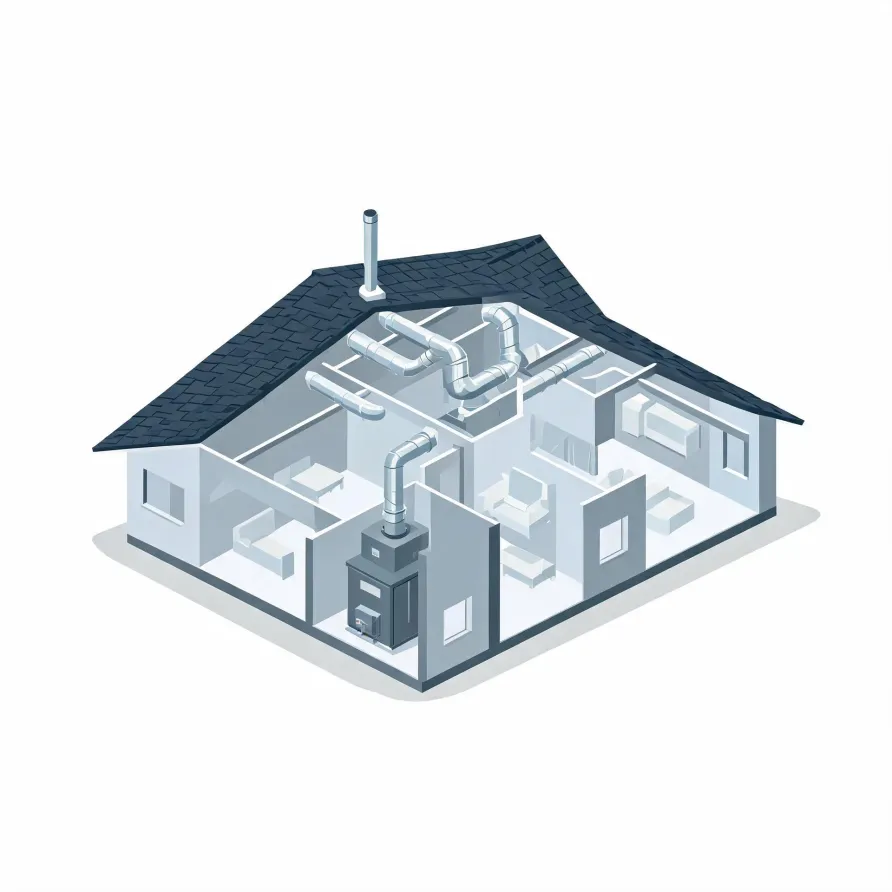
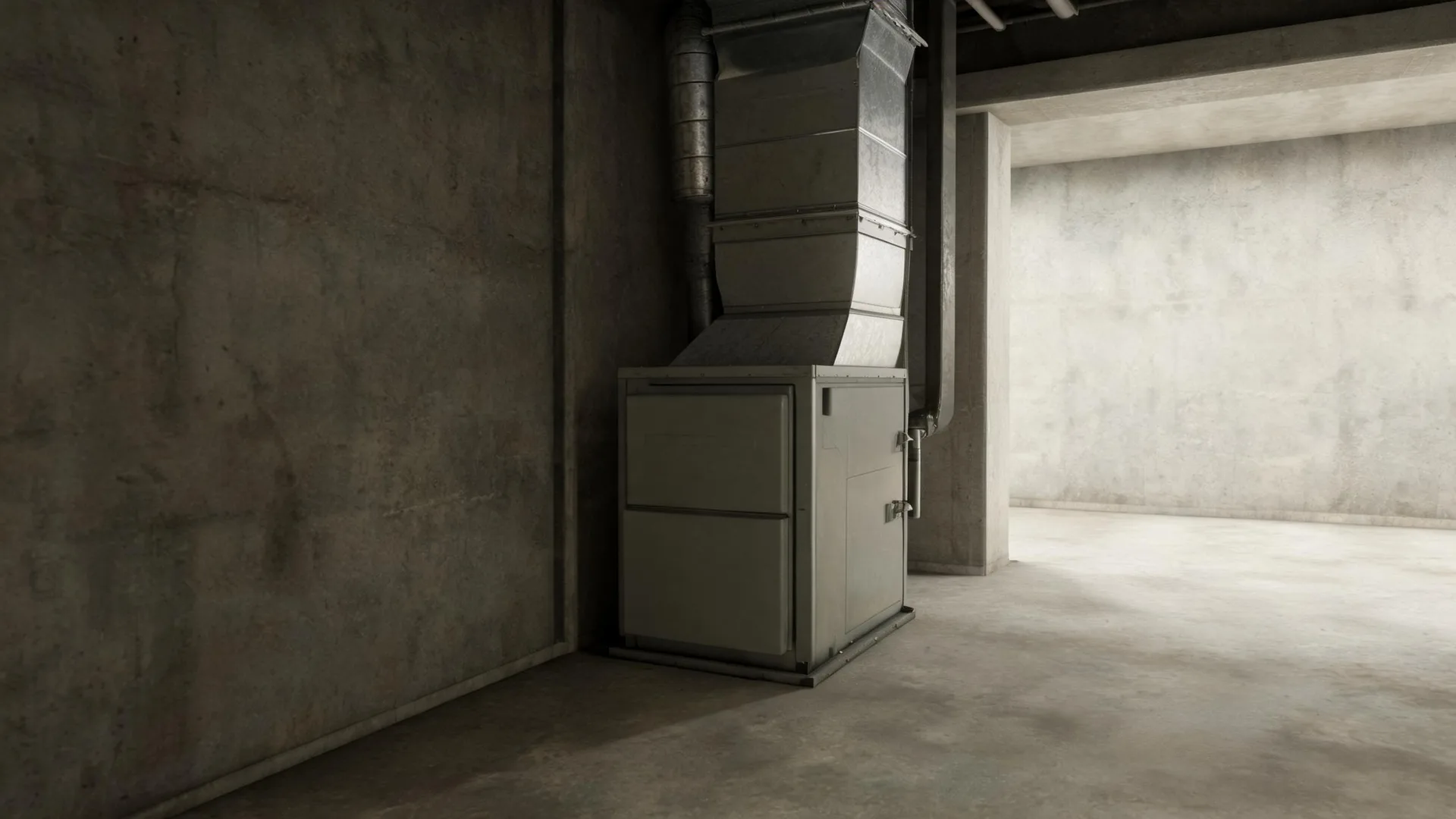
The furnace itself sits in a utility space, basement, or closet and is the piece a contractor goes to first. Inside it, the heat exchanger, burners, and blower motor each have a distinct job, and a fault in any one of them shows up differently. A cracked heat exchanger, a dirty burner, or a failing blower motor will each produce its own set of symptoms.
The flue pipe runs from the furnace to an exterior vent and carries combustion gases out of the house. Alongside it, the thermostat on a main living-area wall tells the furnace when to fire, and the limit switch inside the unit shuts things down if temperatures climb past a safe point. Both are common starting points when a furnace short-cycles or refuses to run.
The drawing shows a typical furnace layout, and a licensed contractor determines which components apply to your specific setup.
Get matched in Conecuh CountyConecuh County by the numbers
56 severe weather events were recorded in Conecuh County, Alabama between 2015 and 2024.
NOAA National Centers for Environmental Information, Storm Events Database, bulk CSV export, events 2015-01-01 through 2024-12-31.Half the homes in Conecuh County, Alabama were built in 1982 or earlier (2020-2024 ACS 5-year).
U.S. Census Bureau, 2020-2024 American Community Survey 5-Year EstimatesConecuh County, Alabama holds 6,444 housing units (2020-2024 ACS 5-year).
U.S. Census Bureau, 2020-2024 American Community Survey 5-Year EstimatesOwners occupy 74.3% of the occupied homes in Conecuh County, Alabama (2020-2024 ACS 5-year).
U.S. Census Bureau, 2020-2024 American Community Survey 5-Year EstimatesCodes & Standards Governing Furnace Repair in Conecuh County, Alabama5 sourced rules and standards
What Furnace Repair Looks Like in Conecuh County
Non-weatherized gas furnaces manufactured on or after November 19, 2015 must reach 80.0 percent AFUE.
Non-weatherized oil-fired furnaces manufactured on or after November 19, 2015 must reach 83.0 percent AFUE.
Mobile home gas furnaces manufactured on or after November 19, 2015 must reach 80.0 percent AFUE.
Non-weatherized gas furnaces manufactured on or after December 18, 2028 must reach 95.0 percent AFUE, up from the 80.0 percent minimum that applies to units manufactured before that date.
Licensing Rules for HVAC Work in Conecuh County, Alabama
Alabama requires state certification to do heating, air conditioning and refrigeration contracting: nobody may advertise, bid, pull permits or do the work unless the person in responsible charge is a certified contractor.
Severe Weather Events in Conecuh County
Weather puts direct stress on furnace components, driving the repair work that keeps a system running through hard seasons. How much stress depends on what this area actually sees, which is why local weather history matters when you are thinking about equipment reliability.
56 severe weather events, 2015–2024. Source: NOAA National Centers for Environmental Information, Storm Events Database.