





Furnace smells like burning in Birmingham, AL

Get the furnace repair search off your mind today.

Hand off my repair

Why does my furnace smell like it's burning?

A burning smell from the furnace is unsettling, especially the first time it kicks on for the season. You want to know if this is normal or if something is actually wrong before you run it again. Most of the year your furnace in Jefferson County sits idle, with mild winters and only a handful of cold stretches calling for heat, so that smell often shows up the moment you finally need it.

A light burning smell the first time you turn it on is usually dust burning off the heat exchanger. A strong or lasting smell is not.

Dust settles on the heat exchanger and burners during the months your furnace sits unused, and the first run of the season burns it off within an hour or so. That smell should fade on its own and not come back. If it doesn't fade, or if it smells sharp, like burning plastic or electrical wiring, that points to something else: a motor running hot, wiring with worn insulation, or a crack in the heat exchanger itself. Any of those needs a licensed technician to look at it before you run the furnace again. Given how little your furnace runs here, a problem like this can sit unnoticed for a while since the system isn't on enough to make it obvious.

  1. Dust burns off the heat exchanger when the furnace first fires.

  2. A failing component overheats and gives off a sharp, acrid odor.

  3. Airflow problems cause parts inside the furnace to run too hot.

  4. Smoke or odor travels through the ducts into every room.

A gray-haired man in a dark sweater sits on a light gray sofa in a living room, looking toward a sunlit window with trees outside.
A gray-haired man in a dark blue sweater sits on a light gray sofa in a sunlit living room, looking off to the side, with a potted plant, shelving unit, and large glass doors behind him.
A bearded man with graying hair in a dark green sweater sits on a sofa in a living room, looking off to the side, with a sliding glass door and a dim kitchen doorway behind him.
A gray-haired man in a dark knit sweater sits on a light gray sofa in a living room, looking toward a sunlit window, with houseplants, a lamp, and framed art in the background.

Most of the time this sorts itself out. The furnace sat unused since spring, dust settled on the heat exchanger, and the first hour of heat burns it off. By the second cycle it should be gone. If it isn't, or if it smells sharp or like plastic instead of dust, something inside is overheating. That's usually a motor working harder than it should or wiring breaking down, and neither gets better by waiting. A dirty filter or a blocked vent can push things that direction too, forcing parts of the furnace to run hotter than they're built for. Once that smell is in the ductwork, it isn't staying near the furnace. It moves into bedrooms and living rooms the same way the heat does, so whoever is home is breathing it, not just whoever walks by the unit. Power costs enough in Jefferson County that a furnace straining against a bad part or short-cycling all night isn't cheap to ignore. Turning it off and getting someone to look costs less than waiting for the part to fail outright on a cold night.

What That Smell Means For Your House

  • A dusty burning smell in the first hour of use should clear on its own and not return the next time the furnace runs.
  • An acrid or plastic-like smell that lingers past the first cycle usually means a motor or wiring issue that gets worse if you keep running the furnace.
  • Shutting the furnace off and calling for repair now costs you less than waiting until a part fails outright in the middle of a cold snap.
  • A clogged filter or blocked vent forces parts of the furnace to run hotter than they should, and that heat is what you're smelling.
  • If the smell reaches bedrooms and living areas through the ductwork, everyone in the house is breathing whatever is burning, not just the room with the furnace.
  • Power in Jefferson County isn't cheap, and a furnace overheating or short-cycling from a bad part runs up your bill while it still isn't heating right.
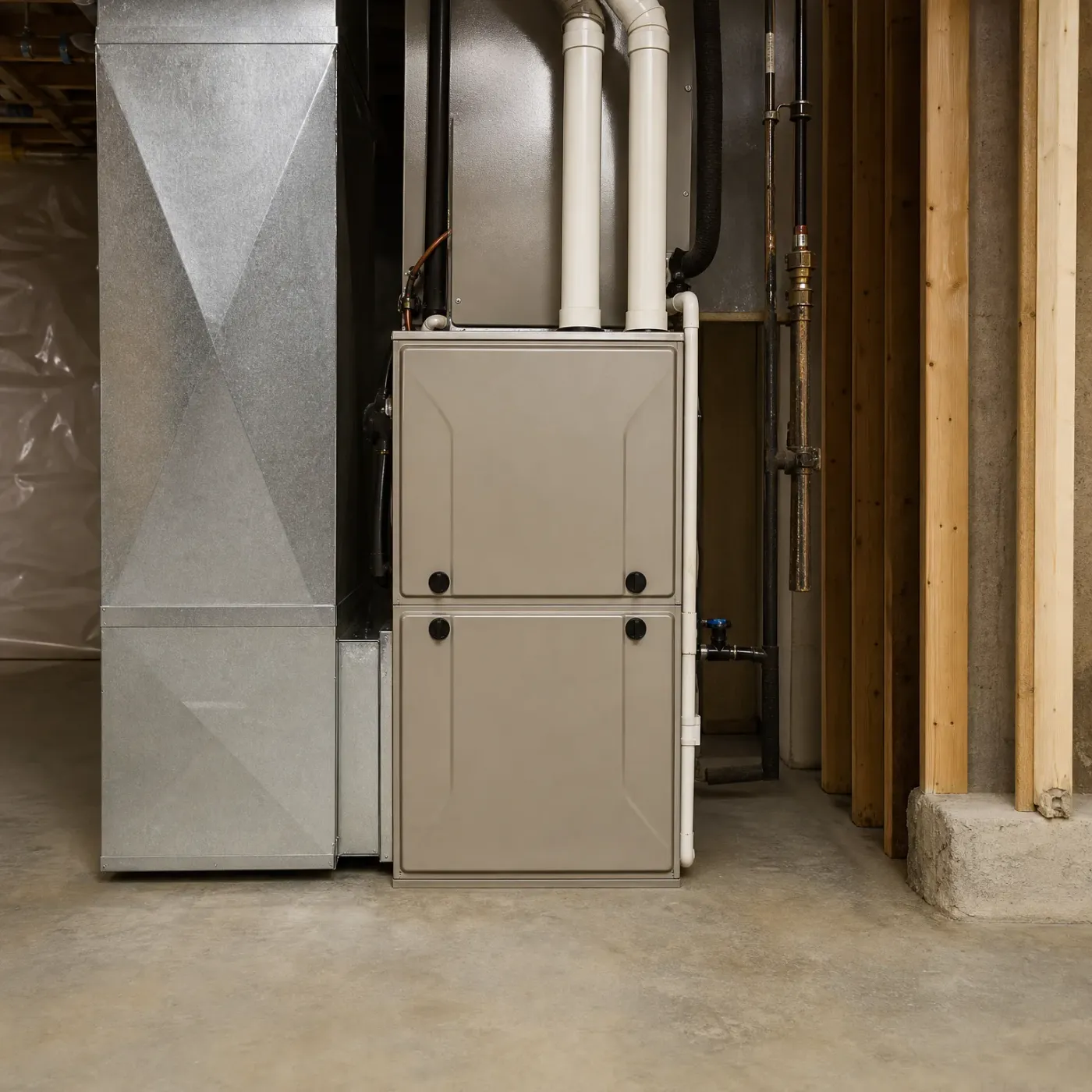
A beige high-efficiency furnace with white PVC vent pipes stands beside galvanized sheet-metal ductwork in a basement with a concrete floor, exposed wood studs, and metal piping along the wall.
A furnace running clean has no smell at all once that first hour of dust burn-off has passed.
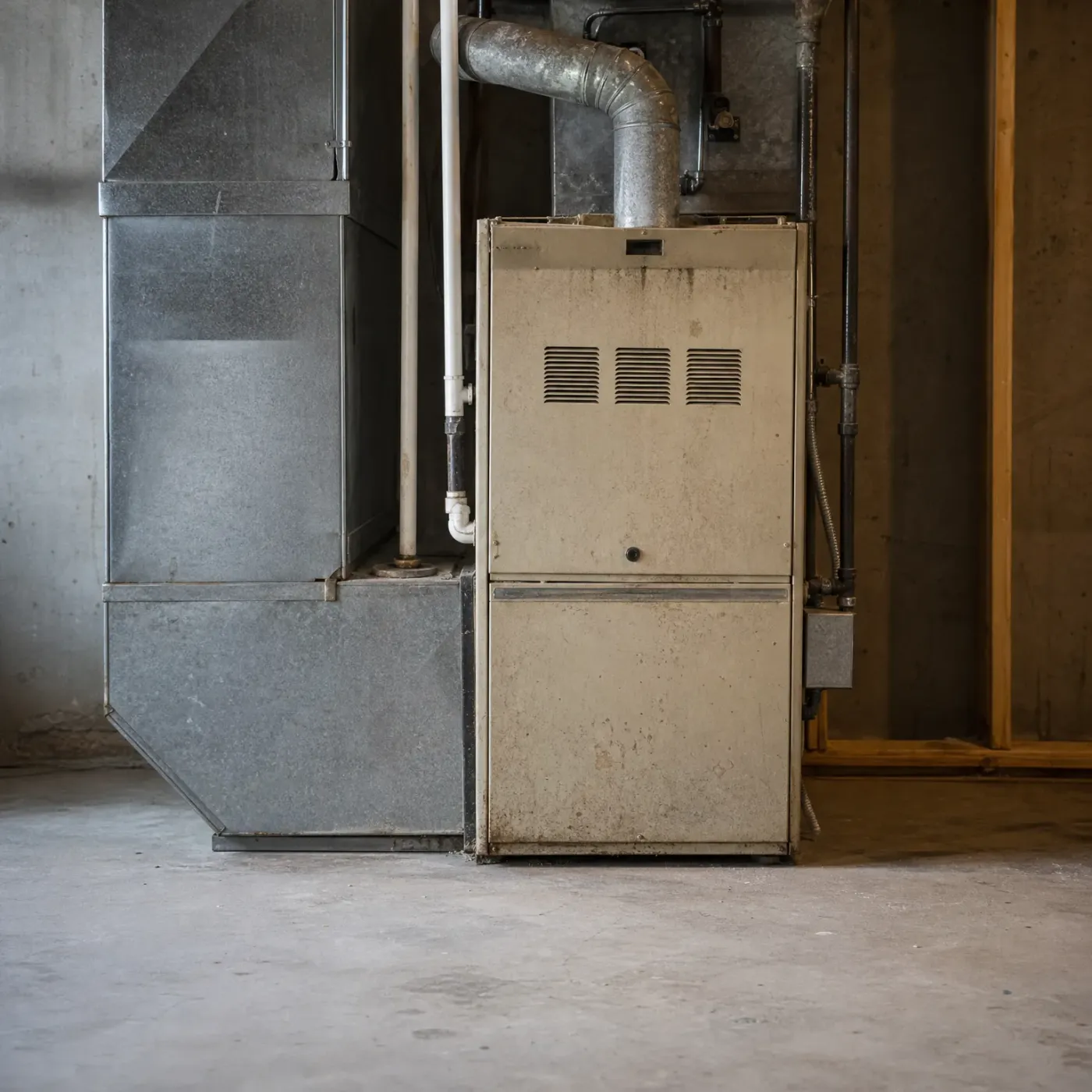
An older beige furnace with a louvered vent panel stands on a concrete basement floor beside galvanized sheet-metal ductwork, a metal flue pipe and vertical pipes along a concrete wall.
This cabinet has run long enough to need a coat of fresh paint, and that alone means nothing is wrong.
A dark interior hallway with a dim window at the end, a wooden floor, a stair railing on the right, and a bench or rug in the foreground.

You wake up a little after 2 for no reason you can name. The house is quiet. No air moving through the vents, no hum from downstairs. You walk the hallway toward the thermostat and the floor is cold under your feet in a way it hasn't been all week. Outside the window the glass has frosted at the edges, and somewhere below the furnace has shut itself off. You stand there a second, waiting to hear it kick back on. It doesn't. Jefferson County winters don't usually ask much of a furnace, which is maybe why you never thought about what happens when it stops answering back.

Hand off the furnace problem

A furnace here only runs hard for a few weeks most winters, so a smell that lingers past the first hour isn't something Jefferson County mild weather will burn off on its own. It means a part is overheating now, and it won't fix itself before the next cold snap sends the blower on for hours at a stretch. Shutting it down and getting a local tech to look at it before you run it again is the safer call. Someone who services furnaces around Birmingham all winter has seen this smell mean a cracked heat exchanger, a failing blower motor or wiring that's chafed against the cabinet, and knows which one it is faster by being the one who gets the call instead of guessing over the phone. Send the request once and it goes to that one contractor, not a handful competing for your number, so you can get back to a warm house without burning smell in it.

Why that first burn-off happens

A new furnace, or one that's sat unused since spring, collects a layer of dust on the heat exchanger and burners over the warm months. When it fires up for the first time, that dust heats and burns off, and you get a smell somewhere between hot metal and burning dust. It's the furnace doing exactly what it's built to do after sitting idle. Jefferson County winters are mild enough that a furnace might not run again for days, so this can happen more than once in a season, not just in November.
Why a lingering smell is different

Dust burns off in minutes and then it's gone. A smell that's still there an hour in, or one that comes back the next time the furnace runs, isn't dust anymore. That pattern points to something inside working harder than it should, a motor bearing, a wire insulation, a part rubbing where it shouldn't. Heat builds in that one spot every cycle instead of clearing out. Left alone, the part that's overheating tends to wear faster, and what started as a smell can end with the furnace not running at all.

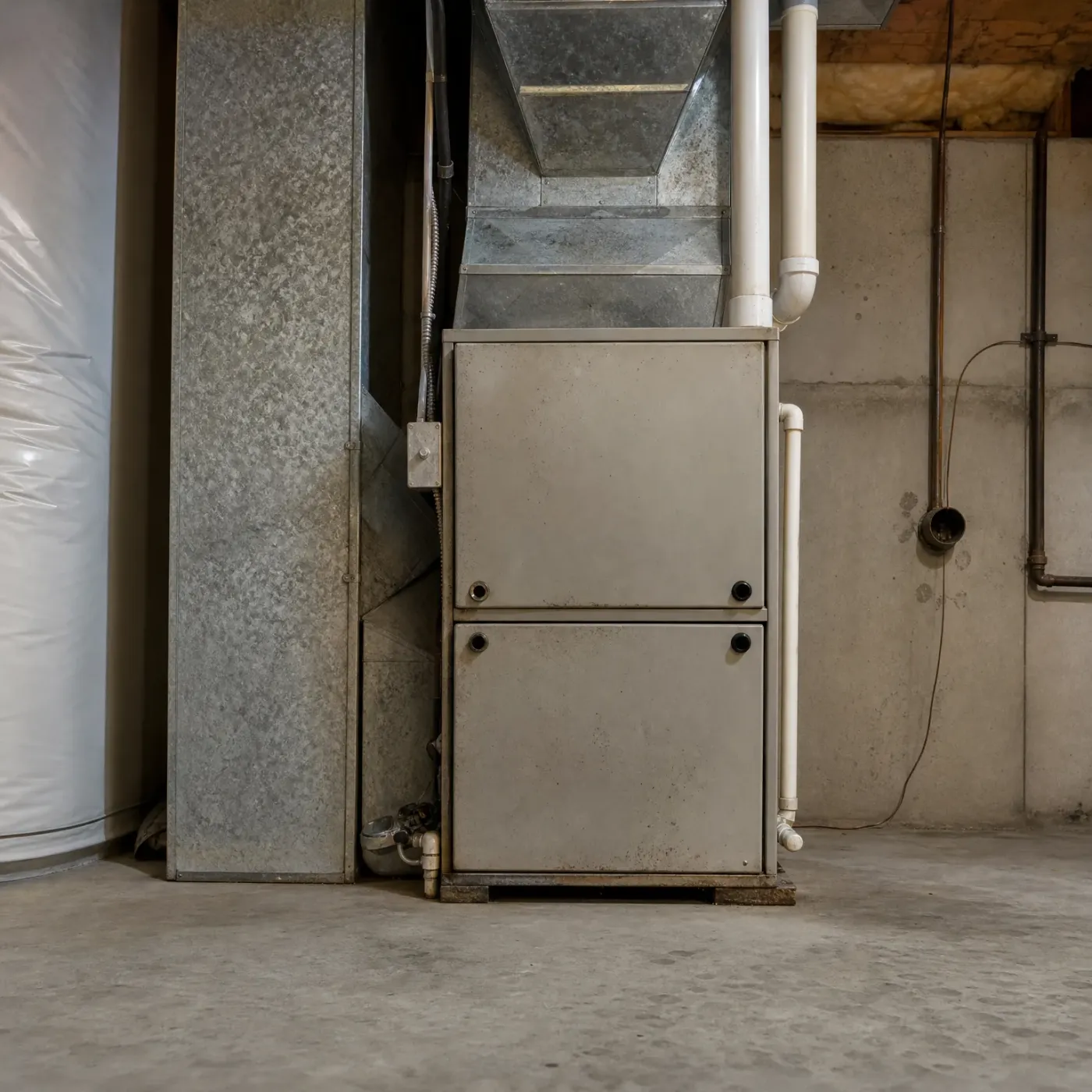
A gray furnace cabinet in a basement, connected to galvanized sheet-metal ductwork and white PVC pipes, against a concrete wall with exposed metal piping and insulation overhead.
Before you get your furnace repair
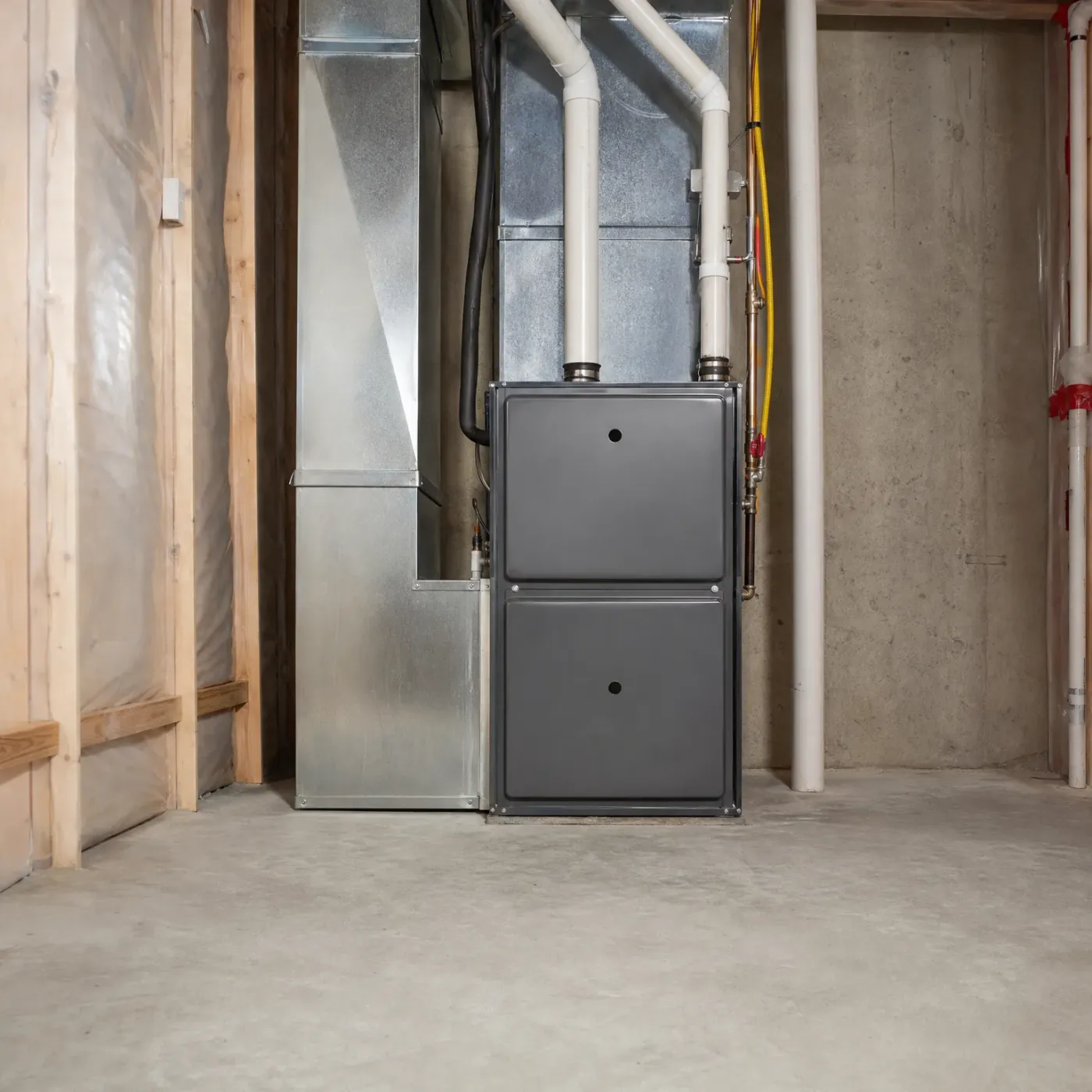
A gray high-efficiency furnace with two PVC vent pipes stands in an unfinished basement beside sheet-metal ductwork, a framed and plastic-covered wall, and a bare concrete wall with vertical pipes.
After you get your furnace repair

You keep running the furnace because the smell faded last time and you'd rather not deal with it until it gets worse. Nothing is confirmed wrong, and calling someone feels premature over a smell.

You have it looked at now, while it's a smell and not a failure. A furnace that's overheating a part tends to keep running until that part fails, often on one of the colder nights when you need it most.

Winter nights average 35°F

Nights here average 35°F in December, January and February, so your furnace isn't running hard for long stretches the way it would further north. That short, light use is exactly why a burning smell stands out. It hasn't had enough hours to be normal dust burn-off wearing itself out.

NOAA nClimDiv 1991-2020

A middle-aged woman with shoulder-length dark hair, wearing a gray cardigan over a cream top, sits in an upholstered armchair and looks toward a sunlit window, with a shelf holding framed pictures and a plant behind her.
A woman with her hair in a bun holds a sleeping young child against her chest, both wrapped in a textured beige knit blanket on a sofa in a dimly lit room with a lamp, framed picture, and bookshelf behind them.

A dusty smell in the first hour is nothing. A smell that lingers or comes back once the furnace is warmed up means something inside it is overheating, and that doesn't fix itself with time or mild weather. Jefferson County doesn't ask much of a furnace most winters, so when it's telling you something is wrong, it's worth listening to. Finding someone qualified to look at it doesn't have to be the hard part. A technician who works on furnaces around Birmingham all winter has seen this exact complaint before and knows what usually causes it, from a cracked heat exchanger to a motor working harder than it should. You get matched with one licensed local contractor, not a handful of companies competing for the job, so there's no round of calls to field and compare. You send the request once, and from there it's someone else's job to track down, not yours.

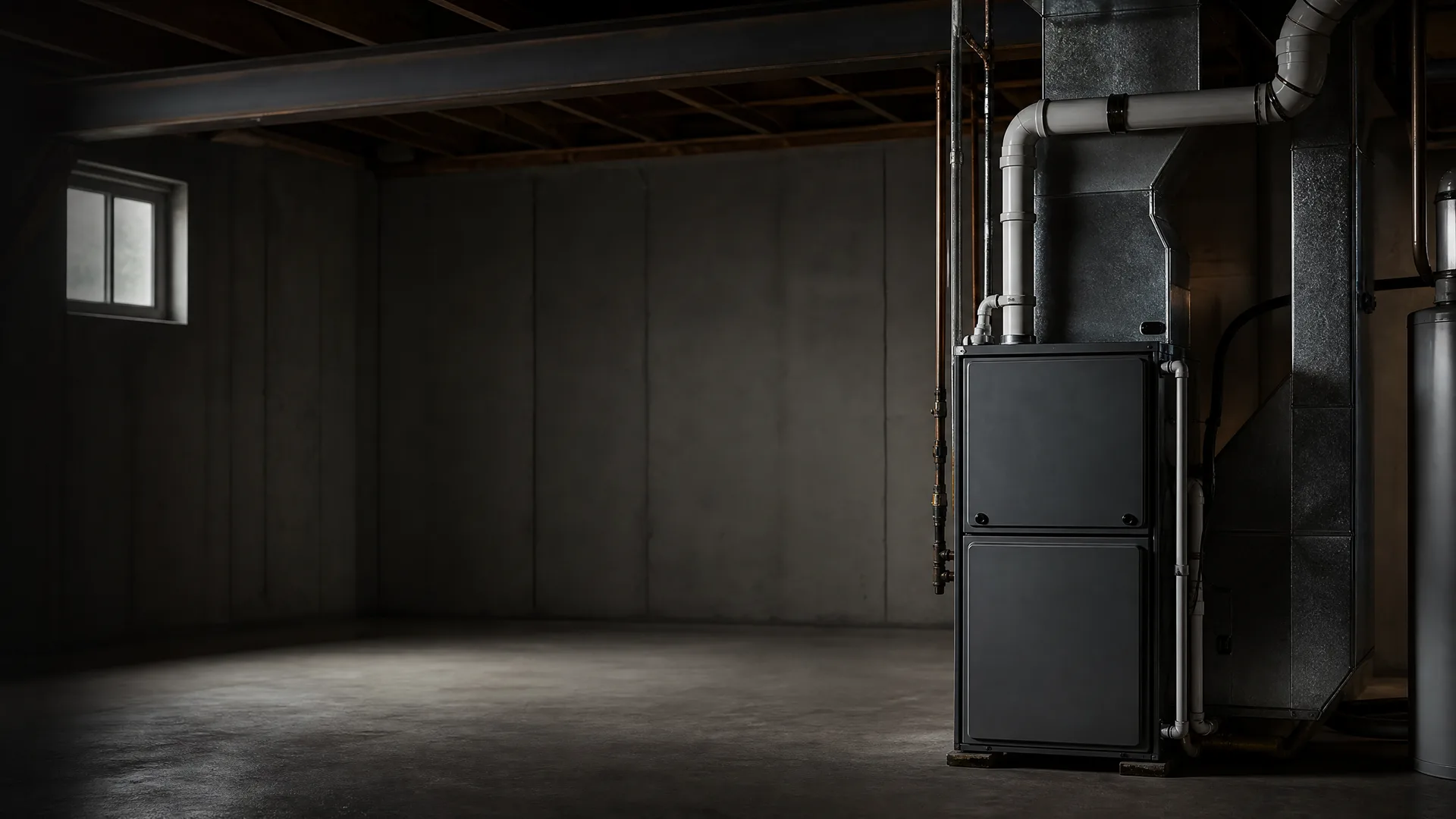
A dimly lit unfinished basement with concrete walls and floor, exposed floor joists, a small window at left, and a dark furnace with PVC venting and sheet metal ductwork at right.

Done looking for a furnace pro

A licensed pro who works in Jefferson County gets your request.

Step 1 of 3: Equipment