Profile view of a bearded man wearing a dark green baseball cap and a dark gray T-shirt against a plain light background.

How to restart a furnace after an Alabama power outage

Step 1 of 3: Equipment

Why won't my furnace turn back on after the power came back on?

Power goes out, then comes back, and the rest of the house seems fine, but the furnace never kicks back on. In Alabama most homes heat with electricity, so when the power trips off and back on, the furnace should pick back up the way a light does. When it doesn't, something in the restart didn't happen, and it's worth knowing what that something usually is before you start flipping switches.

The system switch or breaker got shut off, or the thermostat lost its settings

Most furnaces come back on their own once power returns, the same way a lamp does. When yours doesn't, the usual reason is that the power outage tripped the breaker for the furnace rather than just cutting power to it, or the switch that looks like a light switch near the unit got bumped to off. A programmable thermostat can also lose its schedule in an outage and sit blank or on the wrong setting until it's reset. None of that means the furnace itself failed. But if the breaker won't stay on, or the switch is on and the thermostat is set right and it still won't fire, that points to something electrical inside the unit, and that's worth having a licensed contractor look at rather than resetting it over and over.

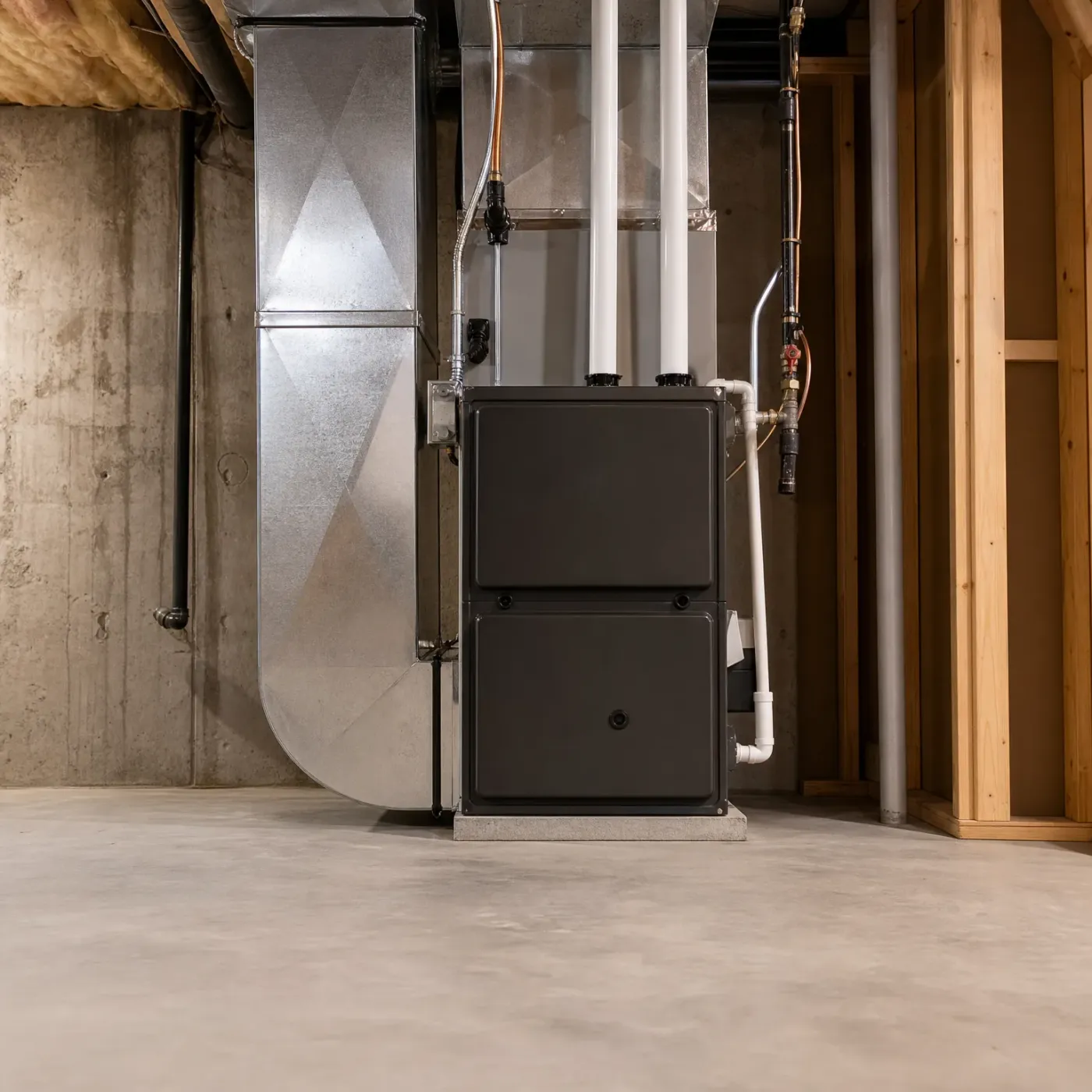
A dark high-efficiency furnace on a concrete pad in a basement, connected to galvanized ductwork, white PVC vent pipes, and copper and black gas piping, with concrete walls and wood framing nearby.

What it looks like when it's working

After the outage, the furnace fires back up on its own. The blower runs, warm air moves through the ductwork, and the exhaust pipe shows steady venting. The burners light the first time the thermostat calls for heat, no second try needed.
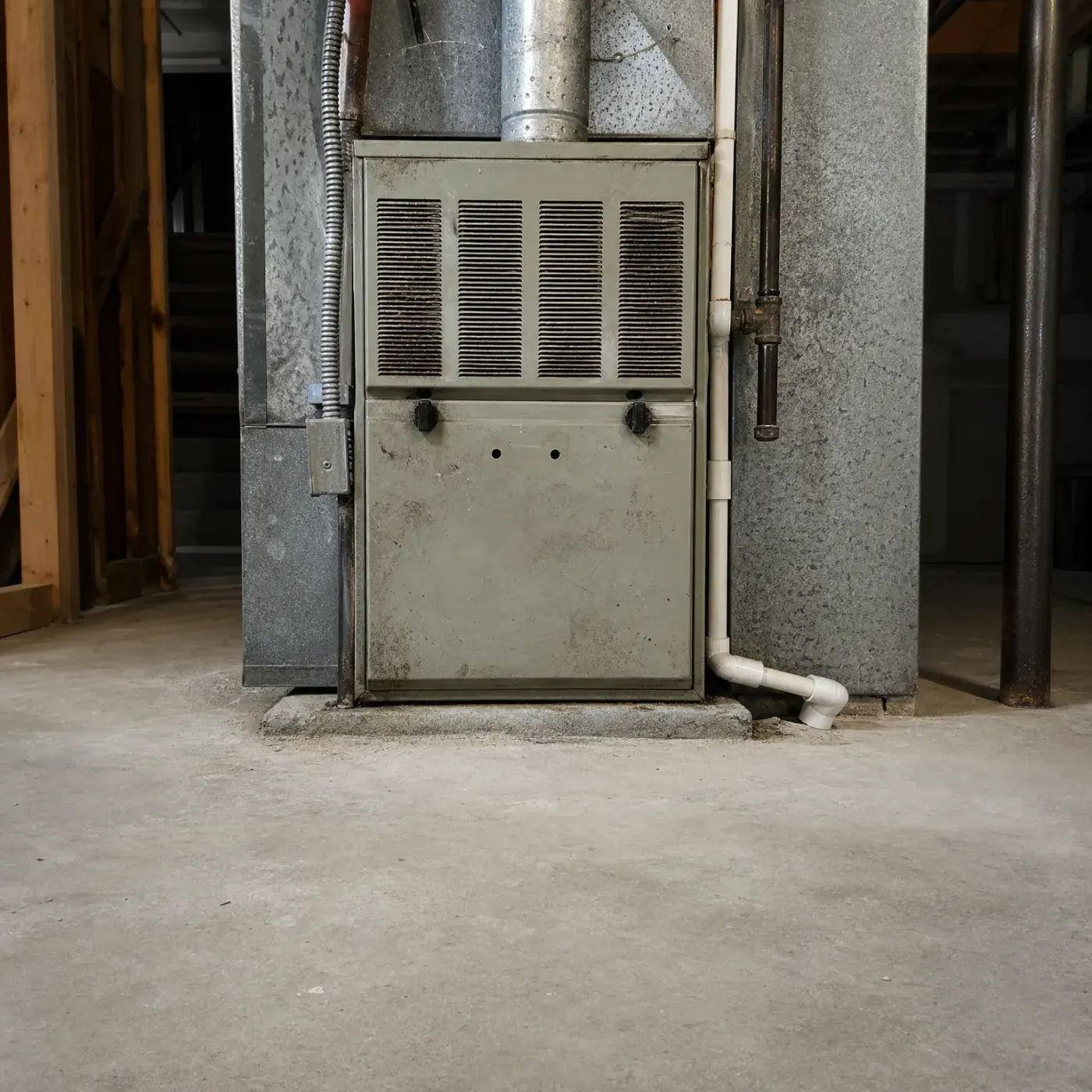
A gas furnace with a louvered upper panel stands on a concrete pad in a basement, flanked by sheet-metal ductwork, white PVC and metal pipes, and insulated columns.

What it looks like when it didn't recover

The thermostat calls for heat and nothing happens. No blower, no sound from the burners, no draft at the exhaust pipe. Sometimes a light on the control board blinks a pattern, or the drain line near the unit shows standing water instead of draining out.

Did the furnace actually restart or just the lights come back on

Walk past the thermostat and check if warm air is actually coming out of the vents, not just the display lighting up. Listen for the blower. If the house stays quiet and the air stays cool while everything else in Alabama runs fine, the furnace tripped and didn't recover. Some homes have a reset switch or a breaker just for the furnace, separate from the rest of the panel, and that one can stay off even after the main power is back. With electric heat running most homes here, a furnace that won't restart means the heat has no backup to fall on. Left alone through a cold night, pipes in unheated parts of the house are the thing most at risk.

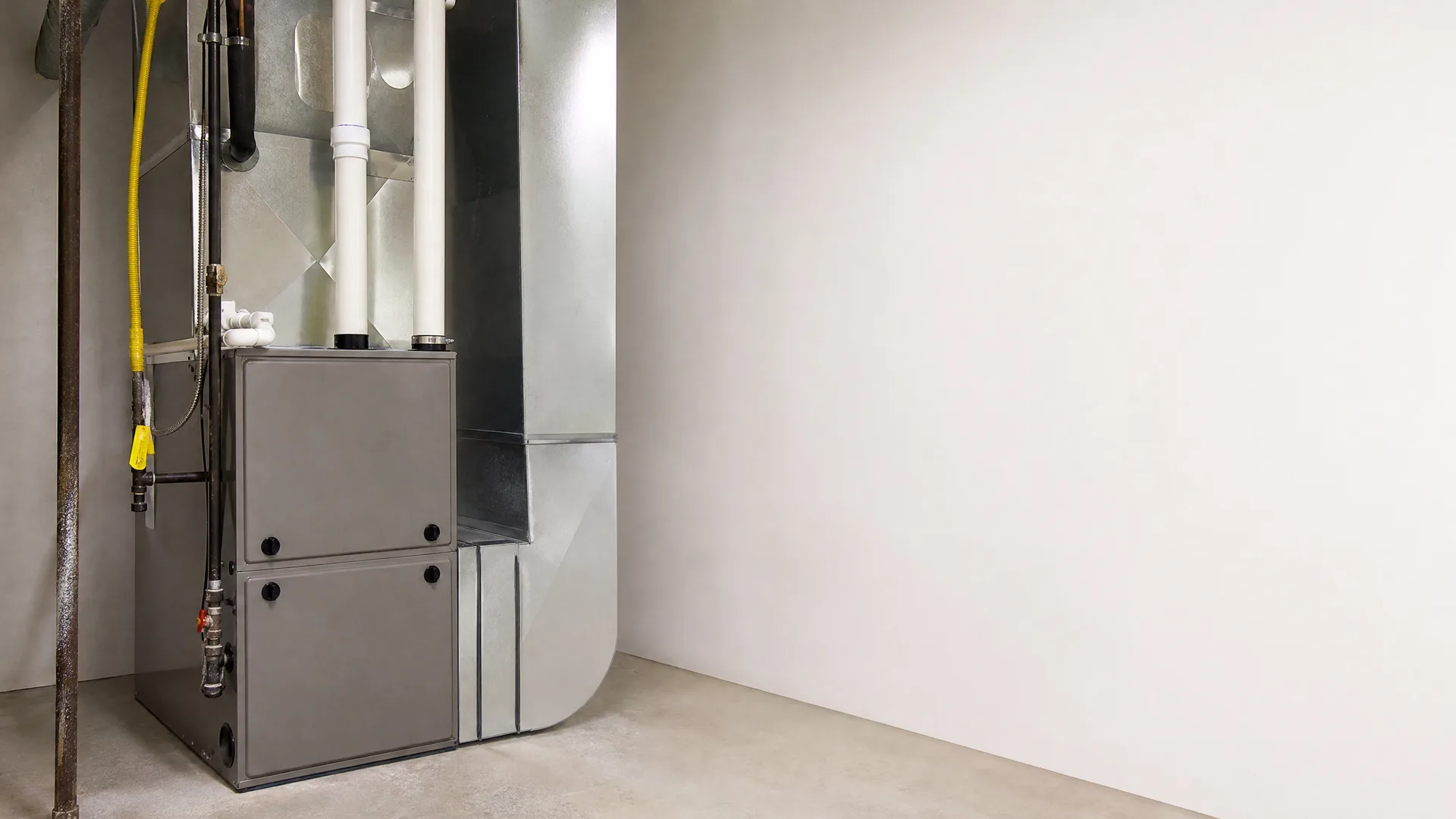
A gas furnace with two gray access panels stands against a plain wall in a basement, connected to sheet-metal ductwork, white PVC vent pipes, and a yellow gas line.

Why the thermostat resets itself

A power outage clears the memory on most thermostats the same way it clears a clock radio. The display comes back on because it runs on its own backup battery or a trickle of power from the furnace board, but the schedule and the call for heat are gone until you set them again. That is why the screen can look normal while the furnace sits idle. Check the mode is set to heat and the temperature is set above the room temperature, not just that the screen is lit.

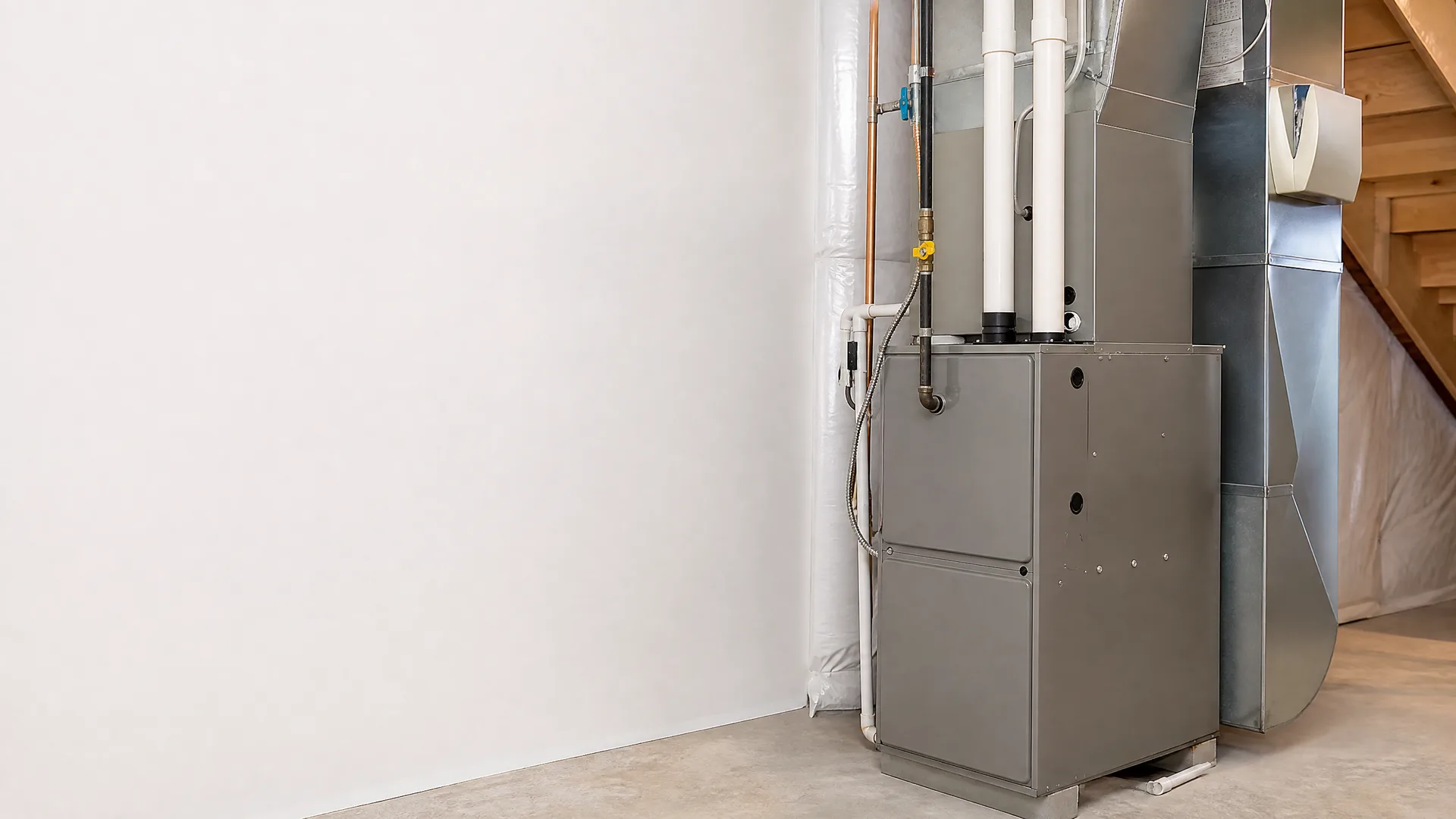
A gray high-efficiency furnace in a basement corner with white PVC vent pipes, copper and black gas piping, and sheet-metal ductwork beside a plain white wall and wooden stair framing.

What the control board is doing

The furnace has a control board that runs through a startup sequence every time it gets power, checking the pressure switch, the limit switch and the igniter before it lets gas reach the burners. If any of those checks fail, the board stops the sequence and won't try again until it's reset. After an outage this sequence can take a few minutes to complete, longer than it takes the lights or the thermostat to come back, which is why the furnace can seem to lag behind the rest of the house.

Winter nights average 36°F statewide

On a winter night here, the outside temperature is only part of the story. With an overnight average of 36°F, your furnace is running on and off for hours, not minutes, so if it doesn't restart after an outage, the house loses heat fast.

NOAA nClimDiv 1991-2020 county normals weighted by homes

A man with grey hair and stubble in a dark sweater sits on a grey sofa indoors, looking off to the side, with a potted plant and a sunlit window behind him.
A man with gray hair, a beard and glasses, wearing a dark green sweater, sits on a gray sofa in a sunlit living room with a potted plant, table lamp and wooden sideboard behind him.
A middle-aged man with graying hair and a short beard sits on a blue sofa in a living room, looking toward a window, with a bookshelf, lamp and framed picture in the background.
A man with graying curly hair and a dark green sweater sits on a gray sofa in a sunlit living room, looking off to the side, with a framed picture, shelving, an armchair and a window with sheer curtains behind him.

One form, no calling around

You can check the breaker, check the switch on the furnace itself, check the thermostat battery, and still not know why it won't fire. Chasing that down room by room, then searching for someone who works on furnaces, calling a few companies, explaining the same outage story to each one, and waiting on quotes to compare takes time you don't have with the house losing heat overnight at 36°F. A request here goes to one licensed contractor local to your part of Alabama, not a handful of companies competing for the job. Someone who services furnaces in homes like yours every winter has likely seen this exact failure after an outage before, on a control board or a limit switch that won't reset itself. That's the part worth handing off. The house is cold now, and figuring out who to call shouldn't be what's standing between you and the furnace running again.

Getting Heat Back On For Good

  • A furnace that stays off after the power comes back usually needs a breaker reset, a switch check, or a qualified look at the board.
  • The thermostat screen lighting up only means its battery works, not that the furnace itself restarted.
  • Breakers and switches in the flipped position but the furnace still silent points to a problem beyond what you can fix by hand.
  • At a 36°F overnight average, every hour without heat matters more than it would in milder weather.
  • A local contractor who services furnaces all winter can usually tell within minutes why this one didn't come back.
  • Getting it checked once, by someone who knows this equipment, beats guessing room by room on your own.

A furnace that won't restart after the power comes back is telling you something failed beyond a simple reset. Maybe the breaker tripped and needs resetting. Maybe the switch on the unit itself got bumped. Maybe the board took a hit when the power cut out and came back, and no amount of flipping switches will fix that. You can check the obvious things yourself, and you should. But when the thermostat lights up, the breaker looks fine, and the furnace still sits silent, you've reached the point where guessing stops helping. At 36°F overnight, a house without heat cools fast, and the hours spent checking one thing after another add up to real cold inside. A contractor who services furnaces all winter in Alabama has seen this exact situation before, likely more than once this season. They know whether a dead board, a failed switch, or something in the ignition system is the usual culprit after an outage like this, and they can narrow it down quickly instead of working through it blind. You don't need to know which part failed before you call. You need someone who can look at the furnace, tell you what actually happened, and get it running again. That's a different job than resetting a breaker, and it's worth having someone qualified handle it rather than working through trial and error while the house keeps losing heat.

A woman with shoulder-length brown hair wearing a beige knit cardigan sits in a gray upholstered armchair near a window, looking off to the side with a slight smile, with bookshelves blurred in the background.
A woman and a sleeping child wrapped together in a cream knitted blanket on a couch, with a potted plant, framed photo and lit lamp in the background.

Skip the search

A furnace that won't restart after an outage is testing more than a breaker. It could be the switch, the board, or something that failed quietly before the power ever went out. Finding that takes a licensed Alabama contractor who works on furnaces all winter and knows what to check first. One contractor, matched to you, means no explaining the problem over and over to different companies and no pile of calls to sort through. With an overnight average of 36°F, that's time you don't want to spend searching.

Fill out one form

The pro who reaches out is licensed in Alabama.

You're not committing to anything by asking.