Tell us about the job
Takes about a minute. No obligation.
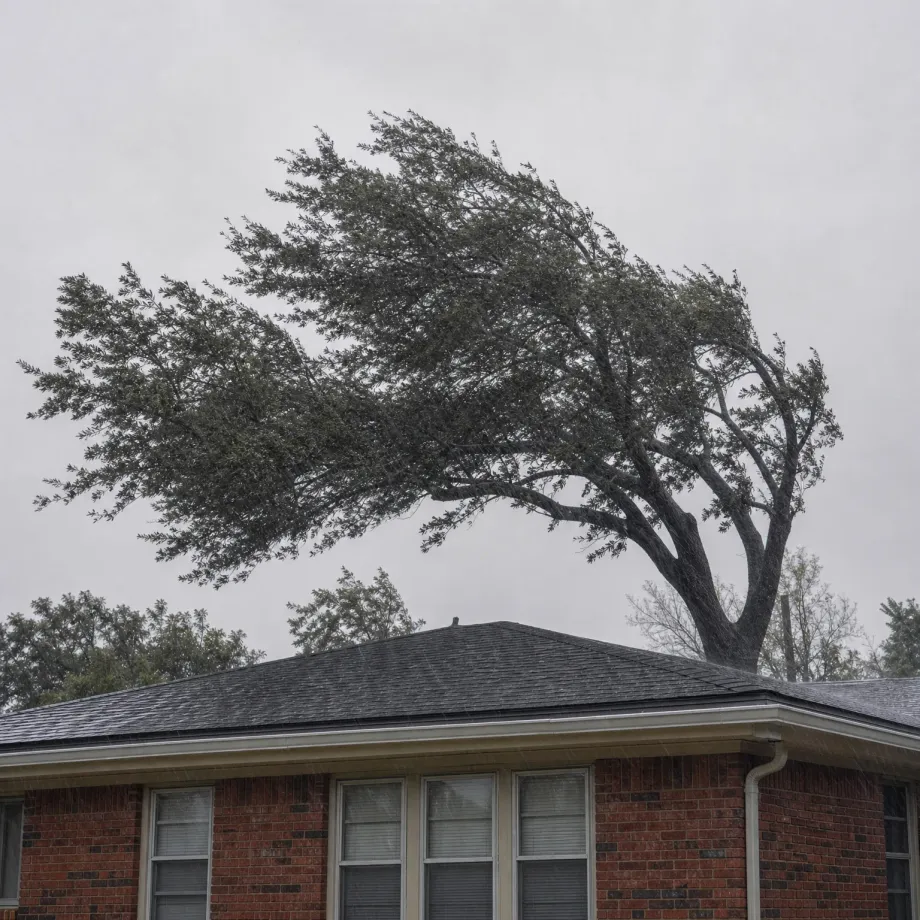
A contractor quoting a furnace installation in DeKalb County has to account for what the local climate actually demands before settling on equipment size. 251 severe weather events were recorded in DeKalb County, Alabama between 2015 and 2024. At that rate, severe weather is a recurring operating condition, not an occasional one, and a furnace sized against a milder picture will run short of capacity when it matters. Equipment selection and duct design here are local engineering calls, not defaults pulled from a product sheet.
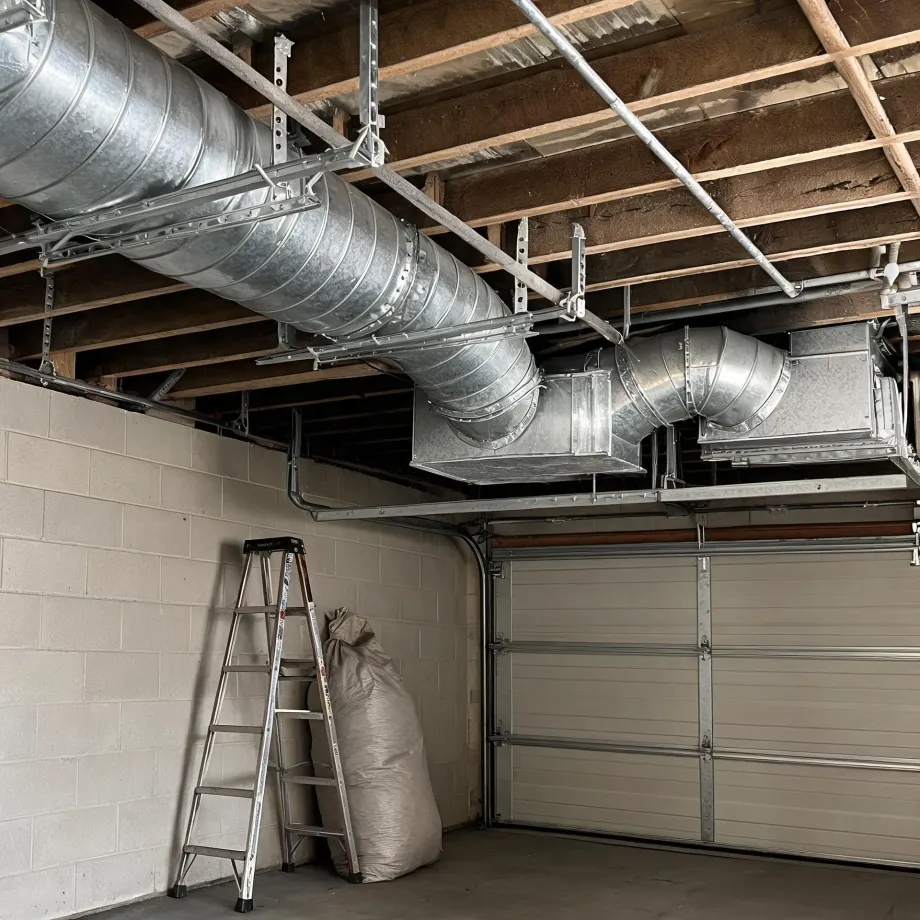
Ductwork sized and routed for an older system does not automatically carry a new furnace well. Half the homes in DeKalb County, Alabama were built in 1984 or earlier (2020-2024 ACS 5-year). A contractor installing a furnace in stock like this has to assess what is already in the walls and attic before the equipment selection means much: whether the existing runs can move the air a new unit produces, and whether the electrical service meets what it draws. If the ductwork falls short, that work happens before the furnace itself goes in.
What Gets Installed With a New Furnace
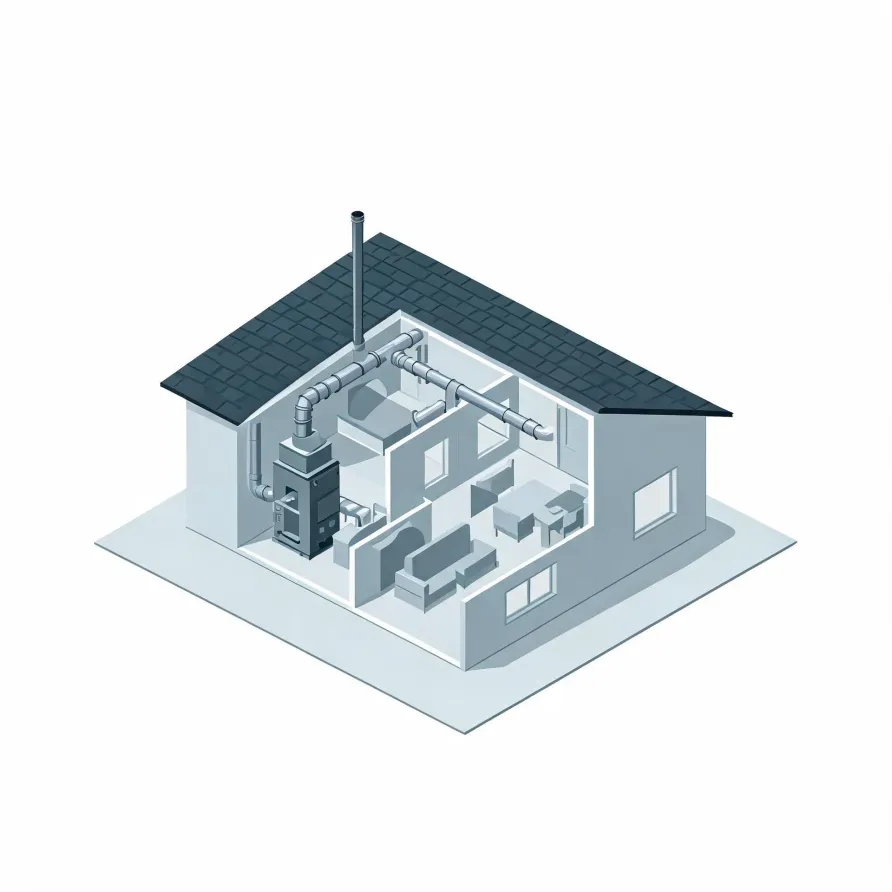
The furnace itself sits inside the house, most often in a basement, utility closet, or crawl space. It holds the burner assembly and heat exchanger, which are the core pieces a contractor sets in place first. The blower motor lives inside the same cabinet, pulling air across the heat exchanger and pushing it into the supply side of the home.
The flue pipe runs from the furnace to an exterior wall or up through the roof, giving combustion gases a path out of the house. A new thermostat mounts on a wall in the living space and gives the homeowner direct control over when the furnace fires. The contractor also connects the furnace to the existing filter housing, which sits at the return-air intake and keeps debris out of the cabinet.
The drawing shows a representative layout, and a licensed contractor determines exactly what the configuration looks like in your house.
Get matched in DeKalb CountyDeKalb County, by the numbers
251 severe weather events were recorded in DeKalb County, Alabama between 2015 and 2024.
NOAA National Centers for Environmental Information, Storm Events Database, bulk CSV export, events 2015-01-01 through 2024-12-31.Half the homes in DeKalb County, Alabama were built in 1984 or earlier (2020-2024 ACS 5-year).
U.S. Census Bureau, 2020-2024 American Community Survey 5-Year EstimatesDeKalb County, Alabama holds 30,963 housing units (2020-2024 ACS 5-year).
U.S. Census Bureau, 2020-2024 American Community Survey 5-Year EstimatesOwners occupy 78.3% of the occupied homes in DeKalb County, Alabama (2020-2024 ACS 5-year).
U.S. Census Bureau, 2020-2024 American Community Survey 5-Year EstimatesFurnace Installation Rules & Standards for DeKalb County, Alabama5 sourced regulations and codes
What Happens During a Furnace Installation in DeKalb County
Non-weatherized gas furnaces manufactured on or after November 19, 2015 must reach 80.0 percent AFUE.
Non-weatherized oil-fired furnaces manufactured on or after November 19, 2015 must reach 83.0 percent AFUE.
Mobile home gas furnaces manufactured on or after November 19, 2015 must reach 80.0 percent AFUE.
Non-weatherized gas furnaces manufactured on or after December 18, 2028 must reach 95.0 percent AFUE, up from the 80.0 percent minimum that applies to units manufactured before that date.
Licensing and Legal Requirements in DeKalb County, Alabama
Alabama requires state certification to do heating, air conditioning and refrigeration contracting: nobody may advertise, bid, pull permits or do the work unless the person in responsible charge is a certified contractor.
Severe Weather Events in DeKalb County
Extreme weather puts real hours on heating and cooling equipment, and those hours compound over the life of a furnace. How hard a system has to work is a local question, and the answer for DeKalb County shapes what a contractor installs and how it needs to be sized.
251 severe weather events, 2015–2024. Source: NOAA National Centers for Environmental Information, Storm Events Database.