
Tell us about the job
Takes about a minute. No obligation.
Furnaces in Lauderdale County do not run against mild, predictable seasons. 700 severe weather events were recorded in Lauderdale County, Alabama between 2015 and 2024. At that rate, severe weather is part of the normal operating life of every system here, and a contractor diagnosing a furnace repair works from that assumption. Heat exchangers, ignitors, and pressure switches carry the cumulative load of repeated thermal and mechanical stress, and those are the components a contractor opens the system looking at first. Age and maintenance history matter, but in this county the weather record is a real factor in which parts have been worked hardest.
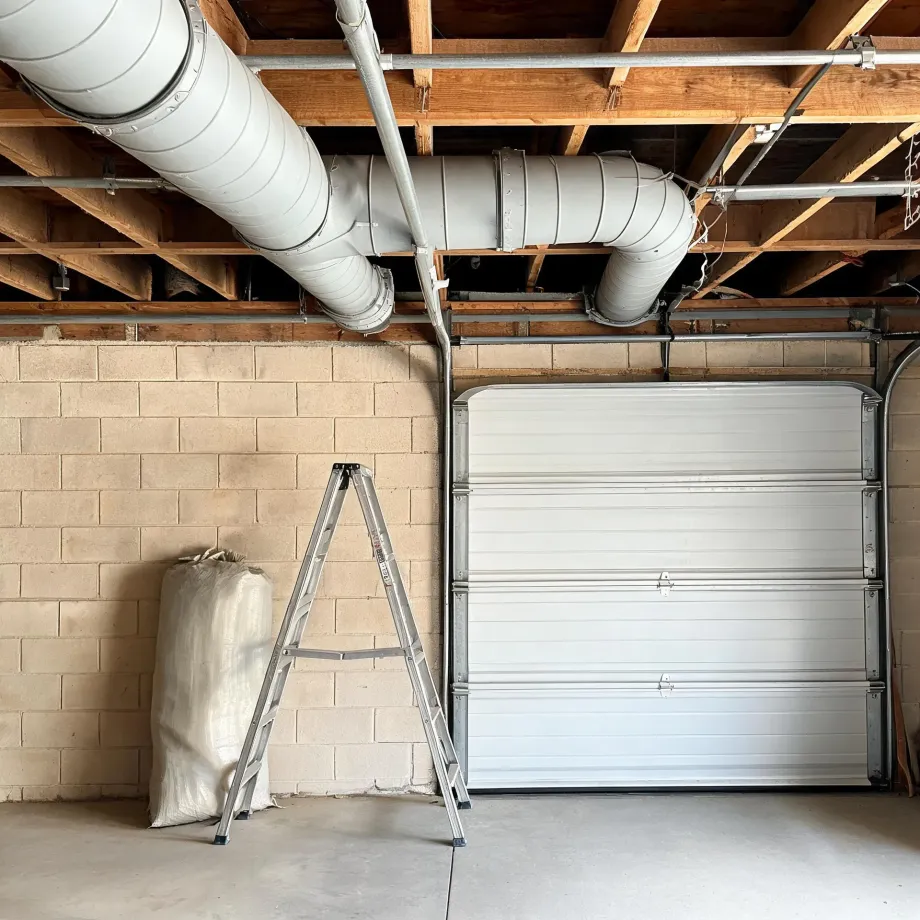
Ductwork in a house this old was run once, adapted since, and is rarely the thing a furnace repair turns on. Half the homes in Lauderdale County, Alabama were built in 1980 or earlier (2020-2024 ACS 5-year). Equipment cycles through a house faster than the house itself changes, which means the furnace a contractor opens today may be a second or third unit in a structure built for something entirely different. What that opens up is a parts question: older furnace models run on components that manufacturers phase out, and a contractor diagnosing the failure has to confirm availability before the repair scope is even set.
The Parts of a Furnace a Contractor Checks First
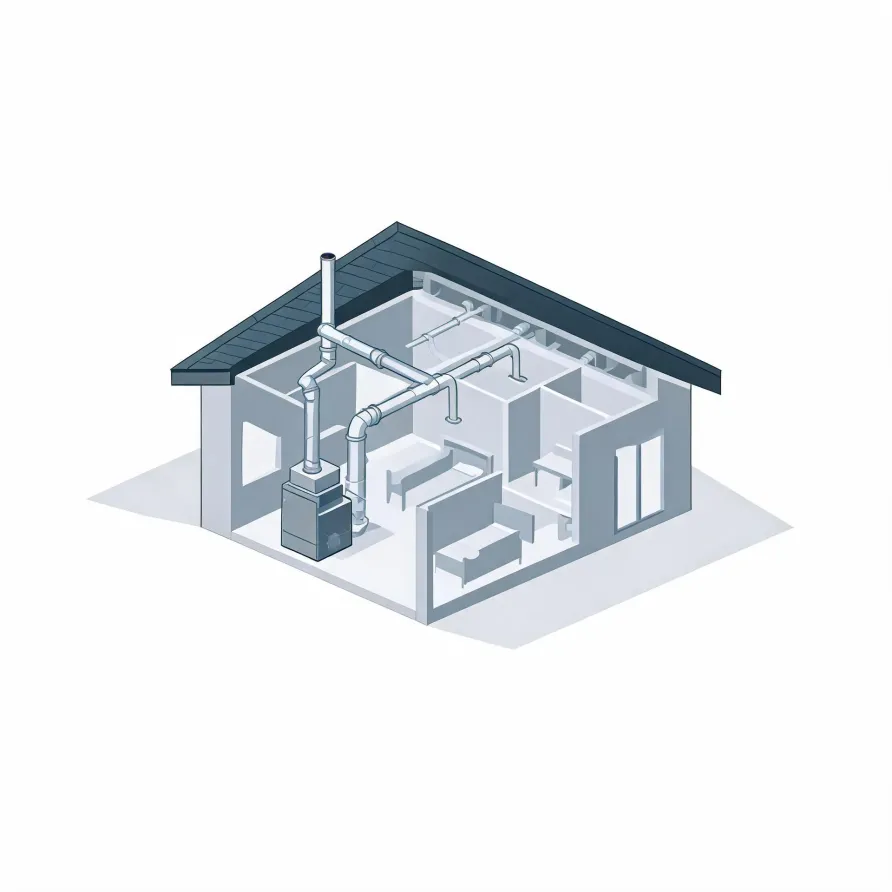
The furnace itself sits in a mechanical room, basement, or utility closet and is the piece that produces the heat. Inside it, the heat exchanger is the part a contractor looks at hard during a repair call. Cracks or failures there let combustion gases into the air supply, so it is often where a diagnosis starts.
The blower motor moves conditioned air out through the supply side of the duct system and draws return air back in. The burner assembly, igniter, and flame sensor all sit inside the cabinet and work together to start and sustain combustion. When any one of them fails, the furnace either does not light or shuts itself down before a full cycle completes.
The drawing shows a general layout of a furnace system, and a licensed contractor determines which components apply to your specific house and setup.
Get matched in Lauderdale CountyLauderdale County, by the numbers
700 severe weather events were recorded in Lauderdale County, Alabama between 2015 and 2024.
NOAA National Centers for Environmental Information, Storm Events Database, bulk CSV export, events 2015-01-01 through 2024-12-31.Half the homes in Lauderdale County, Alabama were built in 1980 or earlier (2020-2024 ACS 5-year).
U.S. Census Bureau, 2020-2024 American Community Survey 5-Year EstimatesLauderdale County, Alabama holds 44,936 housing units (2020-2024 ACS 5-year).
U.S. Census Bureau, 2020-2024 American Community Survey 5-Year EstimatesOwners occupy 68.9% of the occupied homes in Lauderdale County, Alabama (2020-2024 ACS 5-year).
U.S. Census Bureau, 2020-2024 American Community Survey 5-Year EstimatesCodes & Standards Covering Furnace Repair in Lauderdale County, Alabama5 sourced rules and standards
What Furnace Repair Looks Like in Lauderdale County
Non-weatherized gas furnaces manufactured on or after November 19, 2015 must reach 80.0 percent AFUE.
Non-weatherized oil-fired furnaces manufactured on or after November 19, 2015 must reach 83.0 percent AFUE.
Mobile home gas furnaces manufactured on or after November 19, 2015 must reach 80.0 percent AFUE.
Non-weatherized gas furnaces manufactured on or after December 18, 2028 must reach 95.0 percent AFUE, up from the 80.0 percent minimum that applies to units manufactured before that date.
Licensing Rules for Lauderdale County, Alabama
Alabama requires state certification to do heating, air conditioning and refrigeration contracting: nobody may advertise, bid, pull permits or do the work unless the person in responsible charge is a certified contractor.
Severe Weather Events in Lauderdale County
Stress on a furnace comes from more than age and use. Weather that swings hard forces equipment to run harder, and that wear shows up as repairs.
700 severe weather events, 2015–2024. Source: NOAA National Centers for Environmental Information, Storm Events Database.