Tell us about the job
Takes about a minute. No obligation.
A furnace in Coosa County that is struggling this winter is almost certainly carrying a problem that has nothing to do with storms. 50 severe weather events were recorded in Coosa County, Alabama between 2015 and 2024. At that rate, severe weather lands here as a periodic event, not a steady grind, and a contractor diagnosing a heat exchanger crack or a failing inducer motor looks first at how old the unit is, how it was installed, and whether filters and annual service were kept up. Those are the factors that put a furnace in Coosa County on the repair list.
Furnace systems installed in houses built this long ago have often been replaced at least once, and the replacement was not always with whatever the current market offered. Half the homes in Coosa County, Alabama were built in 1985 or earlier (2020-2024 ACS 5-year). What a contractor finds once a furnace is open in stock like this is sometimes a mix of original and aftermarket components, and the parts a particular system takes may no longer be in regular production. That gap between what the unit needs and what a supplier can ship same-week is where repair timelines stretch.
The Parts of a Furnace a Contractor Checks First
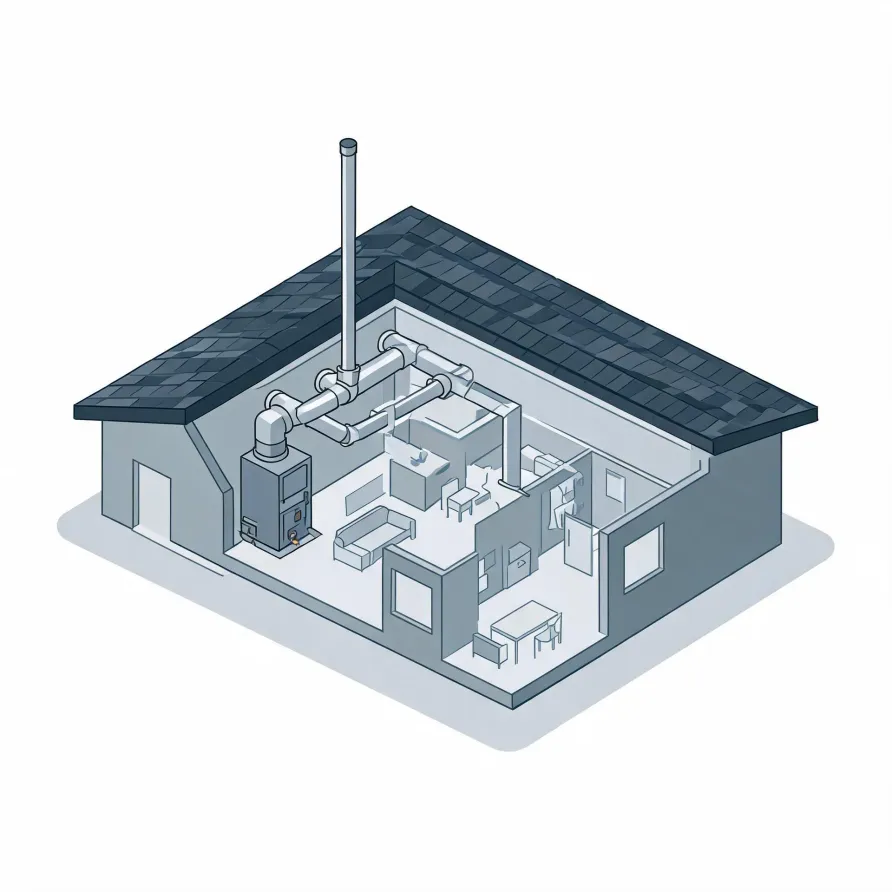
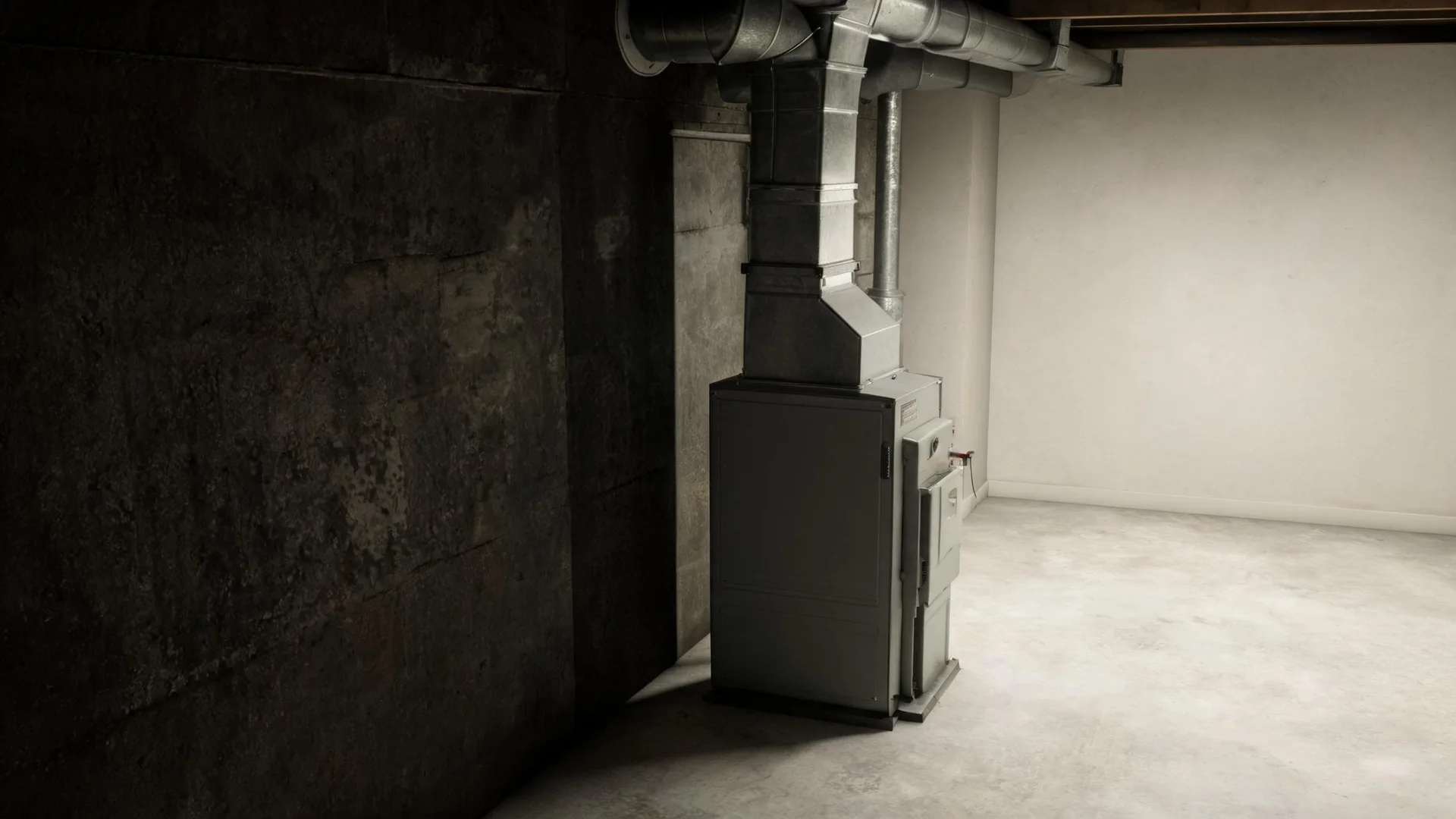
The furnace itself sits in a utility space, basement, or closet and is the heart of the system. Inside it, the heat exchanger takes the heat from combustion and transfers it to the air moving through your home. When a furnace stops heating or heats unevenly, the heat exchanger, the burners, and the blower motor are where a contractor looks first.
The blower motor pushes conditioned air out through the supply side and draws return air back in. Beside it, the control board and the igniter govern when the burners fire and how the whole system responds to your thermostat. A failed igniter, a cracked control board, or a blower that runs but moves little air are common reasons a furnace behaves erratically.
The drawing shows the general layout of a furnace system, and a licensed contractor determines what applies to your specific house and setup.
Get matched in Coosa CountyCoosa County, by the numbers
50 severe weather events were recorded in Coosa County, Alabama between 2015 and 2024.
NOAA National Centers for Environmental Information, Storm Events Database, bulk CSV export, events 2015-01-01 through 2024-12-31.Half the homes in Coosa County, Alabama were built in 1985 or earlier (2020-2024 ACS 5-year).
U.S. Census Bureau, 2020-2024 American Community Survey 5-Year EstimatesCoosa County, Alabama holds 6,058 housing units (2020-2024 ACS 5-year).
U.S. Census Bureau, 2020-2024 American Community Survey 5-Year EstimatesOwners occupy 81.6% of the occupied homes in Coosa County, Alabama (2020-2024 ACS 5-year).
U.S. Census Bureau, 2020-2024 American Community Survey 5-Year EstimatesCodes & Standards Covering Furnace Repair in Coosa County, Alabama5 rules & citations
What Furnace Repair Looks Like in Coosa County
Non-weatherized gas furnaces manufactured on or after November 19, 2015 must reach 80.0 percent AFUE.
Non-weatherized oil-fired furnaces manufactured on or after November 19, 2015 must reach 83.0 percent AFUE.
Mobile home gas furnaces manufactured on or after November 19, 2015 must reach 80.0 percent AFUE.
Non-weatherized gas furnaces manufactured on or after December 18, 2028 must reach 95.0 percent AFUE, up from the 80.0 percent minimum that applies to units manufactured before that date.
Licensing Rules for HVAC Work in Coosa County, Alabama
Alabama requires state certification to do heating, air conditioning and refrigeration contracting: nobody may advertise, bid, pull permits or do the work unless the person in responsible charge is a certified contractor.
Severe Weather Events in Coosa County
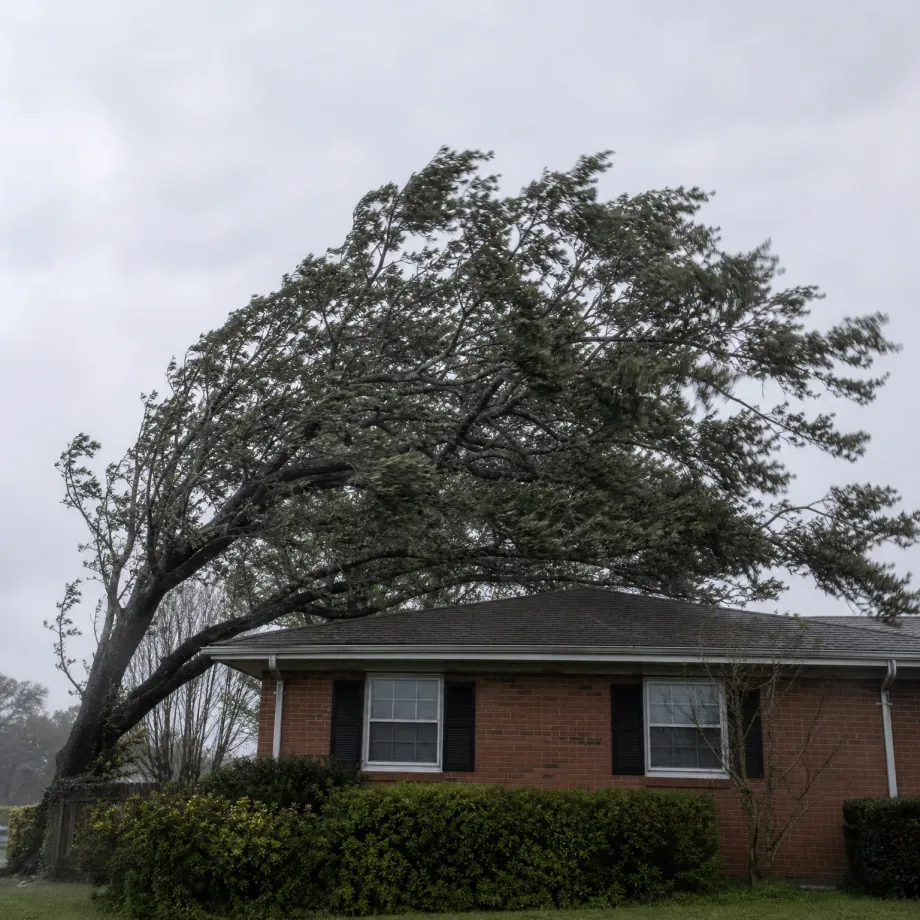
Hard weather puts hours on heating equipment fast, cycling it through demand it was not sized to absorb continuously. A furnace that carries that load in Coosa County is working a local pattern, and repairs here reflect what the climate asks of it.
50 severe weather events, 2015–2024. Source: NOAA National Centers for Environmental Information, Storm Events Database.