Tell us about the job
Takes about a minute. No obligation.
A furnace repair here starts with a different set of assumptions than one in a quieter part of the country. 576 severe weather events were recorded in Madison County, Alabama between 2015 and 2024. At that rate, severe weather is part of normal operating life for every heating system in the county, and contractors expect to find stress on contactors, heat exchangers, and control boards that reflects sustained load, not just years of calendar age. A unit that is relatively new can show wear a contractor would ordinarily associate with an older one.
Furnaces in stock this old have often been repaired and patched across multiple ownership cycles, so what a contractor finds once the cabinet is open can range widely: a heat exchanger with fatigue cracks, a control board on its second replacement, or a blurring of original and aftermarket components. Half the homes in Madison County, Alabama were built in 1992 or earlier (2020-2024 ACS 5-year). That age of housing means a system inside it may predate several rounds of parts consolidation, and a contractor pricing a repair has to confirm availability before the quote means anything. If the part the furnace takes has been discontinued, the scope of the job changes before a single fastener is turned.
The Parts of a Furnace a Contractor Checks First
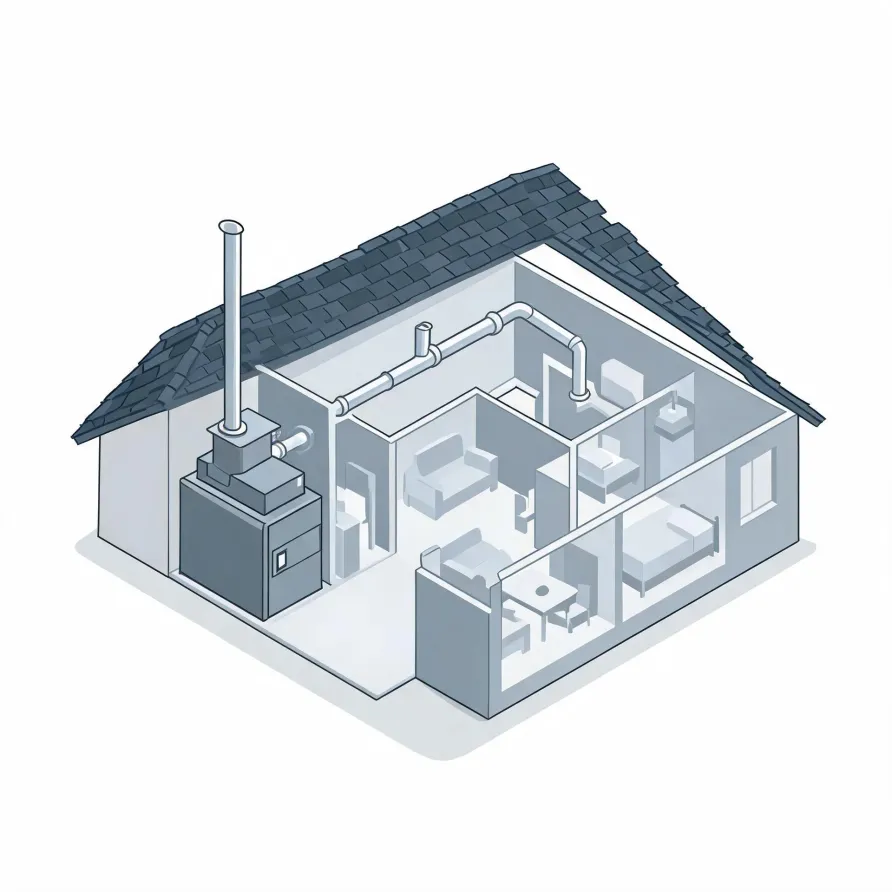
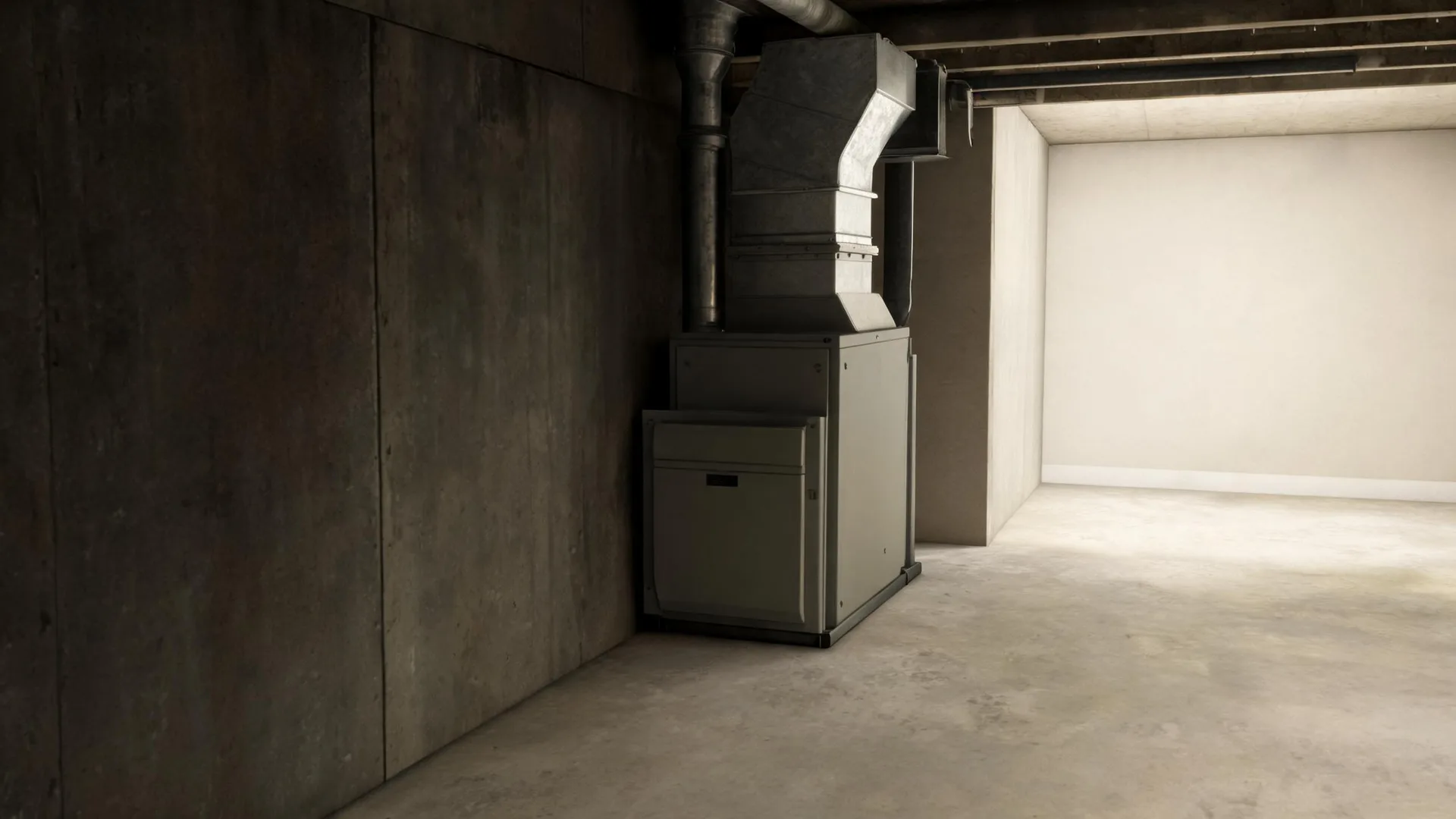
The heat exchanger sits at the core of the furnace cabinet, usually in a basement, utility closet, or mechanical room. It is the piece that actually warms the air, and when a furnace blows cold or runs but produces no heat, this is where a contractor looks first. The burners sit just below it and are checked alongside it.
The blower motor and its fan wheel sit in the lower section of the cabinet and push conditioned air into the supply plenum above. The draft inducer, the ignitor, the flame sensor, and the control board all sit within the same cabinet and each one has a failure pattern a contractor can read from the symptoms a homeowner describes.
The drawing shows a general furnace layout, and a licensed contractor determines which components apply to your specific system and situation.
Get matched in Madison CountyMadison County, by the numbers
576 severe weather events were recorded in Madison County, Alabama between 2015 and 2024.
NOAA National Centers for Environmental Information, Storm Events Database, bulk CSV export, events 2015-01-01 through 2024-12-31.Half the homes in Madison County, Alabama were built in 1992 or earlier (2020-2024 ACS 5-year).
U.S. Census Bureau, 2020-2024 American Community Survey 5-Year EstimatesMadison County, Alabama holds 178,607 housing units (2020-2024 ACS 5-year).
U.S. Census Bureau, 2020-2024 American Community Survey 5-Year EstimatesOwners occupy 68.3% of the occupied homes in Madison County, Alabama (2020-2024 ACS 5-year).
U.S. Census Bureau, 2020-2024 American Community Survey 5-Year EstimatesCodes & Standards Governing Furnace Repair in Madison County, Alabama5 sourced rules and standards
What Happens When a Contractor Shows Up for Furnace Repair in Madison County
Non-weatherized gas furnaces manufactured on or after November 19, 2015 must reach 80.0 percent AFUE.
Non-weatherized oil-fired furnaces manufactured on or after November 19, 2015 must reach 83.0 percent AFUE.
Mobile home gas furnaces manufactured on or after November 19, 2015 must reach 80.0 percent AFUE.
Non-weatherized gas furnaces manufactured on or after December 18, 2028 must reach 95.0 percent AFUE, up from the 80.0 percent minimum that applies to units manufactured before that date.
Licensing Rules for HVAC Repair in Madison County, Alabama
Alabama requires state certification to do heating, air conditioning and refrigeration contracting: nobody may advertise, bid, pull permits or do the work unless the person in responsible charge is a certified contractor.
Severe Weather Events in Madison County
Extreme weather puts real load on heating equipment, and furnaces that run hard under stress are the ones that break. How often that pressure shows up in Madison County shapes what local repair work actually looks like.
576 severe weather events, 2015–2024. Source: NOAA National Centers for Environmental Information, Storm Events Database.