What to do when the heat goes out in Huntsville, AL

Step 1 of 3: Equipment

My furnace stopped heating, what do I do?

Most nights this time of year you don't think about the furnace at all until it stops. Now the house is cooling off and you're standing at the thermostat wondering if this is a quick fix or a call to make tonight. Since most homes around Huntsville heat with electricity, a furnace that quits is usually telling you something specific, and knowing what it is decides whether you wait until morning or not.

Check the breaker and the thermostat before anything else

A furnace that stops heating in an electric home usually comes down to one of a few things: a tripped breaker, a thermostat set wrong or dead on batteries, or a dirty filter that's choked the airflow enough to shut the system down on purpose. Electric furnaces draw a lot of current, and the breaker is the first thing worth checking, since a trip there is common and takes seconds to rule out. If the breaker's fine and the thermostat is calling for heat but nothing's happening, the problem is likely in the furnace itself, the heating elements or the blower motor, and that's a repair, not something to troubleshoot further on your own.

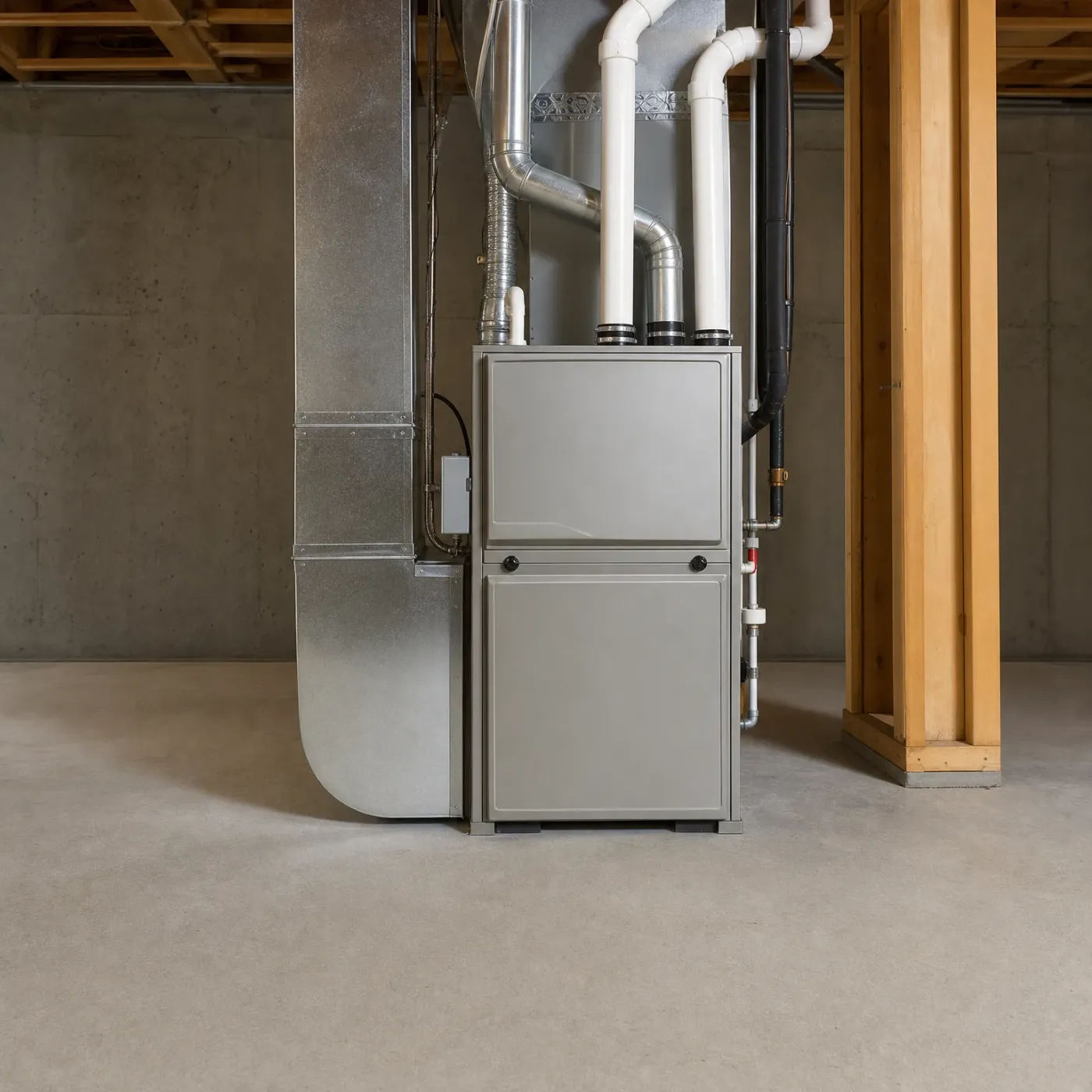
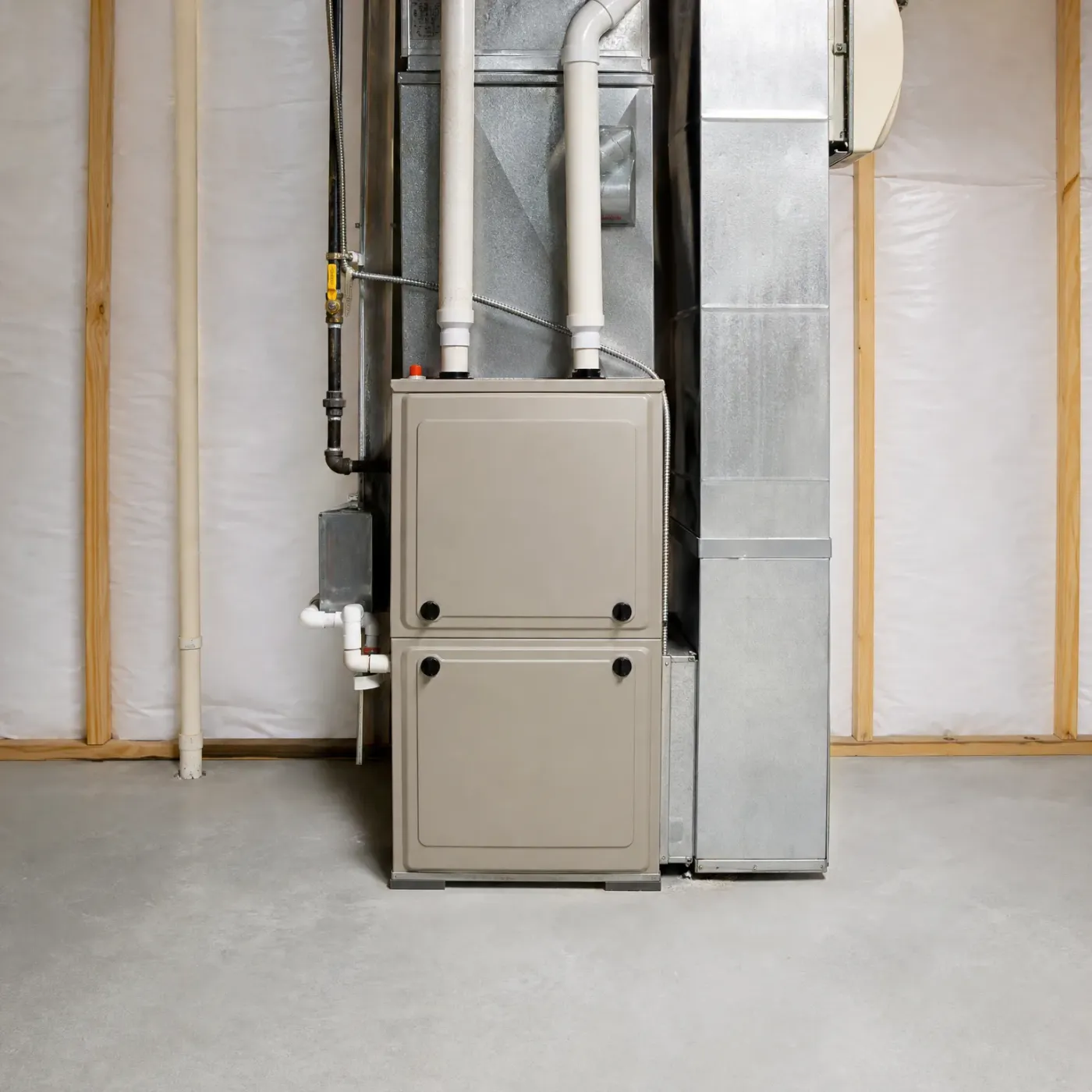
A beige high-efficiency furnace stands on a concrete basement floor beside sheet-metal ductwork, with white PVC vent pipes and a gas line running along an insulated wood-framed wall.

Furnace running right

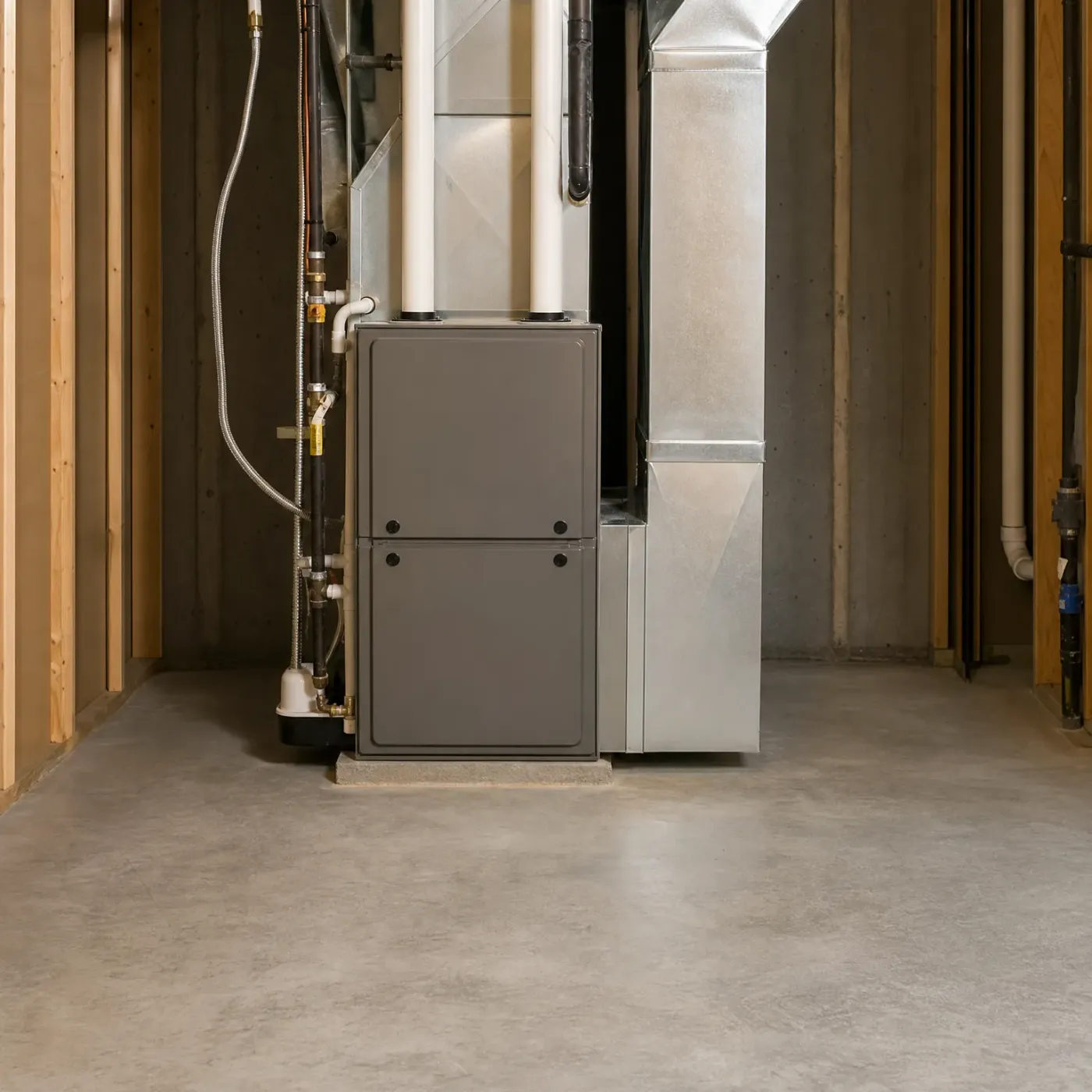
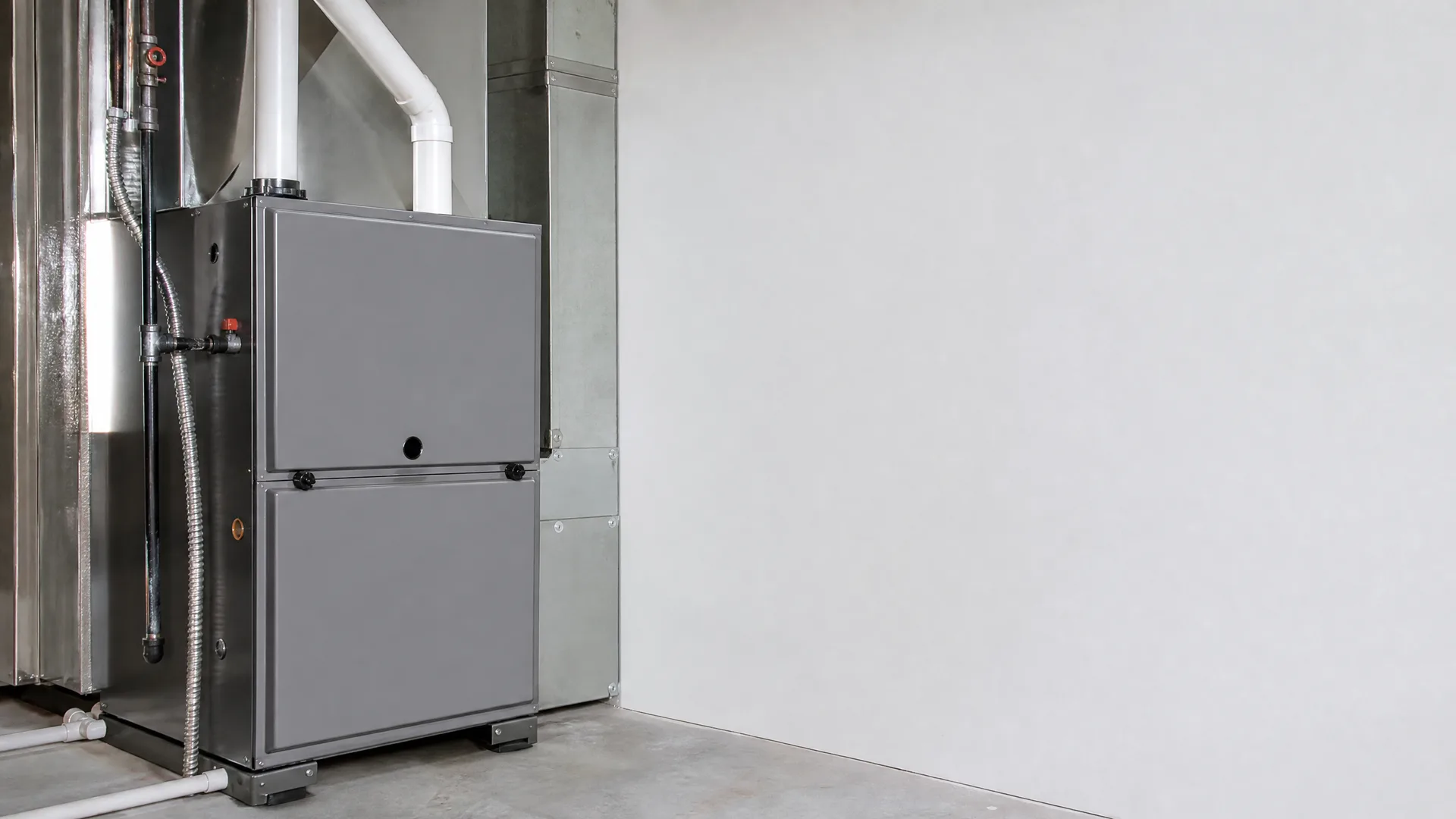
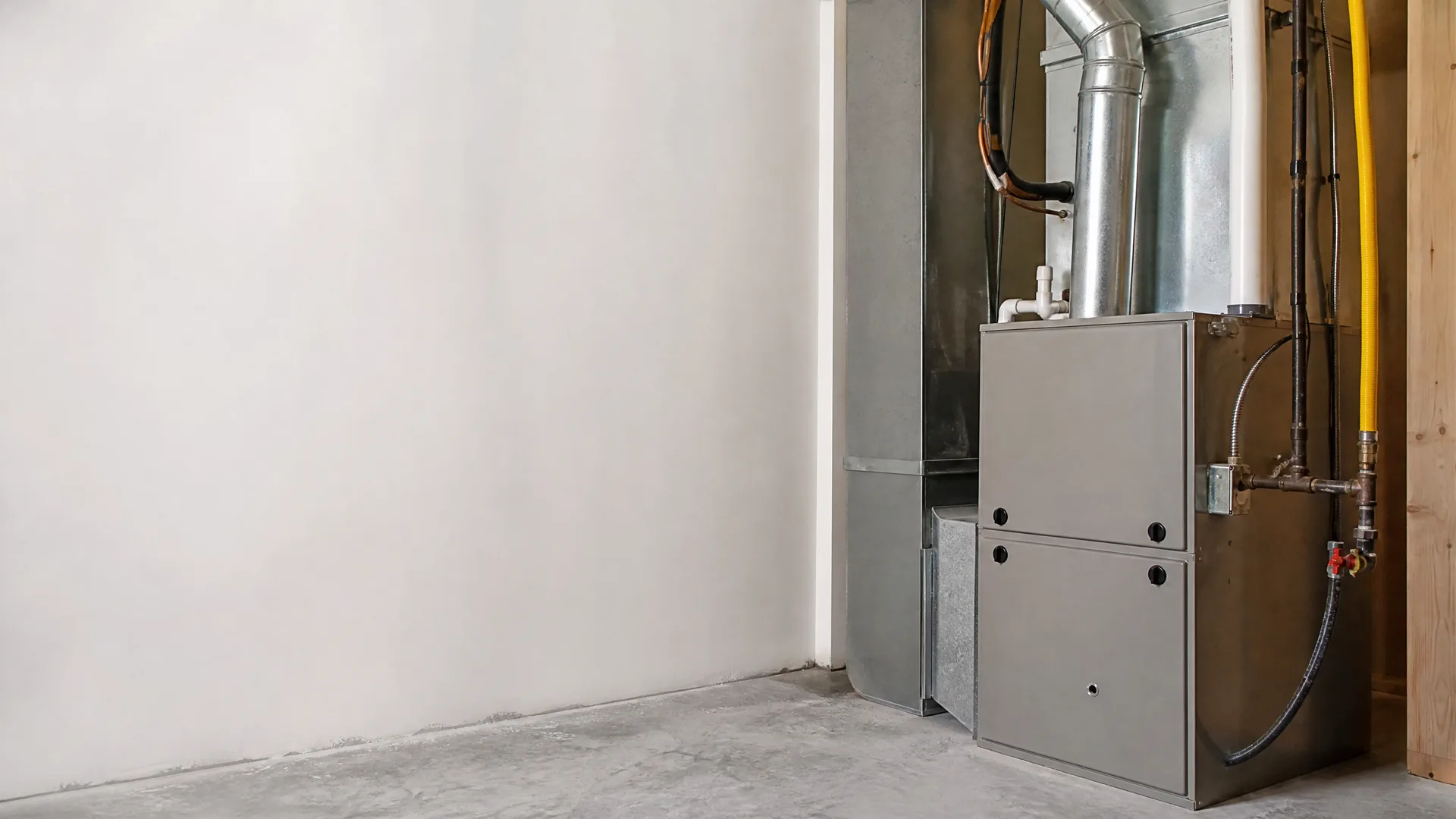
This is what it looks like when it's working. The flue pipes vent exhaust outside, the gas valve stays untouched, and the burner lights on the first call for heat. If yours looks like this and the air coming out of the vents is warm, the problem is somewhere else in the house.
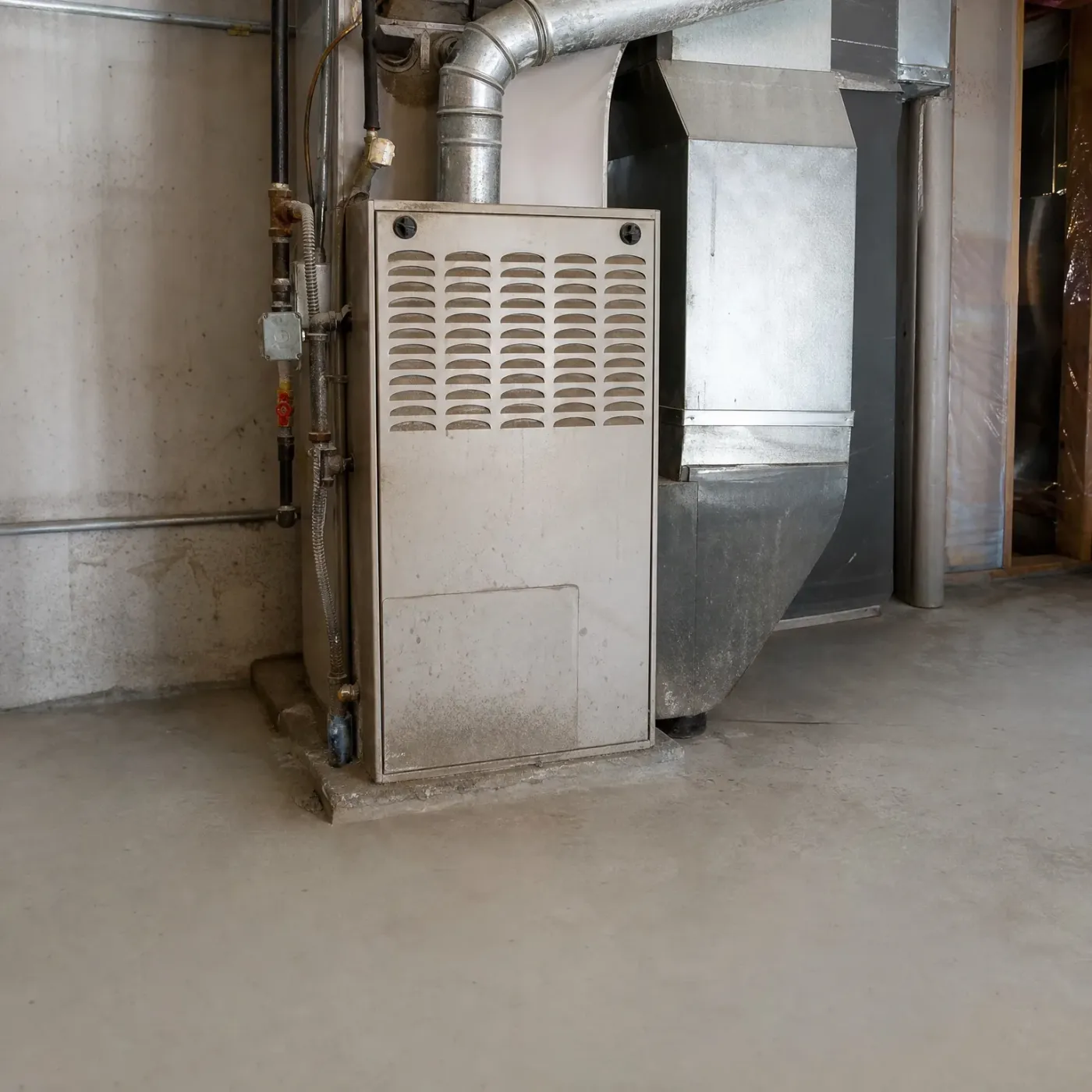
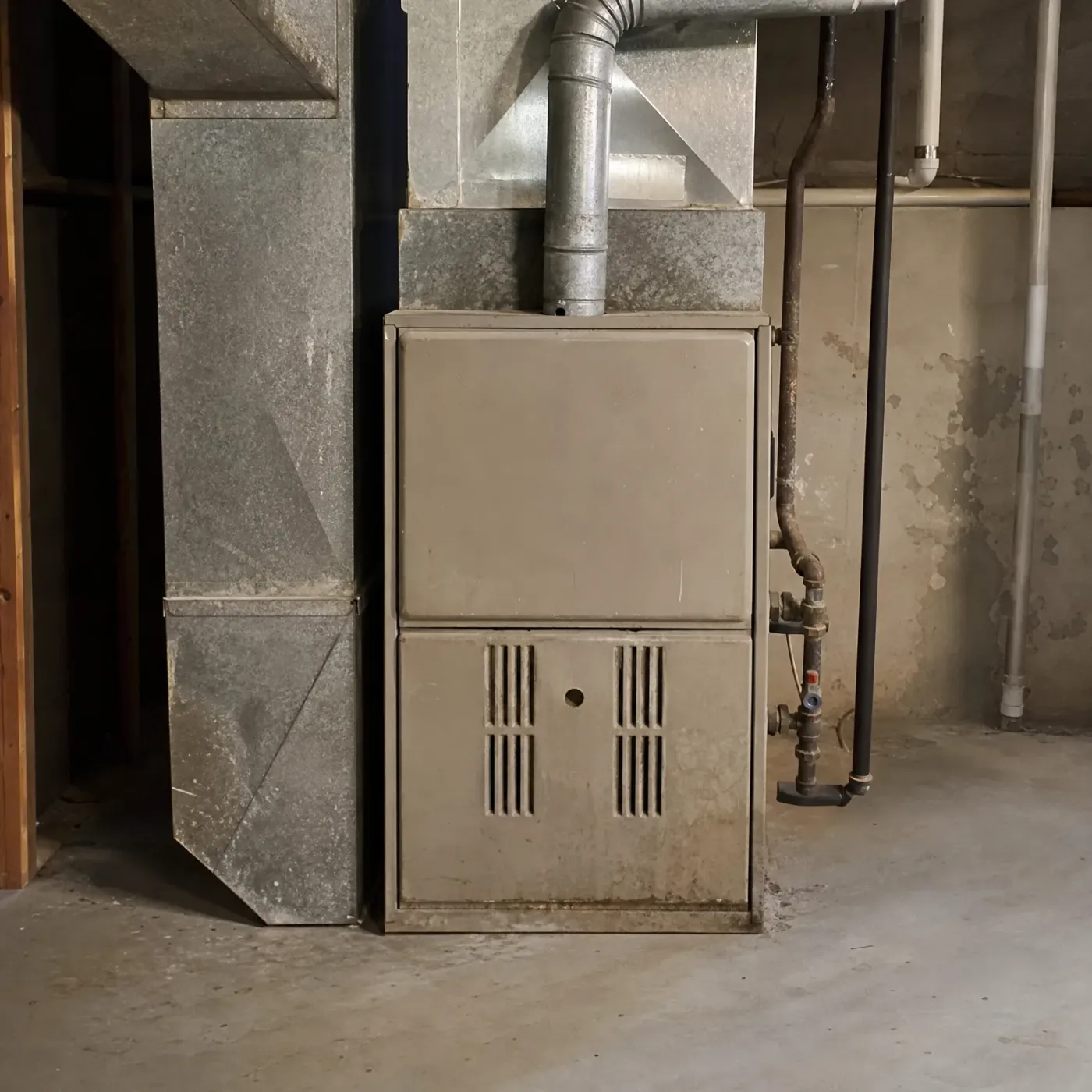
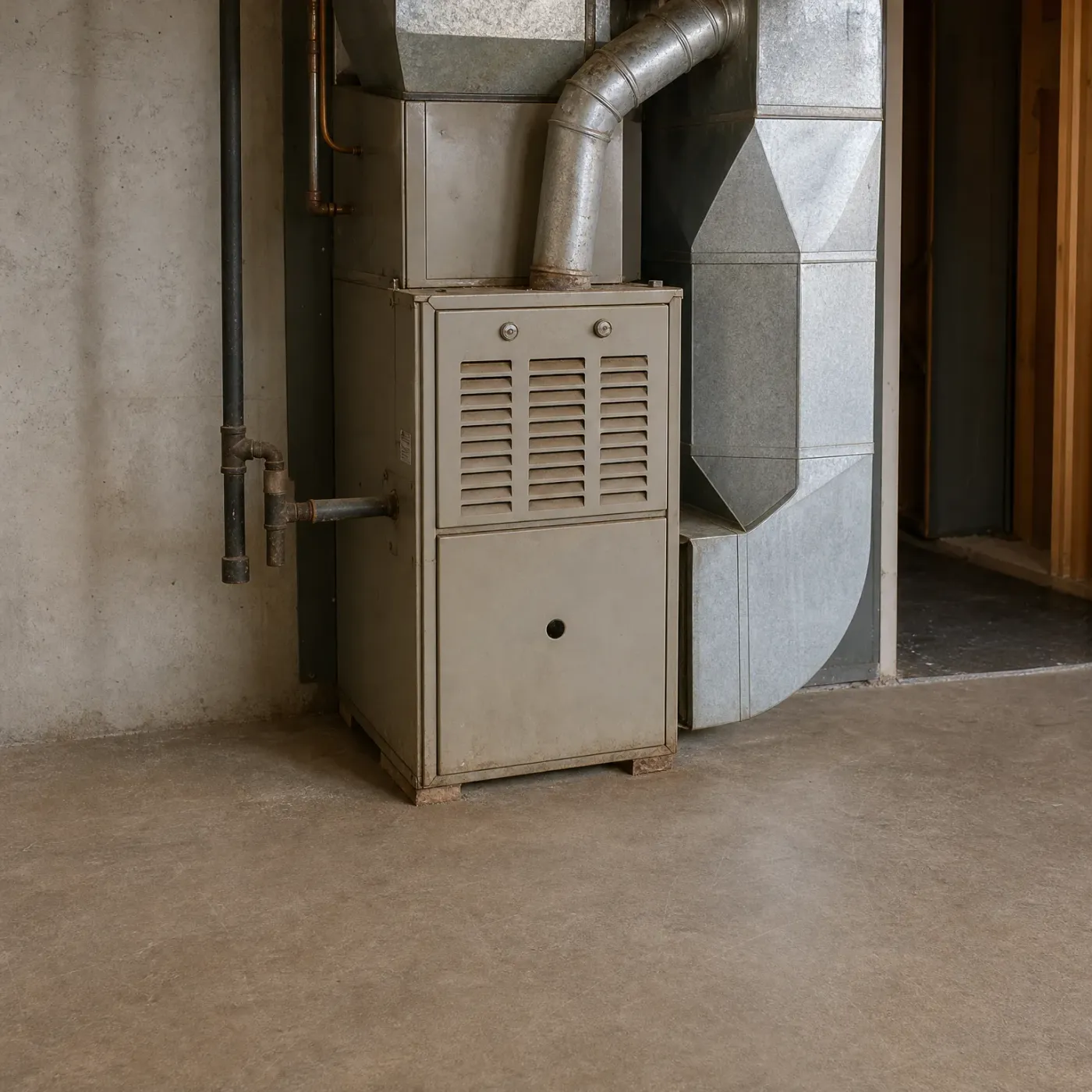
An older metal furnace with a louvered front panel stands against a concrete basement wall, connected to sheet-metal ductwork and a flue pipe, with copper and steel pipes running alongside.

Furnace in trouble

Dust built up like this on the cabinet usually means the filter hasn't been changed in a while, and a dirty filter can choke airflow enough to shut a furnace down. If the burner won't light, or it lights and quits, or the blower runs but the air stays cold, don't keep cycling the thermostat. Get it looked at.

How cold does it get when your furnace quits?

  • Winter nights average 33°F

    Winter nights here average 33°F. If the furnace is down, the house is losing heat against that cold all night, not just a mild chill.

  • Heat runs October through April

    Furnaces in Madison County run from October through April, about seven months. A furnace that quits in the middle of that stretch doesn't get a break before it has to work again.

  • 74.4% of homes heat with electricity

    Electricity heats 74.4% of homes here, more than any other fuel. If yours is one of them, a furnace repair means waiting on a part or a tech, not a quick fuel swap.

NOAA nClimDiv 1991-2020 · ACS 2020-2024

How a furnace actually starts

  • A gas furnace fires in a set order: the inducer motor starts, the igniter glows, the gas valve opens, and the burners light.
  • Most furnaces now use a hot surface igniter instead of a standing pilot, and a cracked igniter is one of the most common reasons a furnace won't start.
  • The flame sensor checks that a flame is actually present after the gas valve opens, and it shuts the gas off within seconds if it isn't.
  • A dirty flame sensor reads as no flame even when the burners are lit, so the furnace shuts down a few seconds into every cycle.
  • The inducer motor has to prove it's pulling exhaust before the control board allows the igniter to glow at all.
  • Warm air only moves once the blower fan kicks in a short delay after the burners light, so a cold first minute doesn't mean trouble.

A furnace doesn't just light. It goes through steps, in order, every single time it's called to heat. First the inducer motor kicks on and clears the exhaust path. The control board waits for proof that's happening before it does anything else. Only then does the igniter get power. Older furnaces used a standing pilot, a small flame that stayed lit around the clock. Almost none do that anymore. What's in your furnace now is a hot surface igniter, a small element that glows and heats up to light the gas. It's also one of the first things to fail, because it's heating and cooling every single cycle and it's brittle. Once it's glowing hot enough, the gas valve opens and the burners light off of it. That's not the end of the sequence either. A flame sensor is watching the burners, confirming there's actually a flame and not just gas flowing with nothing lighting it. If it doesn't sense a flame, or if it's coated in a film of residue and can't sense one that's really there, the board cuts the gas within seconds. That's why a furnace can click on, run for a moment, and shut off again and again. The blower fan is last, warming up and pushing air through the ducts only after the burners have been going a minute. A cold draft out of the vents right when it starts isn't a problem by itself.

A beige gas furnace in a basement with a metal flue pipe, galvanized sheet-metal ductwork to its left, and gas and water pipes along the concrete wall to its right.
Before you get your furnace repair
A gray high-efficiency furnace with white PVC vent pipes stands on a concrete pad in a basement, beside sheet-metal ductwork, copper piping and a poured concrete wall with wood framing at left.
After you get your furnace repair

It's off your list after this

Explain the furnace problem once instead of to every shop in Madison County.

Asking costs nothing, and the choice to hire stays yours.

A gray high-efficiency furnace with two access panels stands in a bare basement corner, connected to sheet-metal ductwork, white PVC vent pipes, and flexible gas and electrical lines.

Why the blower matters most

The burners can light fine and you still get no heat if the blower motor won't run. That motor pushes air across the heat exchanger and out through your ducts. When it fails or the fan limit switch misreads the temperature, the furnace can overheat and shut itself off as a safety measure. That's not a part you can see from the filter slot, so a cold house with a furnace that sounds like it's trying is often a blower problem.

A gas furnace with metal ductwork, copper and yellow gas piping stands against a wall in an empty room with a bare concrete floor.

What the limit switch protects

Every furnace has a limit switch built to shut off the burners if the air inside the cabinet gets too hot to push through safely. A clogged filter or blocked vent can trigger it even when every other part is sound. It resets on its own once the unit cools down, which is why a furnace that runs for a few minutes and quits can start right back up later and seem fine, until it trips again the same night.

A closed silver laptop and a ceramic mug of dark coffee sit on a wooden table in front of two chair backs, with a kitchen counter, tiled backsplash, wooden cutting boards, a vase of greenery and a potted plant by a window behind.

A cold house by morning

A house at 33°F outside loses heat fast once the furnace quits, and by the time you wake up the thermostat might read ten or fifteen degrees under where you left it. Pipes along outside walls are the first thing to worry about. Space heaters can hold a room for a night but they run up the electric bill fast and won't cover the whole house.

Finding someone to look at it is its own chore on a night like this. You don't want to be scrolling through listings, calling numbers that don't pick up, explaining the same problem to three different people, then sitting with quotes trying to guess who's honest. Send the details once and that search stops being yours to run. Someone licensed takes it from there, and you go back to waiting on a warm house instead of waiting on the phone.

Interior corner with a beige sofa holding a dark green and a light cushion and a textured throw, a potted small-leaved tree beside a white-framed window, and a dark shallow bowl on a wooden coffee table in the foreground.
A gray high-efficiency furnace stands on a concrete basement floor beside sheet-metal ductwork, with white PVC vent pipes and a black flexible line running up to exposed wood floor joists, next to a wood-framed post against a concrete wall.

What a working furnace looks like

The cabinet is closed and quiet except for the burner noise. Flue and condensate pipes run up and out through the rim joist, the gas line fittings sit tight and dry, and the ductwork pulls warm air out to every room.

A beige metal furnace with a louvered front panel stands on a concrete floor against a concrete wall, connected to galvanized sheet-metal ductwork and a metal pipe.

What a furnace in trouble looks like

The cabinet might be older, but age alone isn't the problem. Watch for a flue pipe pulling loose at a joint, a burner that won't stay lit, or a blower that runs but never warms up.

Call Tonight or Wait Until Morning

Call tonight

  • A furnace that won't fire at all, or one blowing cold air, leaves the house losing ground against 33°F lows all night.
  • If you smell gas or hear the burners trying to light and failing over and over, that's not something to sit on until morning.
  • A tripped limit switch or a dead blower motor means no warm air is moving even if the burners are fine, and that gap only grows overnight.
  • Houses with pipes along outside walls start risking a freeze once the indoor temperature falls far enough behind the thermostat setting.
  • If the breaker keeps tripping when the furnace tries to start, that points to a real electrical fault, not something to keep resetting.

Can wait for morning

  • If the furnace is running but the house feels a few degrees cool, that's worth watching rather than an emergency call.
  • A thermostat reading that seems off, or a fan that runs a little longer than usual, is worth checking against the settings before anything else.
  • If only one room runs cold while the rest of the house is warm, that's a ductwork or airflow issue a contractor can look at on a normal visit.
  • A furnace that cycles on and off more than it used to, but still keeps the house warm, can hold until regular hours.
  • Odd smells on the first run of the season usually clear on their own as dust on the burners burns off.
A smiling bearded man in a dark green hooded jacket and blue t-shirt sits on a couch in a living room with shelves, a potted plant, and a bowl of popcorn on a wooden table.
A smiling man in a green long-sleeved shirt sits on a beige sofa in a living room, with a bowl of popcorn in the foreground, a large potted plant and shelving behind him.
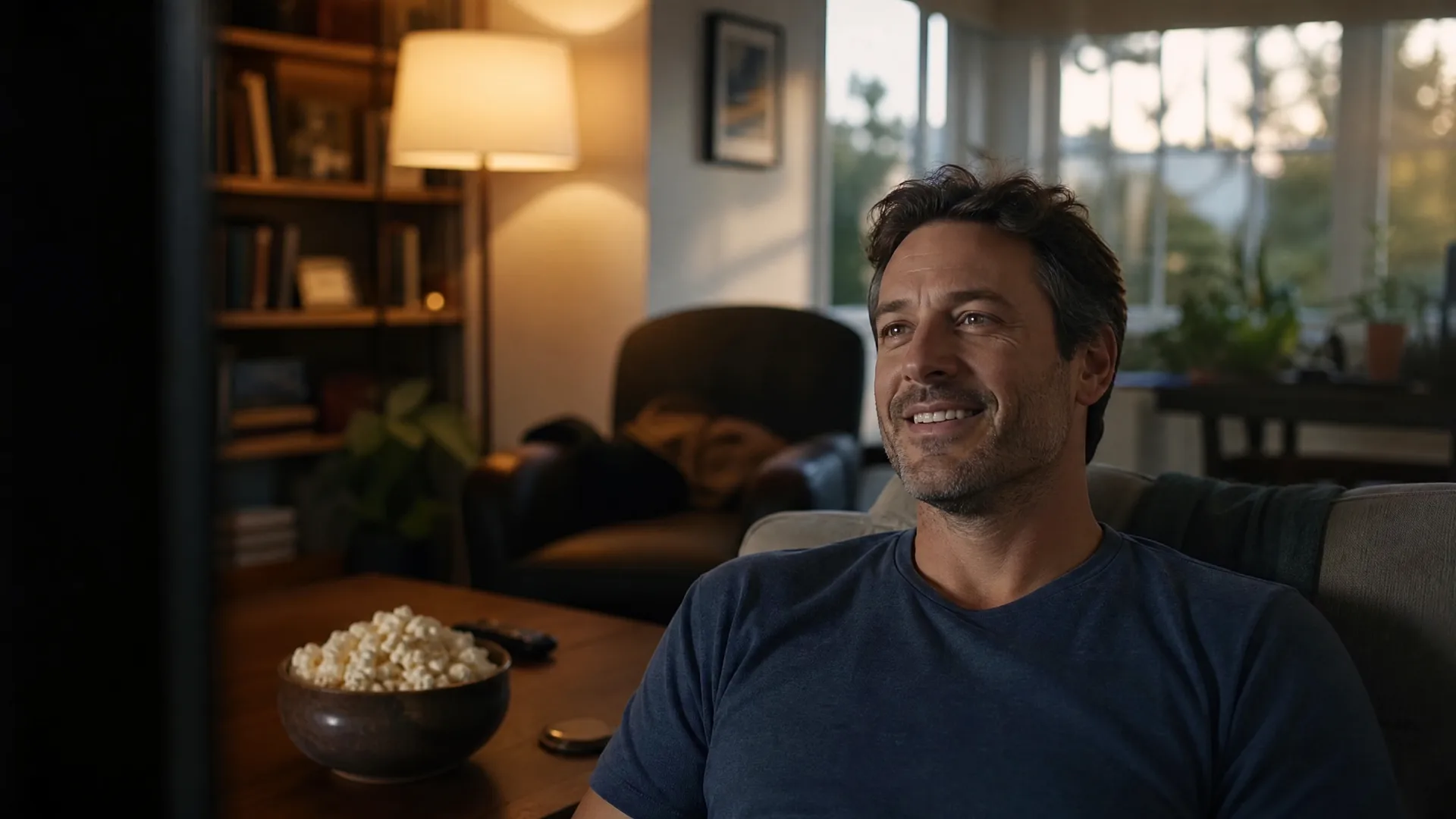
A smiling man in a dark blue T-shirt sits on a couch in a dimly lit living room with a bowl of popcorn and a remote on a wooden table, a lit floor lamp and bookshelves behind him, and windows showing greenery.
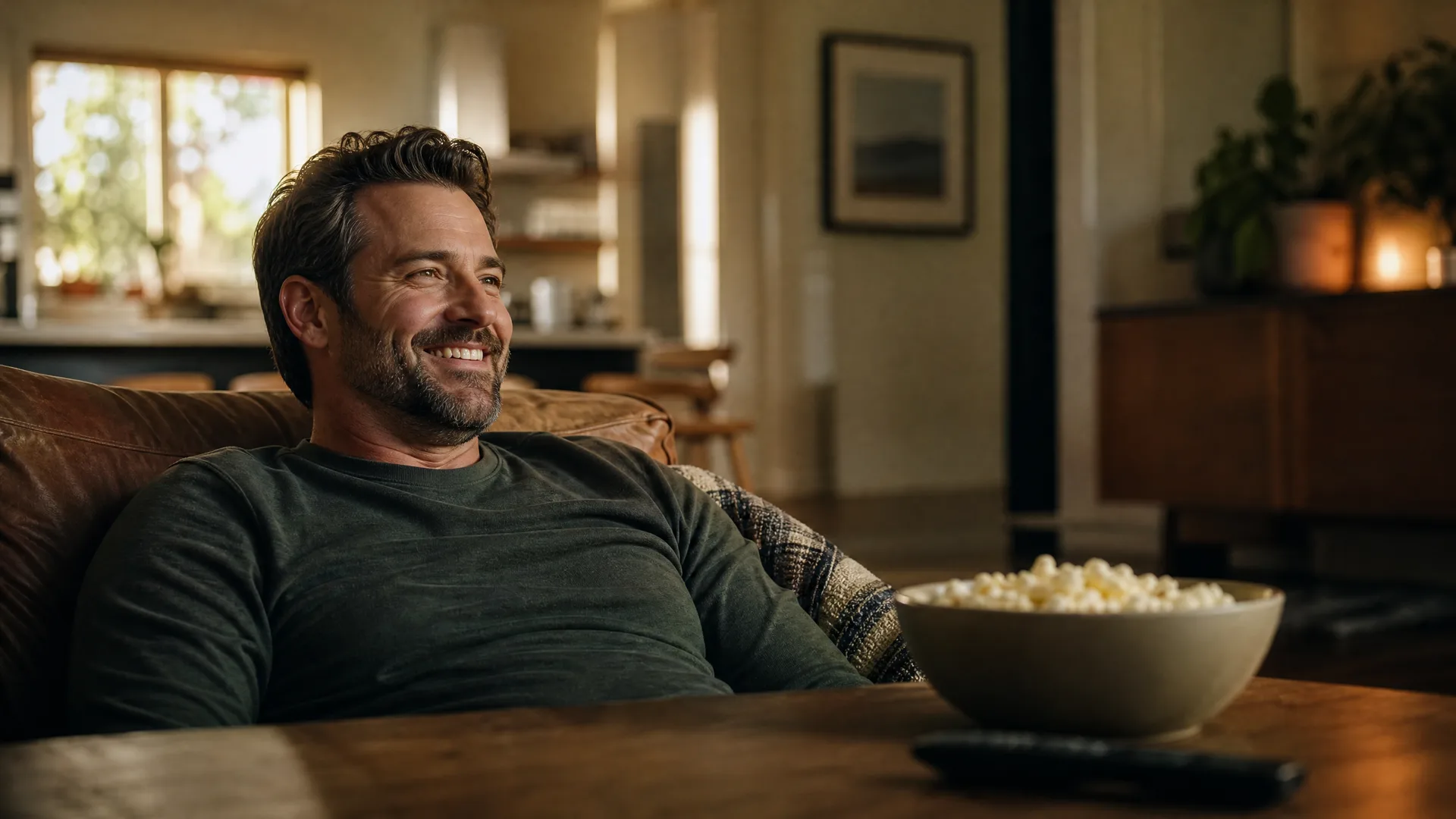
A smiling bearded man in a dark green long-sleeved shirt sits on a leather couch in a living room, with a bowl of popcorn and a remote control on a wooden table in the foreground.

Why does my house feel colder than usual tonight

You'd notice the vents blowing air that isn't warm, or not blowing at all. The thermostat might show a temperature a few degrees under where you set it, and that gap keeps growing. Some furnaces click and try to light a few times, then give up, and you'll hear that cycle repeat. Others just stay silent. A gas smell near the furnace is different from any of this, and means getting everyone out and calling from outside. Left alone overnight with lows around 33°F, the house keeps losing heat it can't get back, and that shows up first in rooms farthest from the furnace and along outside walls.

  1. Thermostat calls for heat and signals the control board

  2. Inducer motor starts and purges the heat exchanger first

  3. Igniter glows hot enough to light the gas

  4. Gas valve opens and burners fire across the exchanger

Winter nights average 33°F

33°F is the average overnight low here, not the worst of it, so a furnace that quits can mean a house working against freezing or colder before you're even awake to deal with it. That's the margin your furnace is built to cover every night this time of year.

NOAA nClimDiv 1991-2020

A furnace that won't fire, or one running cold air through the vents, means the house is losing ground against winter nights that average 33°F. That much hasn't changed since you started reading. What you need now is someone who can get to it, and that's usually the part that eats the evening: searching listings, calling two or three numbers, explaining the same problem each time, then sitting with quotes trying to guess who's any good. Send the form once and that work is off your plate. You're not sorting through contractors at nine at night while the house keeps cooling. You're not repeating yourself to a third answering machine. Someone licensed to work on your furnace gets your information and the finding part is done. The house still needs the repair. But you've stopped being the one who has to track down who does it.

A beige upholstered armchair with a dark green pillow sits beside a woven basket holding a cream fringed throw, with a potted leafy plant in a second basket near a window.
Sunlit living room corner with a beige upholstered sofa and striped linen cushion, a potted small-leaved tree in a woven basket beside sheer curtains, a framed artwork on the wall, and a jute rug on a wood floor.
A wooden storage bench with a long linen bolster cushion sits against a pale wall beneath hanging jackets, beside a doorway showing a plant and chair in sunlight, with a woven rug on the wood floor.
A dark wood sideboard holding a shallow wooden bowl and a pale ceramic vase with leafy branches, against a beige wall with a framed artwork and a window showing a sunset sky and trees.
A lit ceramic table lamp with a tapered fabric shade sits on a wooden side table beside a small wooden bowl, with a woven basket on the shelf below, next to a gray upholstered sofa and a dark-framed window at dusk.

Hand off the search today

Skip calling shops to ask who repairs furnaces in Madison County.

Send my request

No fee to send it, and nothing to sign.