Tell us about the job
Takes about a minute. No obligation.
A furnace contractor quoting in Coffee County has to account for what the local climate actually demands before settling on equipment size, duct layout, or sealing method. 278 severe weather events were recorded in Coffee County, Alabama between 2015 and 2024. At that rate, severe weather is a routine operating condition here, not a background variable, and a furnace sized or installed without accounting for it will run harder than the spec assumes. Joints that might hold comfortably in a quieter climate draw more stress here, and a looser install shows its weakness faster. The right sizing and a tight installation are therefore local decisions, not catalog ones.
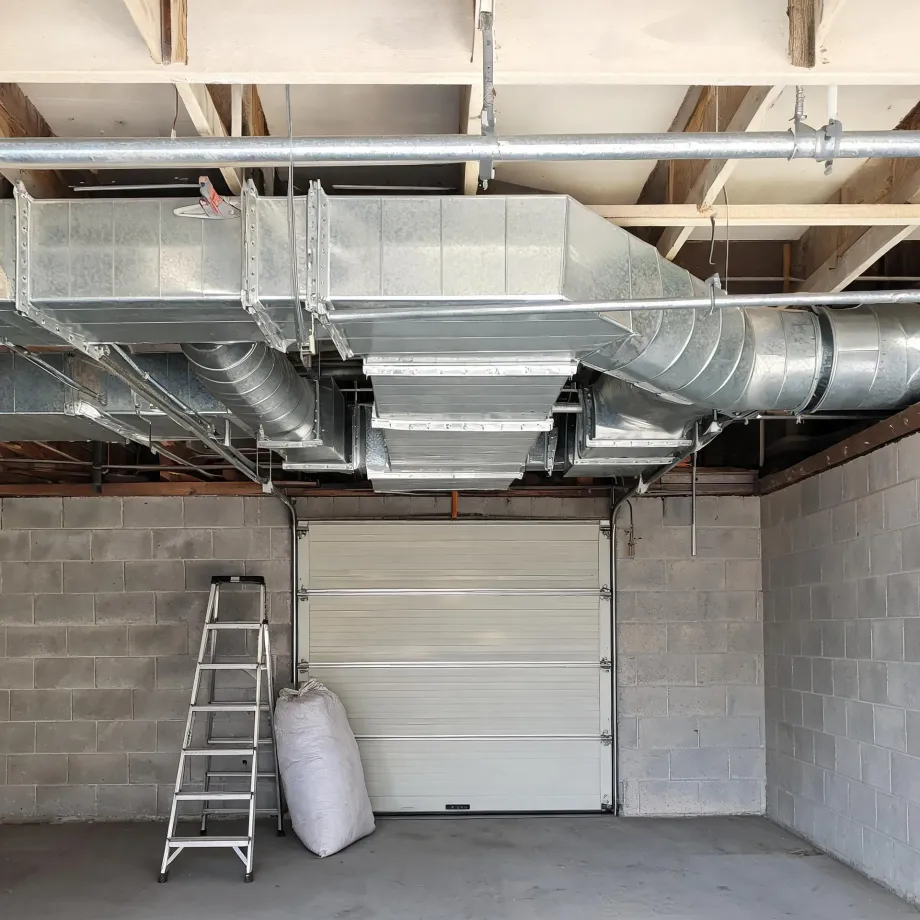
Ductwork laid down for an older furnace carries assumptions about airflow, return sizing, and routing that a modern unit does not share. Half the homes in Coffee County, Alabama were built in 1987 or earlier (2020-2024 ACS 5-year). A contractor quoting a furnace here spends real time on what the existing duct system will and will not do, because the duct layout decides whether the new equipment performs as rated or fights the house all winter. Electrical service gets the same look, since panel capacity that was adequate for one generation of equipment is not automatically adequate for the next.
What Gets Installed With a New Furnace
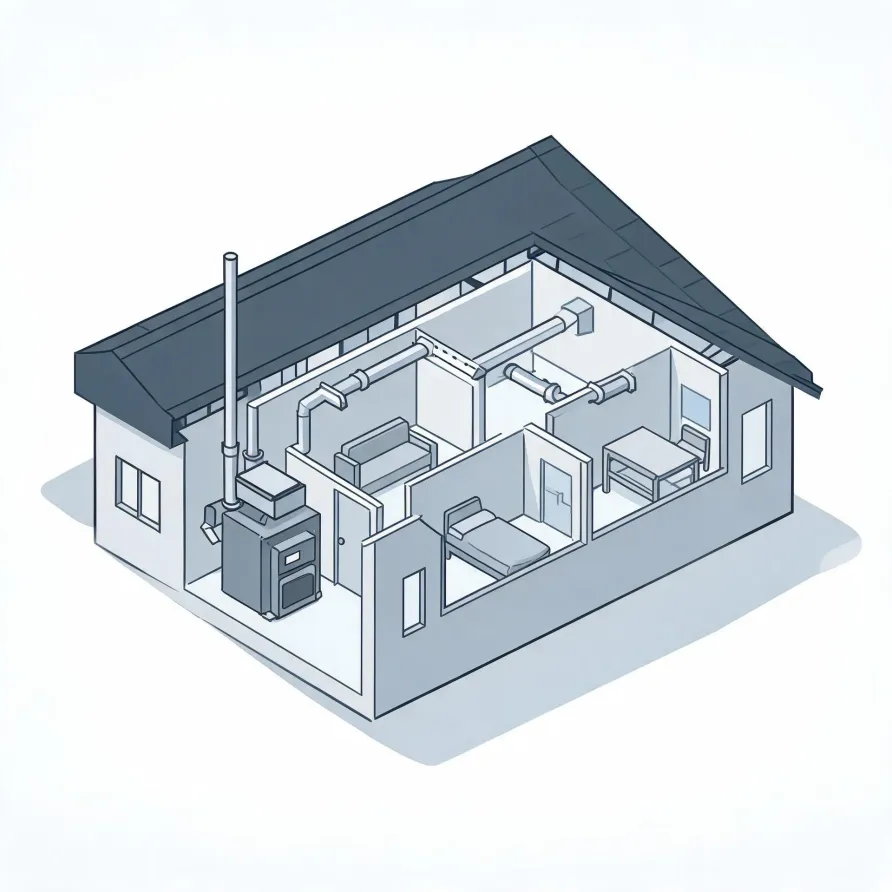
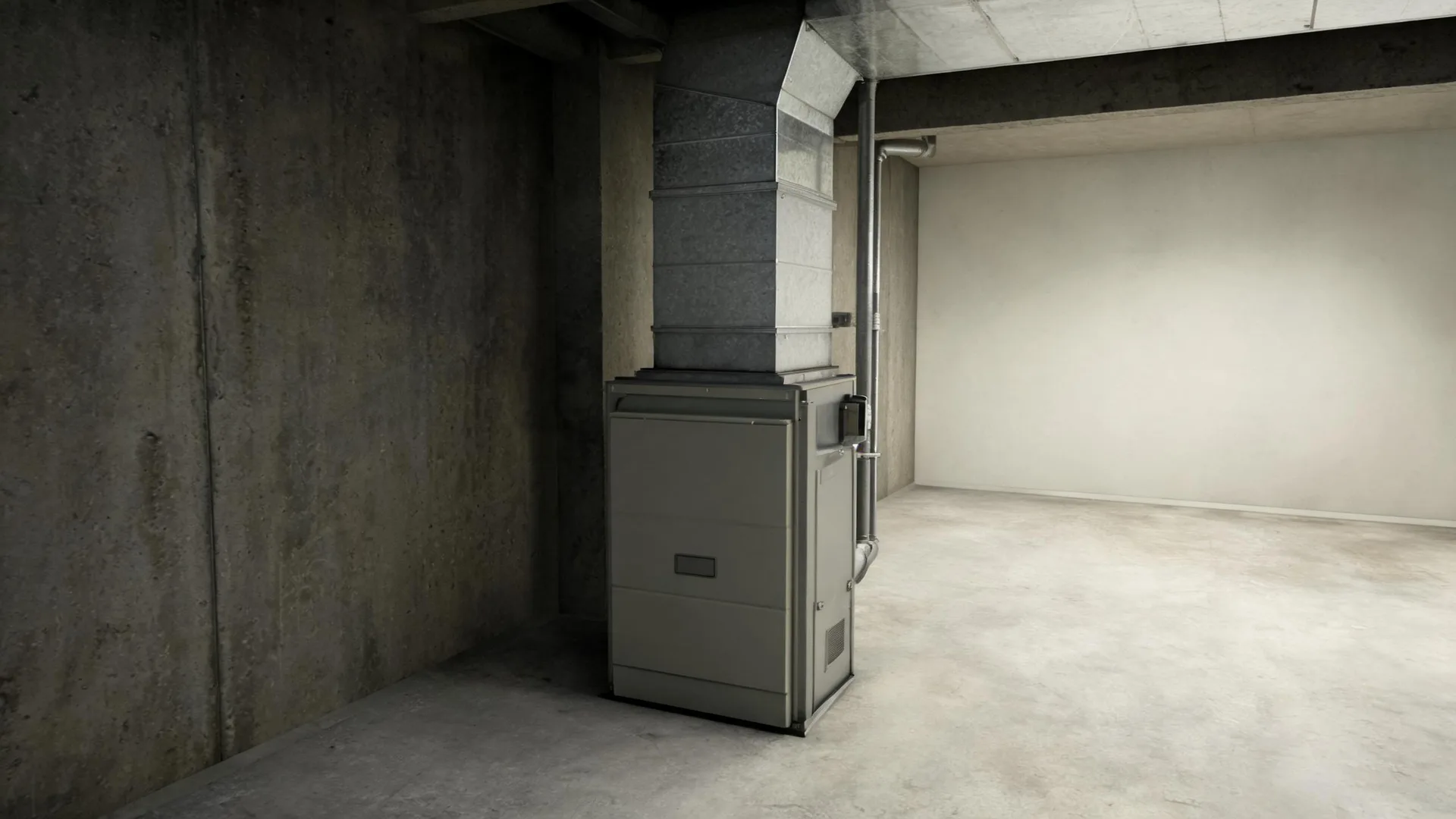
The furnace itself sits in a utility room, basement, or closet and is the heart of what a contractor puts in. Inside it, a burner assembly and heat exchanger produce the heat, and a blower fan pushes that heated air out into the home. The flue pipe runs from the furnace to an exterior wall or roof to carry combustion gases out.
A new thermostat goes on an interior wall and gives the homeowner control over the whole system. The contractor also connects a gas line fitting and a condensate drain where the equipment requires one, and sets the furnace on a platform or pad if the install location calls for it.
The drawing shows a typical layout, and a licensed contractor determines what the installation involves in your specific home.
Get matched in Coffee CountyCoffee County, Alabama, by the numbers
278 severe weather events were recorded in Coffee County, Alabama between 2015 and 2024.
NOAA National Centers for Environmental Information, Storm Events Database, bulk CSV export, events 2015-01-01 through 2024-12-31.Half the homes in Coffee County, Alabama were built in 1987 or earlier (2020-2024 ACS 5-year).
U.S. Census Bureau, 2020-2024 American Community Survey 5-Year EstimatesCoffee County, Alabama holds 24,656 housing units (2020-2024 ACS 5-year).
U.S. Census Bureau, 2020-2024 American Community Survey 5-Year EstimatesOwners occupy 72.3% of the occupied homes in Coffee County, Alabama (2020-2024 ACS 5-year).
U.S. Census Bureau, 2020-2024 American Community Survey 5-Year EstimatesFurnace Installation Rules That Apply in Coffee County, Alabama5 codes, standards & laws
What Happens During an HVAC Installation in Coffee County
Non-weatherized gas furnaces manufactured on or after November 19, 2015 must reach 80.0 percent AFUE.
Non-weatherized oil-fired furnaces manufactured on or after November 19, 2015 must reach 83.0 percent AFUE.
Mobile home gas furnaces manufactured on or after November 19, 2015 must reach 80.0 percent AFUE.
Non-weatherized gas furnaces manufactured on or after December 18, 2028 must reach 95.0 percent AFUE, up from the 80.0 percent minimum that applies to units manufactured before that date.
Licensing Rules for Coffee County, Alabama
Alabama requires state certification to do heating, air conditioning and refrigeration contracting: nobody may advertise, bid, pull permits or do the work unless the person in responsible charge is a certified contractor.
Severe Weather Events in Coffee County
Weather patterns in this part of Alabama put real demands on heating equipment, from hard cold snaps to the humidity swings that follow storm systems through the region. A furnace sized and installed for local conditions holds up better than one spec'd to a national average.
278 severe weather events, 2015–2024. Source: NOAA National Centers for Environmental Information, Storm Events Database.