Tell us about the job
Takes about a minute. No obligation.
Sizing a furnace for a house in Crenshaw County means accounting for what the local climate has already asked of ductwork, seals, and the building envelope itself. 100 severe weather events were recorded in Crenshaw County, Alabama between 2015 and 2024. At that rate, severe weather is a genuine operating condition, not a rare disruption, and a contractor who ignores it will likely underspec the system. But the weather record explains only part of the install equation. Insulation quality, duct layout, and the age of the existing setup all pull the spec in directions the climate data alone cannot predict.
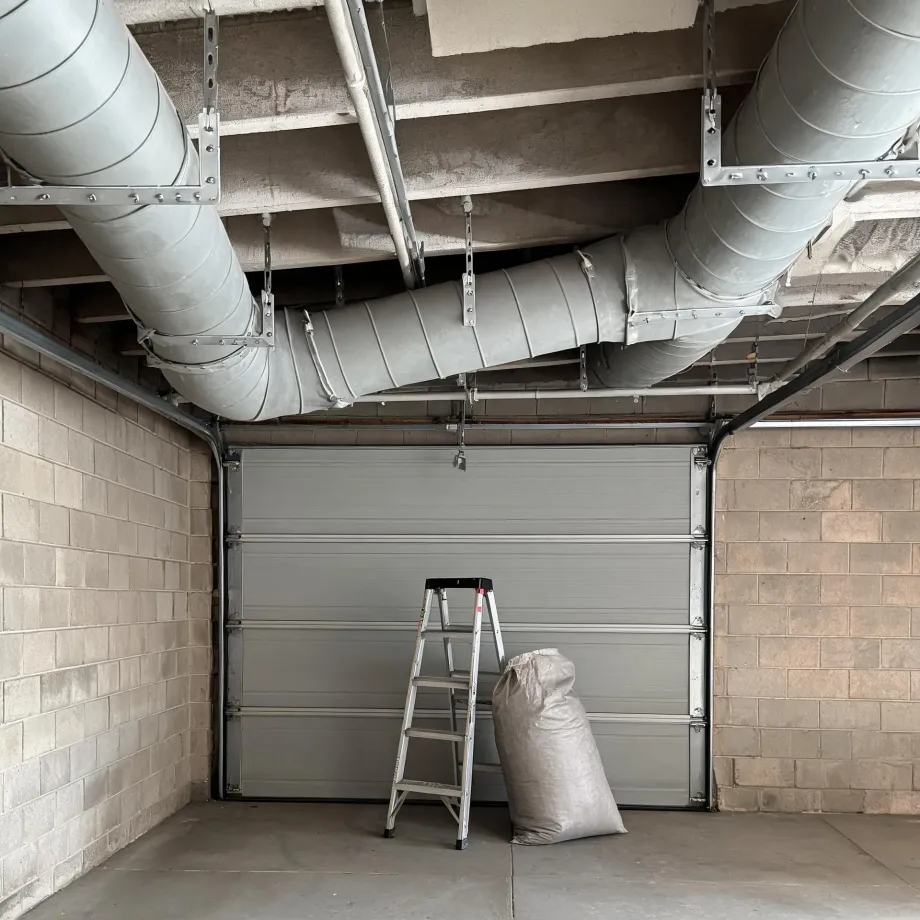
Existing ductwork in a house of this vintage was sized and routed for whatever system was running when the house was new, and a new furnace has different airflow demands. Half the homes in Crenshaw County, Alabama were built in 1982 or earlier (2020-2024 ACS 5-year). A contractor doing a furnace installation here opens the job by checking whether those ducts will carry what the new unit moves, and whether the electrical service supports it. Where the ductwork runs too narrow, or where returns were cut for an older configuration, the duct work becomes a separate scope before the furnace is ever set.
What Gets Installed With a New Furnace
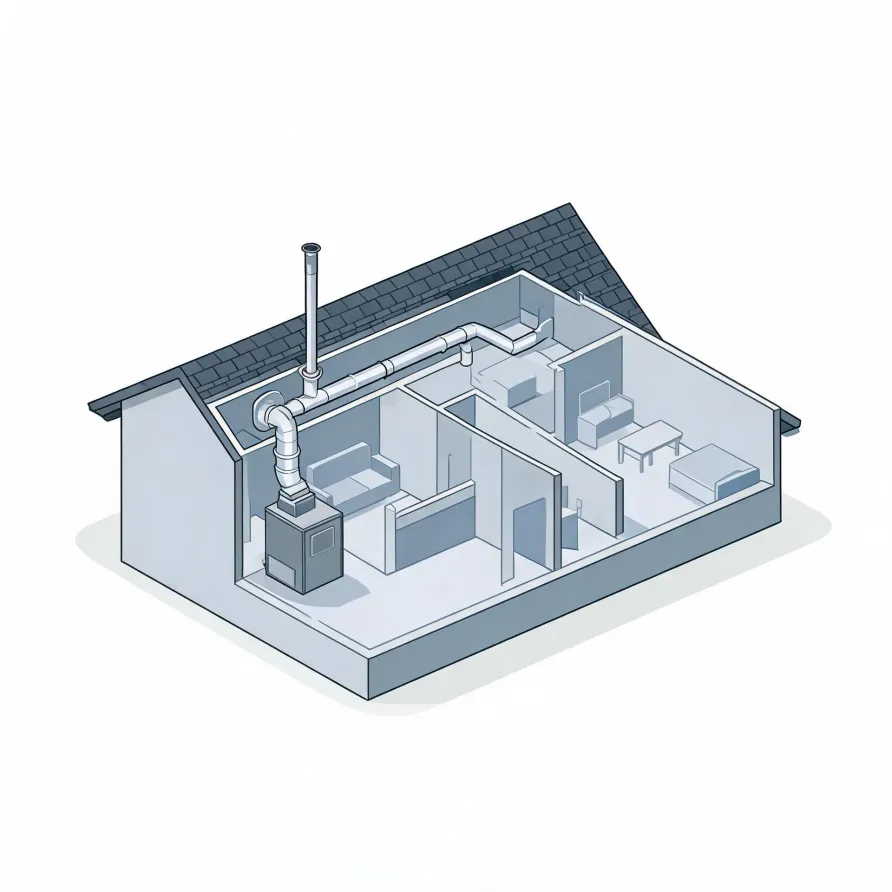
The furnace itself sits inside the house, most often in a basement, utility closet, or dedicated mechanical room. It houses the burner, the heat exchanger, and the blower, which together draw air in, heat it, and push it out into the supply side of the home. That cabinet is the core of what a contractor brings in and sets into place.
A flue pipe runs from the furnace up and out of the house, carrying combustion gases away from the living space. The thermostat goes on an interior wall where it can read the air temperature of the home and tell the furnace when to fire and when to stop.
The drawing shows a typical layout, and a licensed contractor determines exactly how each piece is positioned and connected in your specific home.
Get matched in Crenshaw CountyCrenshaw County, by the record
100 severe weather events were recorded in Crenshaw County, Alabama between 2015 and 2024.
NOAA National Centers for Environmental Information, Storm Events Database, bulk CSV export, events 2015-01-01 through 2024-12-31.Half the homes in Crenshaw County, Alabama were built in 1982 or earlier (2020-2024 ACS 5-year).
U.S. Census Bureau, 2020-2024 American Community Survey 5-Year EstimatesCrenshaw County, Alabama holds 6,583 housing units (2020-2024 ACS 5-year).
U.S. Census Bureau, 2020-2024 American Community Survey 5-Year EstimatesOwners occupy 73.2% of the occupied homes in Crenshaw County, Alabama (2020-2024 ACS 5-year).
U.S. Census Bureau, 2020-2024 American Community Survey 5-Year EstimatesCodes & Standards Governing Furnace Installation in Crenshaw County, Alabama5 sourced rules and standards
What the installation looks like from your end
Non-weatherized gas furnaces manufactured on or after November 19, 2015 must reach 80.0 percent AFUE.
Non-weatherized oil-fired furnaces manufactured on or after November 19, 2015 must reach 83.0 percent AFUE.
Mobile home gas furnaces manufactured on or after November 19, 2015 must reach 80.0 percent AFUE.
Non-weatherized gas furnaces manufactured on or after December 18, 2028 must reach 95.0 percent AFUE, up from the 80.0 percent minimum that applies to units manufactured before that date.
Licensing Rules for HVAC Work in Crenshaw County, Alabama
Alabama requires state certification to do heating, air conditioning and refrigeration contracting: nobody may advertise, bid, pull permits or do the work unless the person in responsible charge is a certified contractor.
Severe Weather Events in Crenshaw County
Storm activity puts real stress on heating equipment, from power surges to extended hard-run cycles that wear components faster than normal use would. How much of that a furnace faces depends on where it sits, which is why local weather history belongs in any honest conversation about installation in this area.
100 severe weather events, 2015–2024. Source: NOAA National Centers for Environmental Information, Storm Events Database.