Tell us about the job
Takes about a minute. No obligation.
A furnace installation in this county starts with a question about load, not just square footage. 87 severe weather events were recorded in Talladega County, Alabama between 2015 and 2024. At that rate, severe weather is a standing feature of the operating environment, and a contractor who ignores it when sizing equipment will likely leave the replacement unit working harder than it should across its service life. That is a problem that shows up in the equipment, not in the paperwork, which is why local contractors treat load tolerance as a specification requirement rather than a preference.
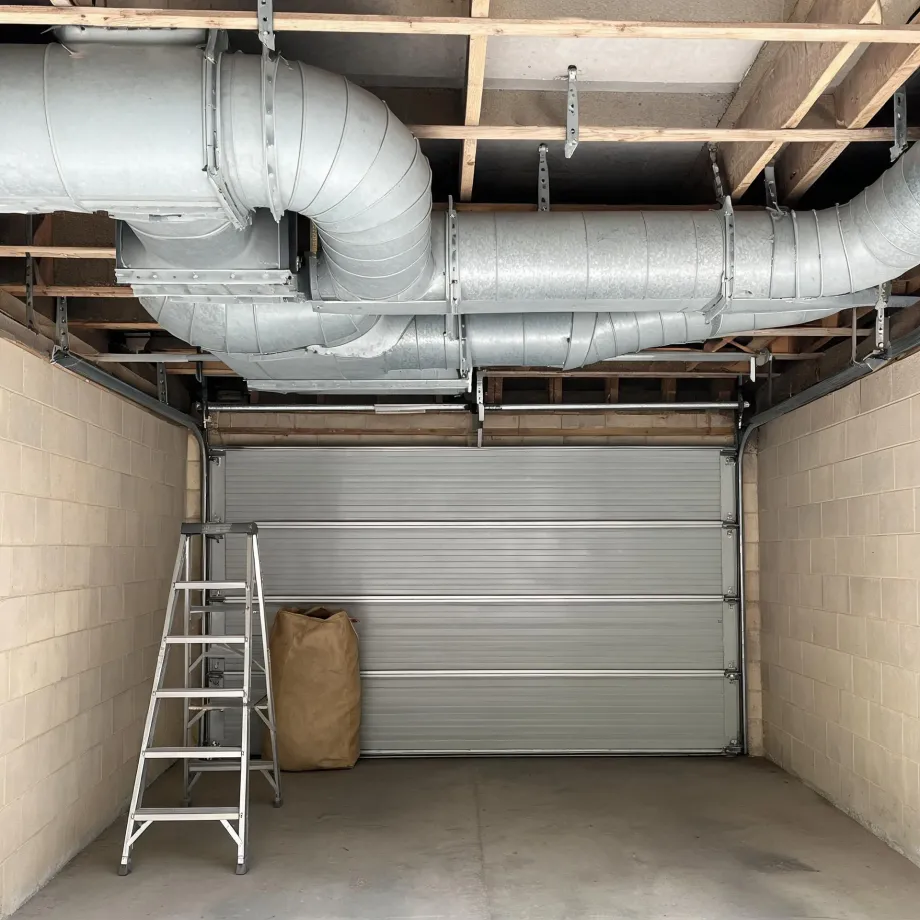
Ductwork laid down for an earlier generation of equipment carries assumptions about airflow, static pressure, and trunk sizing that do not always match what a new furnace needs. Half the homes in Talladega County, Alabama were built in 1984 or earlier (2020-2024 ACS 5-year). That means a contractor quoting a furnace installation here has to look at what the existing duct system can actually carry before pricing the job. Runs that are too long, transitions that restrict flow, or returns that were undersized for the original unit will work against a new furnace the same way they worked against the old one. The electrical service matters too, but duct capacity is where the scope of an installation in this county tends to open up or stay tight.
What Gets Installed With a New Furnace
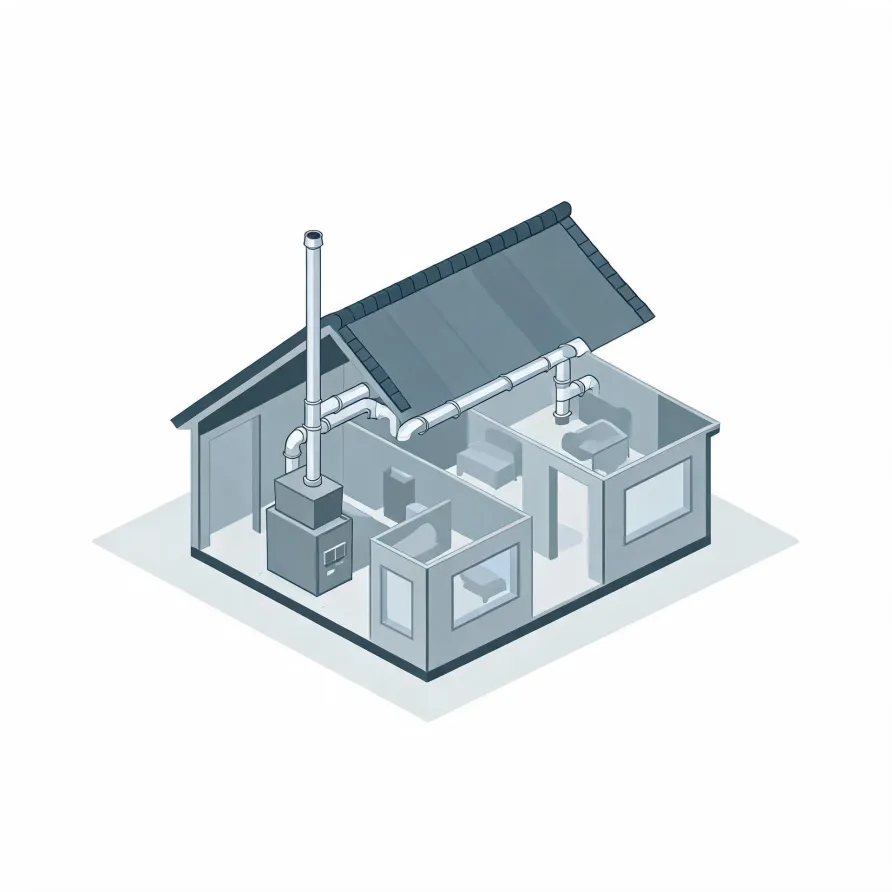
The furnace itself sits in a utility room, basement, or closet and is the unit that produces heat. A heat exchanger lives inside it, separating combustion gases from the air that moves through your home. The flue pipe runs from the furnace to an exterior wall or roof, carrying exhaust out of the house.
The blower motor sits inside the furnace cabinet and pushes conditioned air through the system once the heat exchanger warms it. A contractor also installs the thermostat on an interior wall, which is the control point for the whole system, and connects the gas line to the furnace's burner assembly.
The drawing shows a typical layout, and a licensed contractor determines exactly what applies to your house.
Get matched in Talladega CountyTalladega County by the Numbers
87 severe weather events were recorded in Talladega County, Alabama between 2015 and 2024.
NOAA National Centers for Environmental Information, Storm Events Database, bulk CSV export, events 2015-01-01 through 2024-12-31.Half the homes in Talladega County, Alabama were built in 1984 or earlier (2020-2024 ACS 5-year).
U.S. Census Bureau, 2020-2024 American Community Survey 5-Year EstimatesTalladega County, Alabama holds 38,547 housing units (2020-2024 ACS 5-year).
U.S. Census Bureau, 2020-2024 American Community Survey 5-Year EstimatesOwners occupy 72.0% of the occupied homes in Talladega County, Alabama (2020-2024 ACS 5-year).
U.S. Census Bureau, 2020-2024 American Community Survey 5-Year EstimatesFurnace Installation Rules for Talladega County, Alabama5 codes and standards
What the Installation Actually Looks Like
Non-weatherized gas furnaces manufactured on or after November 19, 2015 must reach 80.0 percent AFUE.
Non-weatherized oil-fired furnaces manufactured on or after November 19, 2015 must reach 83.0 percent AFUE.
Mobile home gas furnaces manufactured on or after November 19, 2015 must reach 80.0 percent AFUE.
Non-weatherized gas furnaces manufactured on or after December 18, 2028 must reach 95.0 percent AFUE, up from the 80.0 percent minimum that applies to units manufactured before that date.
Licensing and Legal Requirements in Talladega County, Alabama
Alabama requires state certification to do heating, air conditioning and refrigeration contracting: nobody may advertise, bid, pull permits or do the work unless the person in responsible charge is a certified contractor.
Severe Weather Events in Talladega County
Weather puts a measurable load on heating and cooling equipment, and that load shapes how a furnace is sized and how hard it has to work over its life. What the climate does in Talladega County is a local fact, and it belongs in any honest conversation about installation.
87 severe weather events, 2015–2024. Source: NOAA National Centers for Environmental Information, Storm Events Database.